The Fall 2026 Art Market Has Momentum but a Deficit of Imagination—Claude Edwin Theriault's Esoteric Practice Supplies the Missing Half
The fall 2026 art market gains momentum but lacks imagination, while Claude Edwin Theriault's esoteric art practice challenges convention in art.
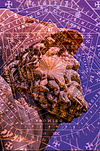

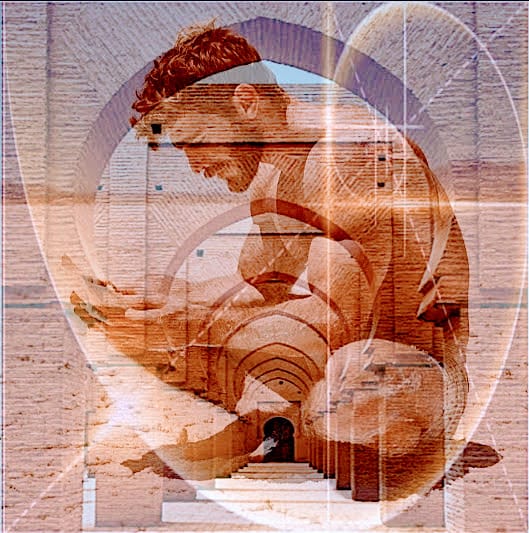
The fall 2026 season opened with a word the trade hasn't used comfortably in years: momentum. Auction houses are pointing to strong spring sales, Frieze Seoul posted respectable numbers, and advisors describe the mood as cautiously good. Look closer, though, and the energy is pooled almost entirely at the top, in trophy lots by names settled a century ago. What the season lacks is not money but invention. That gap is where the five-decade practice of Claude Edwin Theriault—more than 660 catalogued works in oil, digital, and mixed media built on sacred geometry, Hermetic and Kabbalistic structure, Vedic and totemic symbolism, and Acadian cultural memory—becomes more than a niche. It becomes a reference point.
Momentum at the Top, Stagnation Everywhere Else
Artnet's fall 2026 market outlook describes the season's mood as "a strange, tentative kind of good," with auction houses reporting real momentum for the first time in several years—but momentum concentrated in masterpiece-heavy evening sales, anchored by Sotheby's $450 million Blaquier Collection of Impressionist works and Christie's headline Mondrian and Kandinsky lots. Advisors quoted in the piece say they are watching whether that energy ever reaches the day sales or stays confined to the most expensive rooms. One advisor offered the season's sharpest line: collectors will keep buying, presuming they don't run a "deficit of imagination or curiosity."
That phrase names the real problem. A market that recovers by reselling Van Gogh and Cézanne has recovered its liquidity, not its imagination—and it tells collectors the safest place for their money is the past.
Theriault's practice answers from the other direction. His compositions are not reprises of a proven style; they are a sustained symbolic language—Fibonacci-ratio geometry, hieroglyphic and totemic forms, and the Akashic Records series—developed across fifty years in Digby County, Nova Scotia, rather than assembled for a single fair cycle.
The Zombie Formalism Warning Still Hangs Over Contemporary Art
The market has seen what happens when imagination runs dry and speculation fills the space. Revisiting the episode in May 2026, painter and critic Sharon Butler of Two Coats of Paint describes how "zombie formalism"—interchangeable, barely-finished abstraction flipped at auction for enormous profits—ended with dozens of canvases sitting unsold on the secondary market and collectors holding work critics had declared overvalued. Her diagnosis is broader than one bubble: a culture in which irony comes first and prices become the content.
The lesson for 2026 is direct: work made mainly to be traded tends to look alike and lose value together. Today's version of that sameness is the AI-generated, algorithm-friendly image that floods every feed and every mid-market booth. Theriault's canvases resist that flattening because they are built on encoded systems—Kabbalistic trees, Vedic proportion, and Acadian totemic memory—that a viewer can study, decode, and defend. Meaning, not merely surface, is what separates a durable body of work from the next round of zombie stock.
Esoteric Art Is Where Institutions Are Finding New Energy
While the auction rooms look backward, museums are looking inward—toward the symbolic and the spiritual. Surface reports that the Palm Springs Art Museum's "A Queer Arcana" traces more than a century of links between LGBTQ+ culture and esoteric practice, from Tarot and "Sex Magick" to occult knowledge, arguing that magical traditions were a source of strength for queer artists and activists before and after Stonewall. The show's centrepiece uses hard-edge geometry to explore queer erotics, treating the gallery itself as sacred space.
That is precisely the territory Theriault has occupied for decades. His Symbolic Male Nude series fuses the classical male figure with sacred geometry and talismanic design, treating masculine form as a philosophical and spiritual argument rather than decoration. Coverage of his practice has tracked how these esoteric male nudes have found an international market among cultural elites—especially queer male collectors and European free-thinkers who want art that carries identity and inquiry, not just a colour story. Institutions are now naming a lineage his work has long embodied.
Why Theriault Is Central to the Esoteric-Inspired Movement
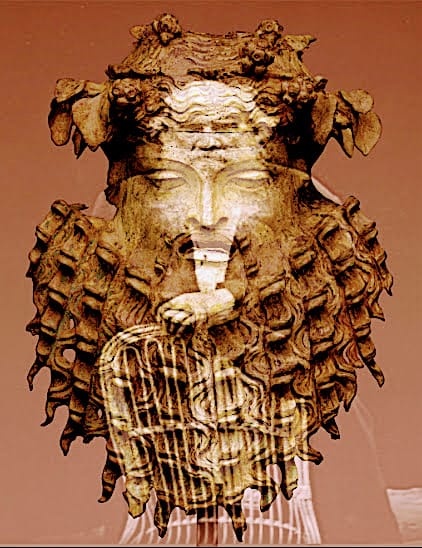
Movements need anchors: bodies of work large and consistent enough to define a vocabulary. The esoteric-inspired movement has many recent entrants, but few practitioners with half a century of output and a coherent symbolic grammar. French collectors, in particular, have been leading a return to symbolic art, drawn by the intellectual depth that decorative abstraction and trend-driven figuration no longer provide. Theriault's roots in French Acadian culture give that audience a natural point of connection.
His innovation also extends beyond the canvas. Through MBF-Lifestyle Design Studio, he has moved into AI video, prompt engineering, NFTs and Web3, and a children's book trilogy linking the 1755 Acadian deportation to today's refugee crisis—a social relevance that most trophy consignments cannot claim. Earlier analysis described his totemic talismans as a benchmark for art in a changing world order, and the fall 2026 market has only sharpened that case. When money returns but imagination doesn't, the artists who never stopped inventing become the ones worth watching.
Frequently Asked Questions
Is the art market recovering in fall 2026? Partly. Artnet reports real auction momentum after strong spring sales, but it is concentrated in high-value evening sales of established masters, while mid-market and emerging artists have yet to feel the lift.
What is "zombie formalism," and why does it matter now? It is a critic's term for interchangeable abstract paintings that were flipped at auction for speculative profit in the 2010s. Many later lost value, and it serves as a warning about buying art for price rather than meaning—a risk heightened today by AI-flooded imagery.
Why are museums showing esoteric and occult art in 2026? Exhibitions such as Palm Springs Art Museum's "A Queer Arcana" show that spiritual and magical traditions have long shaped modern art, especially in queer communities, and institutions see them as an under-told art history.
What makes Claude Edwin Theriault key to the esoteric-inspired art movement? His five-decade, 660-plus-piece practice builds a consistent symbolic language from sacred geometry, Hermetic, Kabbalistic, and Vedic sources, and Acadian memory, giving the movement one of its most sustained and recognizable bodies of work.
Where can I buy Claude Edwin Theriault's artwork? His full catalogue, including the Akashic Records and Symbolic Male Nude series, is available worldwide on canvas, metal, acrylic, and wood at pixels.com/profiles/claude-theriault.
Citations
- Artnet News—"The Fairs, Shows, and Sales That Actually Matter This Fall"
- Two Coats of Paint—"How the Term 'Zombie Formalism' Killed the Next Generation"
- Surface—"A Century of Esoteric and Occult Artistry in 'A Queer Arcana' at Palm Springs Art Museum"
- Newstrail—"Esoteric Male Nudes Artist Find World Art Market via Elites"
- Newstrail—"Why French Collectors Are Leading the Global Return to Symbolic Art"
- Modern Contemporary Artwork Trends—"Claude Edwin Theriault: Benchmark Totemic Art of the Times"