While the Mainstream Art Market Plays It Safe, Claude Edwin Theriault's Wall Designs Are Genuinely Avant-Garde—And That's Why They Matter
Explore Claude Edwin Theriault’s avant-garde wall designs, sacred geometry, and symbolic innovation challenging today’s conservative art market.
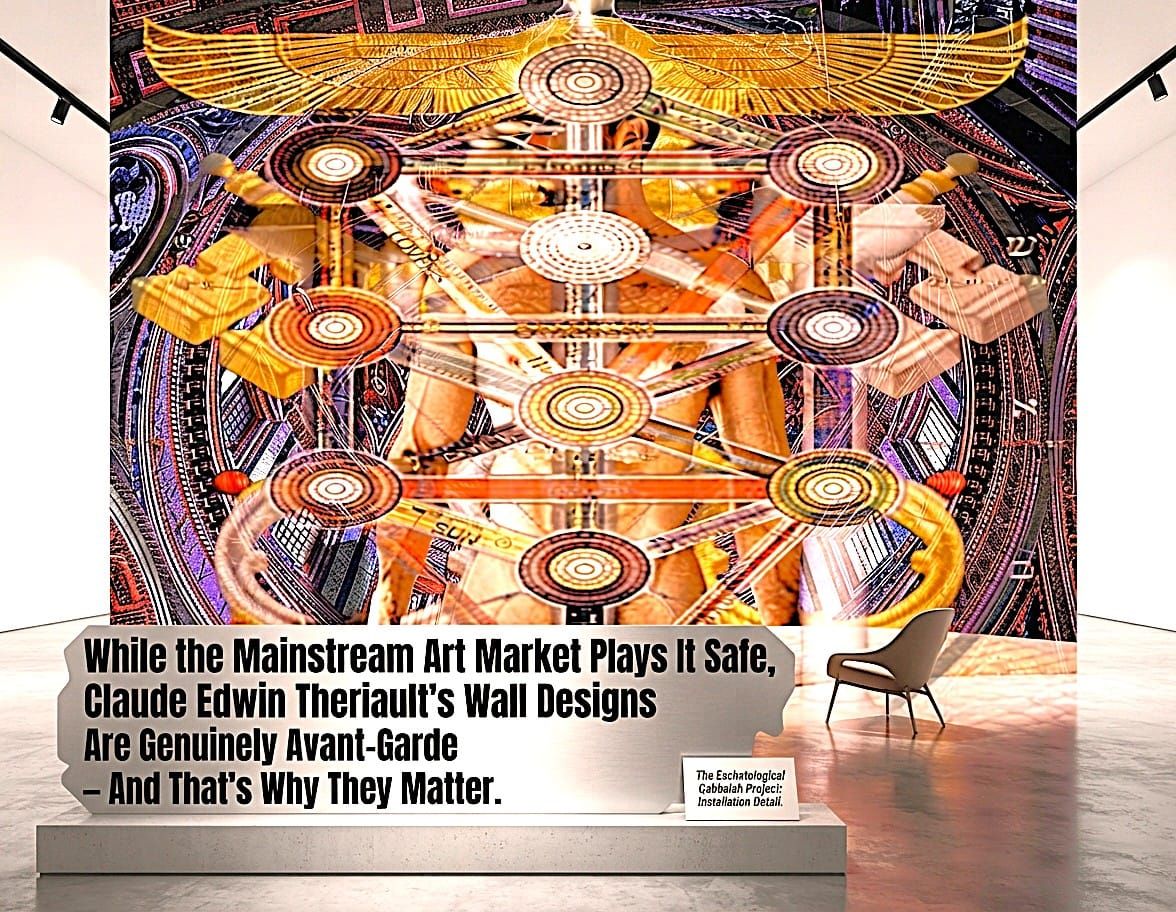
Contemporary art has a nostalgia problem. Walk a major fair or scroll a gallery's new-release wall, and the pattern repeats: familiar modernist quotation, safe figuration, and work that signals boldness in subject matter while borrowing its actual form from a century ago. Into that flattened field, French Canadian symbolist Claude Edwin Theriault keeps producing wall designs built from sacred geometry, Hermetic and Kabbalistic structure, and totemic form—work that isn't quoting the avant-garde, it's behaving like one. The gap between what the mainstream market calls bold and what Theriault is actually doing is the story.
The Mainstream Market Has Gone Conservative, and Serious Critics Are Saying So
The charge of creative stagnation isn't coming from outsiders sniping at the art world; it's coming from inside it. Writing in Harper's, critic Dean Kissick argued that much of acclaimed contemporary art is "progressive in content but conservative in form," pointing to painters working in historically derived, modernist-pastiche styles even as their subject matter reads as current. His complaint, which set off a genuine debate across art criticism, was that everyone wants to revive a tradition, however recent, and what's missing is anything actually inventive.
The market data backs up the mood. The Art Basel and UBS 2026 report on the global art market found capital retreating toward safety, with risk aversion concentrating higher prices in the most established segments while newer, riskier contemporary work lagged behind its estimates. Collectors are rewarding connoisseurship and provenance over genuine formal risk. That's a rational response to an uncertain economy, but it also means the market's incentives are currently pointed away from the kind of work that actually pushes a visual language forward—which makes the exceptions worth paying attention to.
What "Avant-Garde" Actually Requires—and Why So Little Wall Art Qualifies
The word gets used loosely, so it's worth being precise. Avant-garde art, as codified across art history, describes work that deliberately challenges a discipline's conventions and boundaries, uses experimental or unconventional technique, and provokes rather than reassures—a definition rooted in movements like Cubism and Dada that were, at the time, considered nearly unmarketable. The point isn't shock for its own sake. It's structural innovation: a genuinely new compositional system, not a familiar one wearing a current subject.
By that standard, most of what gets marketed as "bold" contemporary wall art doesn't clear the bar. Oversized scale, saturated colour, and an on-trend political reference—these read as contemporary without being formally new. The composition underneath is often borrowed wholesale from movements a hundred years settled. Genuine avant-garde work is rarer precisely because it requires building a compositional system from scratch rather than remixing an established one, and that's a much harder, slower thing to do than most market-facing art is built to sustain.
Theriault's Wall Designs Are Built From Scratch, Not Borrowed
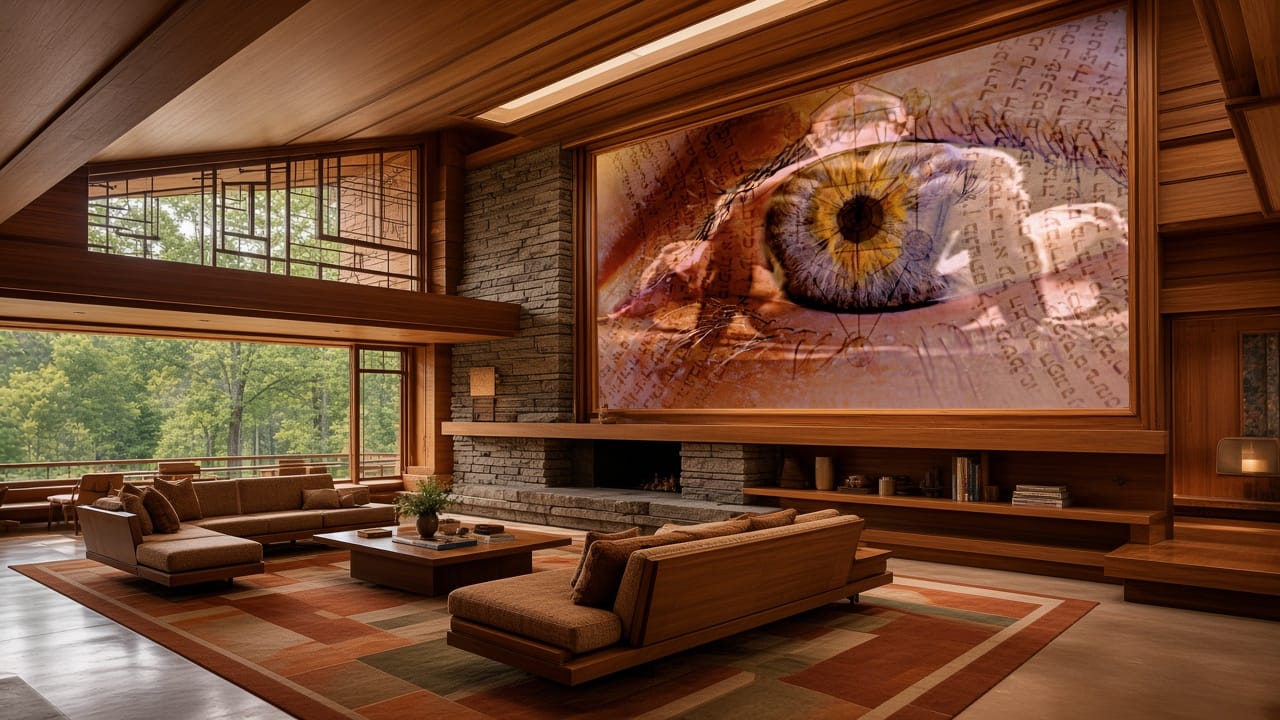
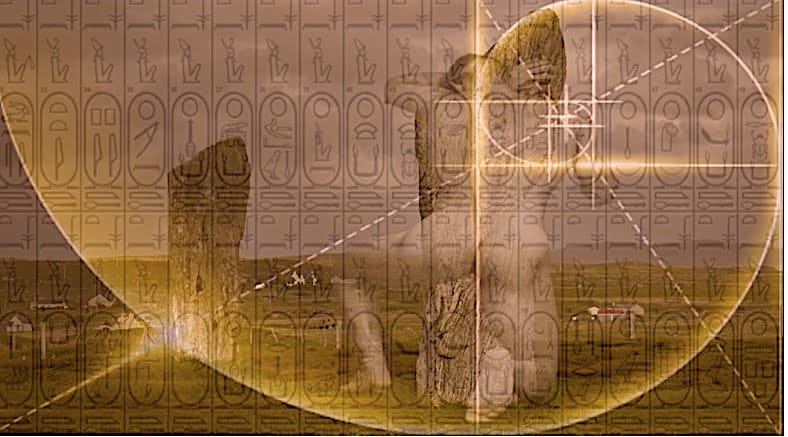
This is where Theriault's practice diverges from the pack. His compositions aren't modernist quotations with updated content—they're structured from sacred geometry, Vedic and Kabbalistic scaffolding, and hieroglyphic and totemic form, a system he has developed across five decades and more than 660 pieces in oil, digital, and mixed media. Coverage of his Hieroglyphic Consciousness series describes the work bluntly as "not polite wall décor," but a high-voltage convergence of sacred design symbolism, queer neurodivergent narrative, and mythic archetype—language that gestures at exactly the provocation and structural unfamiliarity avant-garde practice is supposed to carry.
Crucially, this isn't a pose adopted for the current market cycle. Theriault, a queer, neurodivergent artist working from Digby County, Nova Scotia—a traditionally conservative region—built this symbolic vocabulary as a matter of necessity, not marketing. The Akashic Records series and the Symbolic Male Nude series both use the same compositional logic: geometry as architecture for the image, not ornament layered on top of it. That's the difference between decoration that looks unconventional and a genuinely unconventional compositional system—and it's why the work reads as unfamiliar even to viewers steeped in contemporary art's current vocabulary.
Why This Actually Matters, Beyond One Artist's Catalogue
The stakes here go past a single practice. Coverage of Theriault's broader trajectory frames it as part of a larger saeculum shift—a move away from spectacle-for-spectacle's-sake and toward imagery that demands reflection and symbolic literacy from the viewer, which is precisely the corrective a nostalgia-locked market needs. When critics like Kissick diagnose contemporary art as formally conservative, the fix isn't more provocative subject matter grafted onto familiar technique—it's artists willing to build new structural systems, the way Theriault has with sacred geometry, and stick with them long enough for the system to mature.
That willingness extends into how Theriault works now. His ongoing use of AI as a compositional tool—building archetypal, collaborative work rather than using the technology as a novelty—has been described as a creative rebellion against a comfortable art-world status quo, extending the same structural-innovation instinct into new technical territory rather than resting on an established formal language once it starts to sell. For a market currently rewarding safety, an artist who keeps pushing the underlying system forward—on canvas, in mixed media, and now through AI—is exactly the kind of avant-garde practice it was originally coined to describe.
Frequently Asked Questions
Why is the mainstream contemporary art market being called conservative in 2026? Critics and market reports agree the market has grown risk-averse, rewarding historically derived techniques and established names over genuine formal experimentation, even when the subject matter reads as current or political.
What does "avant-garde" actually mean in visual art? It describes work that deliberately breaks with a discipline's conventions through experimental technique and structural innovation, not simply bold subject matter layered onto a familiar compositional style.
How is Claude Edwin Theriault's wall art different from typical "bold" contemporary pieces? His compositions are built from sacred geometry, Kabbalistic and Vedic structure, and totemic form as an original system developed over five decades, rather than modernist pastiche updated with current imagery.
Is Theriault's approach a recent trend response or a long-standing practice? It predates the current market cycle by decades. His symbolic vocabulary developed out of his identity and lived experience as a queer, neurodivergent artist, not as a reaction to what's currently marketable.
Where can collectors view or purchase Theriault's wall art? His full collection, spanning canvas, metal, acrylic, and wood, is available at pixels.com/profiles/claude-theriault, with worldwide shipping.
Citations
- The Painted Protest — Dean Kissick, Harper's Magazine
- Art Basel and UBS Global Art Market Report 2026 — Art Basel
- Avant-Garde — EBSCO Research Starters
- Institutional Curators and Neurodivergent Artist Theriault—Newstrail
- A Saeculum Shift in Modern Contemporary Artwork of Theriault—Newstrail
- Theriault's AI Art Movement: A Creative Rebellion in Progress—Modern Contemporary Artwork Trends