About this site
Who’s behind this?
Claude Edwin Theriault builds things himself, across whatever medium the idea actually needs—and doesn’t wait for anyone’s permission to start.
He’s a Nova Scotia-based Acadian multidisciplinary artist working at the unlikely intersection of traditional Acadian cultural storytelling, AI-assisted music and visual production, NFT and digital art, and sacred-design print work—four lanes that look unrelated until you notice the same person building all of them, alone, on his own terms, because no existing institution was ever going to greenlight the combination.
That’s not a sales pitch. It’s the actual throughline of this site.
The project this site exists to carry
The clearest example is Cajun Dead et le Walkin’ Stick—a book trilogy (the Blomidon Bayou series) and a companion film series built around an immortal Acadian folk figure whose walking stick carries a carved mark for every displaced child he’s accompanied across three centuries.
Its centerpiece film, Grand Pré—Gaza et le Enfants, pairs children expelled during the real 1755 Acadian Grand Dérangement with children displaced in Gaza’s 2025 crisis—both guided across both timelines by the same figure. It’s sung, not spoken, across four languages, built from twenty visual blocks where the song is always written first and the visual sequence is timed against the finished track afterward, never the other way around. Theriault, who is neurodivergent, designed the entire grammar around that constraint deliberately—no spoken dialogue anywhere, because he’s said conventional dialogue-driven storytelling was something he personally found exhausting to track, and he built the alternative for exactly the audience, including autistic and Asperger’s viewers, that conventional film grammar tends to leave out.
It moved forward with zero institutional heritage funding. Not because nobody asked—because a bilingual, sung, dialogue-free story pairing 1755 Acadia with 2025 Gaza fit no funding category any committee was set up to approve. So it got built without one.
Why the NFT work and the sacred-design prints live on the same site
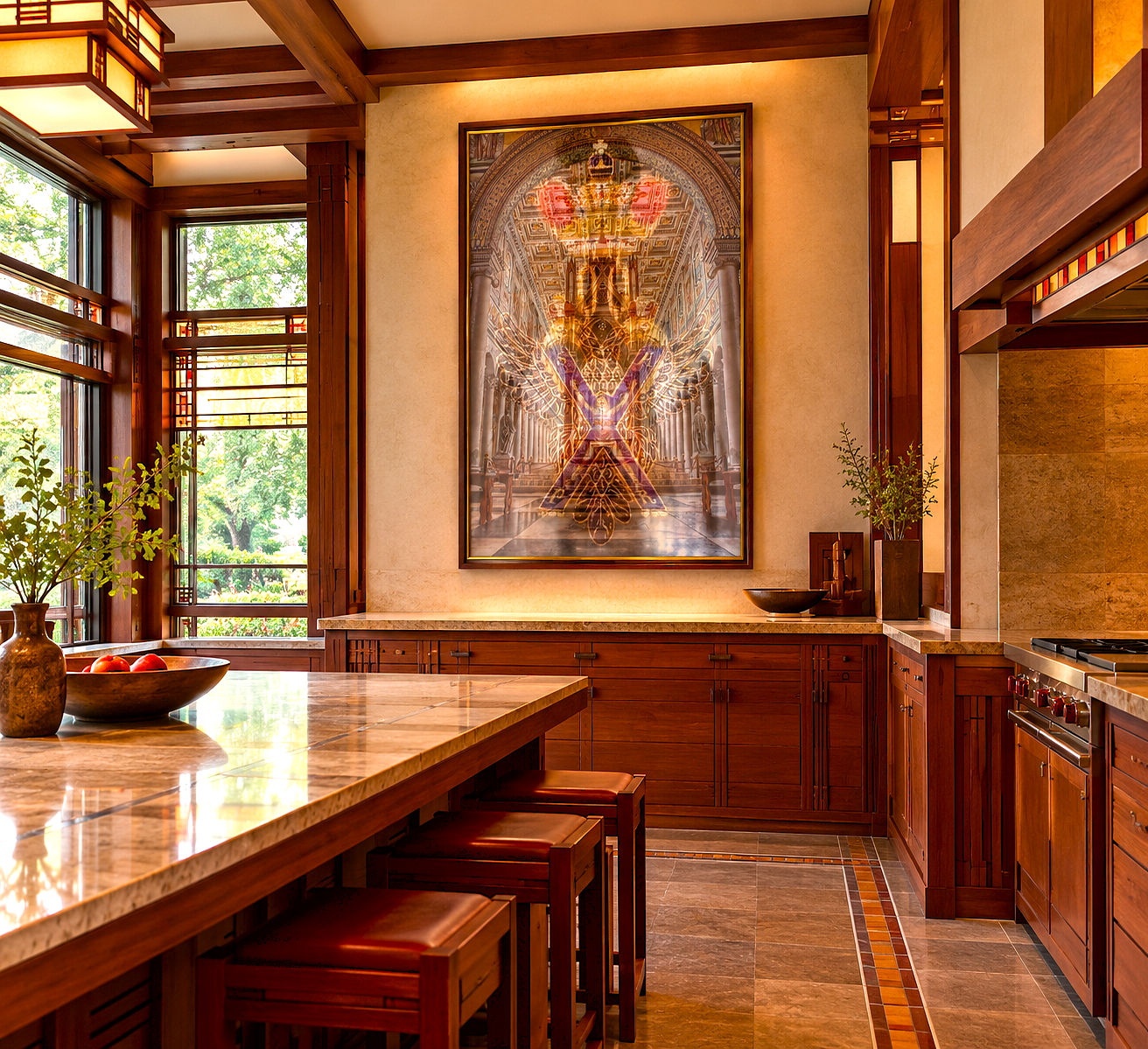
Because they come from the same instinct. The metaverse brand-logo collection, the print-on-demand talisman and sacred-design artwork, and the AI-assisted composition work behind the film’s score—none of it is a side hustle bolted onto the “real” work. It’s the same artist testing the same question across every medium available to him: what can get made and get in front of people without first convincing a gatekeeper it deserves to exist?
Sometimes the answer is a 578-piece OpenSea NFT collection. Sometimes it’s a sung film about two centuries of displaced children. Same method, different output.
What subscribing actually gets you
New essays and dispatches land here roughly every two days—tracking what’s actually happening in the global refugee and humanitarian crisis right now and which artists, musicians, and filmmakers are refusing to let it fade into background noise, alongside the ongoing Cajun Dead coverage and Theriault’s broader art and NFT work. Subscribe and it comes to you directly, with no algorithm deciding whether you see it.
If you want to see the rest of the practice: the OpenSea collection and the print-on-demand store are linked below, same artist, same instinct, different medium.