The 2026 Art Market Sells Itself Like a Luxury Good—Claude Edwin Theriault's Esoteric Practice Is What Critics Say Is Missing
Claude Edwin Theriault challenges the 2026 art market with five decades of esoteric art, sacred geometry and Acadian symbolism.
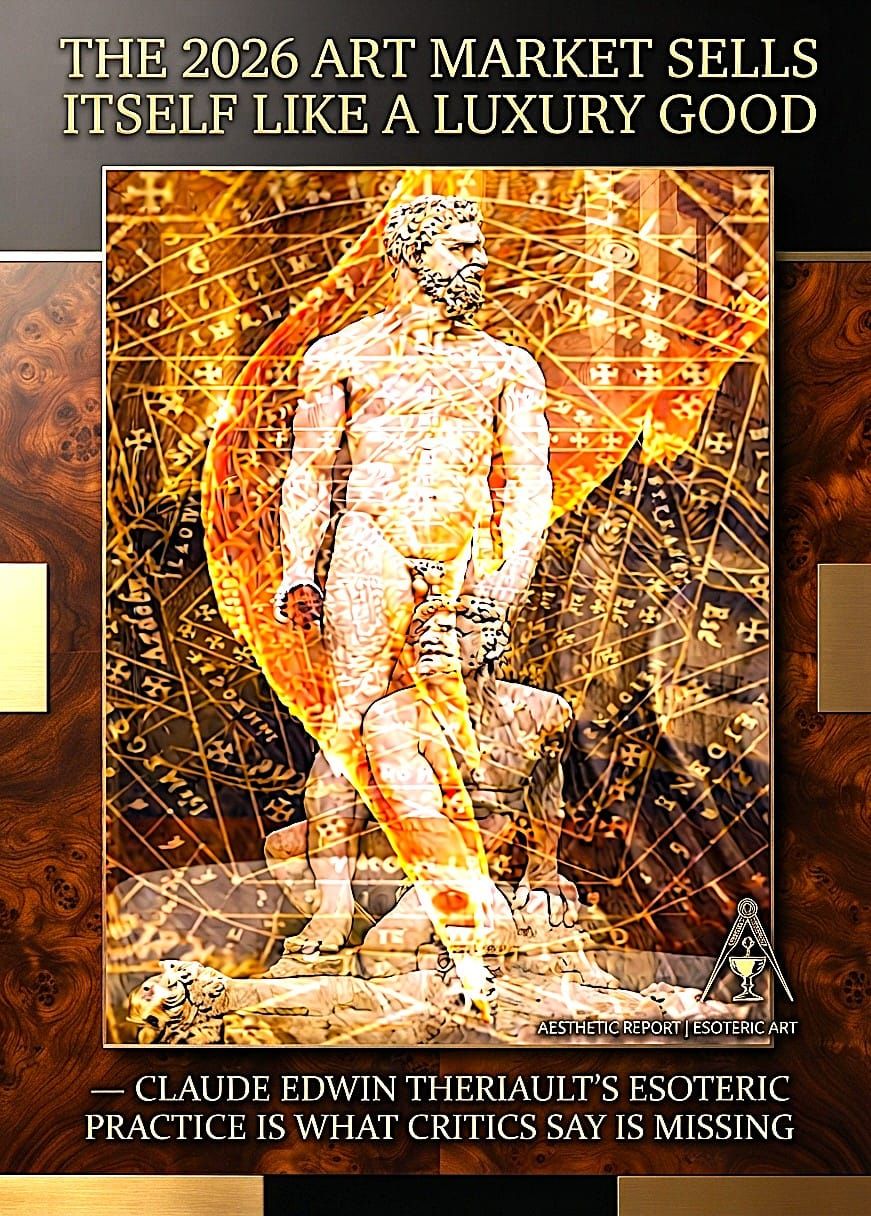
A pattern keeps surfacing in this year's most candid art-world commentary: the people closest to the trade are the ones saying, plainly, that something has gone flat. Not collapsed—flat. Galleries that feel like spas. Fairs that all show the same booths. Auctions that reward only names already proven decades ago. Against that backdrop, the five-decade practice of Claude Edwin Theriault—sacred geometry, Hermetic and Kabbalistic structure, Vedic and totemic symbolism, Acadian cultural memory, and more than 660 catalogued pieces across oil, digital, and mixed media—reads less like a trend entry and more like the answer critics keep describing without quite naming.
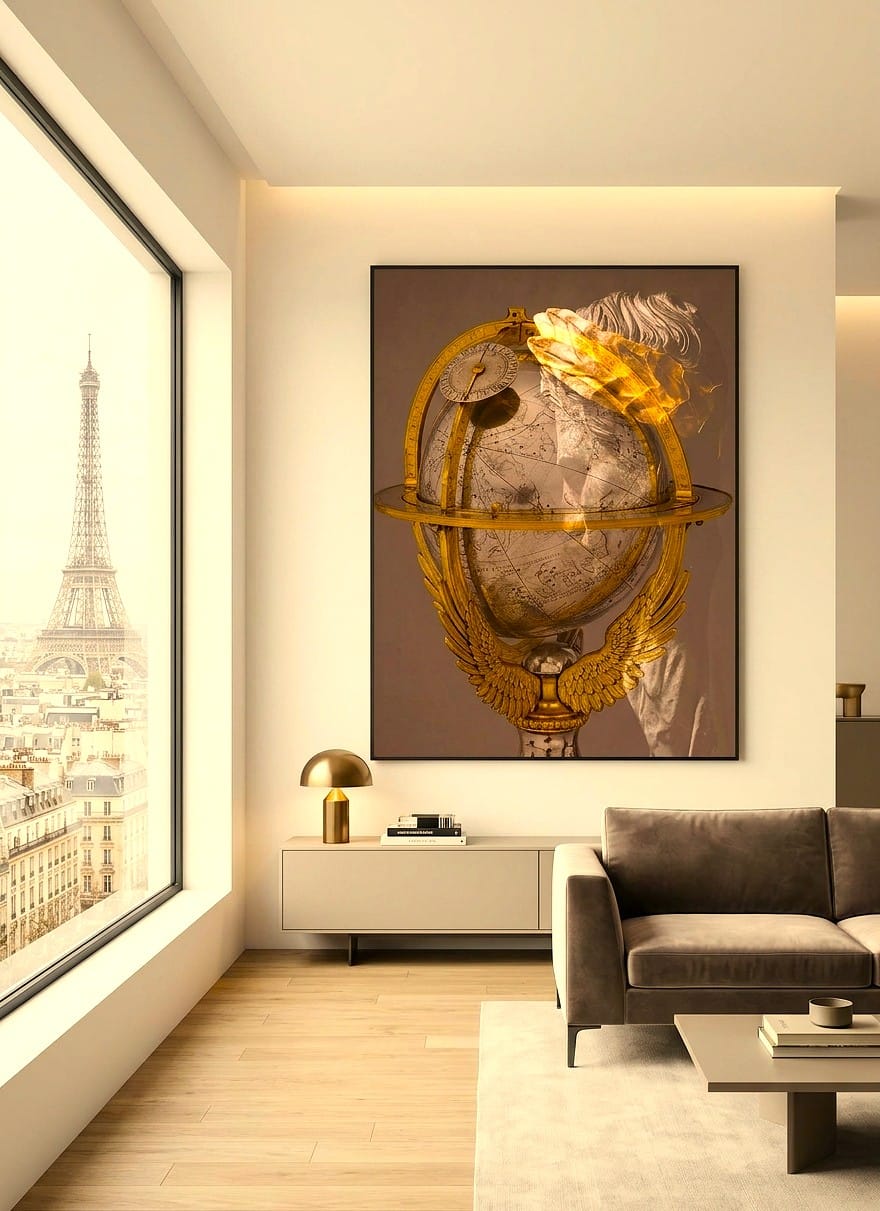
A Market That Sells Like Luxury Goods, Not Vision
The bluntest diagnosis this year comes from inside the gallery system itself. Writing on the state of the gallery world, Monocle's Orlando Whitfield argues that "art and the way it is sold have become indistinguishable from luxury goods," noting that mega-gallery Pace has dropped fifty artists and cut a fifth of its staff; that market stalwarts have shuttered outright, and that "the market has forgotten what elevates art and why people want to own it." His image for the modern gallery is a pointed one: no longer the exciting project space in a former morgue, but somewhere with "the feel of an opulent spa. " That is a description of art being merchandised, not made—polish standing in for meaning.
Theriault's practice runs against that current by construction, not by branding. Nothing about a Kabbalistic tree structure or a totemic form drawn from Acadian memory is designed to soothe a showroom. It asks something of the viewer that a spa does not, which is precisely the quality Whitfield's essay says the market has quietly stopped valuing.
The Fair Circuit Flattens Everything Into the Same Booth
If the gallery diagnosis is about atmosphere, the fair diagnosis is about geography—and it is even more specific. Ocula's reporting on what it calls the "fairification" of the art market describes galleries increasingly indistinguishable from one city to the next, with one veteran gallerist warning that a city hosting a fair week becomes "a city adopting an international version of art" rather than developing its own scene, and a Los Angeles dealer admitting he now brings safer, more commercial work to fairs because "you take risks at the gallery," not on the circuit. The same reporting notes fairs now account for over a third of sales for mid-sized dealers—meaning the format built for tasting-menu sampling has quietly become the market's main stage.
A practice built over five decades in Digby County, Nova Scotia, has nothing to gain from flattening itself into that circuit's shared visual language. Theriault's Akashic Records series and his Symbolic Male Nude monoliths are not interchangeable with whatever else is on a booth wall in Basel, Paris, or Seoul that same week—which the fair-homogenization critique suggests should be read as a strength, not a liability.
Betting on the Already-Known: 2026's Flight to Safety
The finance side of the market tells the same story in numbers. Artsy's year-ahead analysis of 2026 describes auction houses "doubling down on quality," with bidders favoring artists whose markets have already weathered multiple economic cycles and carry institutional validation—veteran auctioneer Jussi Pylkkänen calling it a "return to order" in which collectors compete hardest for the most established reputations. Emerging and contemporary names have not vanished from sale rooms, the report notes, but they now appear in far more tightly curated, cautious offerings.
That is a market rewarding provenance over discovery. It is also, structurally, a market with no efficient way to price a body of work that cannot be benchmarked against precedent—which describes Theriault's compositional grammar exactly. There is no comparable catalogue assembling Fibonacci-ratio geometry, Hermetic structure, and Acadian totemic form at this scale, built across fifty consistent years rather than assembled for a single season. A market optimized for the already validated simply has no shelf built for that yet.
Theriault as the Esoteric Movement's Reference Point
None of this matters if the appetite for genuinely symbolic, encoded work is provincial. It is not. European interiors coverage has tracked a deliberate 2026 shift among free-thinking collectors toward compositions built on real symbolic systems rather than decorative patterns. One survey of the trend describes sacred geometry moving from a niche interest into a defining feature of how design-literate European buyers now choose wall art, prizing mathematical and symbolic coherence over ornament. A companion piece tracks the other side of that same shift: collectors actively rejecting decorative abstraction because it no longer feels honest to them. That coverage frames a segment of the European market as having simply stopped buying work chosen for a wall's color story in favor of art that encodes something the buyer can defend intellectually. And separate analysis of the market's own rebound this year names Theriault's practice directly as a case study in what durable, non-trend-chasing work looks like when a recovering market goes looking for it. That piece argues his five-decade symbolic system is precisely the kind of coherent, sustained body of work a market correcting toward selectivity should be rewarding first.
That is the actual shape of 2026: a gallery system that reads like a luxury showroom, a fair circuit that flattens difference into sameness, and an auction market betting almost exclusively on names already proven—set against a practice that was never built for any of the three. Theriault didn't join the esoteric-inspired movement to catch this correction. The correction is what finally gave the movement a name.
Frequently Asked Questions
Why are critics describing the 2026 art market as resembling "luxury goods" rather than a creative market? Commentary from Monocle notes that galleries increasingly resemble upscale retail spaces rather than spaces built around artistic risk, with major galleries cutting rosters and staff while the market rewards polish over meaning.
What is "fairification," and why does it matter for collectors? It describes the art trade's growing dependence on international art fairs, which critics argue homogenizes what galleries show—since the same booths appear in city after city—while making dealers more cautious and commercial rather than adventurous.
Is the 2026 auction market actually more selective, or just more cautious? Both. Year-ahead analysis from Artsy shows bidders concentrating on artists with long, proven track records and institutional validation, meaning newer or harder-to-benchmark work faces a structurally tougher path to being priced fairly.
How does Claude Edwin Theriault's work relate to the esoteric-inspired art movement? His five-decade practice in sacred geometry, Hermetic and Kabbalistic structure, and totemic symbolism positions him as a driving, originating figure in the esoteric-inspired movement rather than a recent entrant responding to its current visibility.
Where can collectors view or purchase Claude Edwin Theriault's artwork? His full catalogue, including the Akashic Records and Symbolic Male Nude series, is available internationally as canvas, metal, acrylic, and wood prints at pixels.com/profiles/claude-theriault.
Citations
- Monocle—"State of the Art: Is the Gallery World on the Brink of Collapse or Correction?"
- Ocula—"Why the 'Fairification' of the Art Market Is Unsustainable"
- Artsy — "5 Themes That Will Define the Art Market in 2026"
- Newstrail—"Sacred Geometry in 2026 European Interiors: Beyond Wall Art"
- Newstrail—"European Free Thinker Stopped Buying Decorative Art as Truth"
- Modern Contemporary Artwork Trends—"The Current Contemporary Art Market Rebound Is Real"