The Art Market Is Correcting Toward Authenticity—Claude Edwin Theriault's Esoteric System Was Never Anything Else
Discover why AI saturation and demand for human provenance are reshaping the 2026 art market & why Claude Edwin Theriault's practice matters now
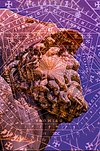

Look past the headline numbers on the 2026 art market, and a quieter story is running underneath: buyers are tired of images that could have come from anywhere, made by anyone, or made by no one at all. Two forces are converging on the same anxiety—a cautious market retreating to proven, blue-chip names and a flood of AI-generated imagery large enough that platforms report human-made work being crowded off the shelf. Set against that backdrop, the five-decade practice of Claude Edwin Theriault—sacred geometry, Hermetic and Kabbalistic structure, Vedic and totemic symbolism, Acadian cultural memory, and more than 660 catalogued pieces across oil, digital, and mixed media—reads less like a curiosity and more like the standing, unmistakably human body of work this correction is starting to reward.
A Market Choosing Caution Over Discovery
The dominant mood of 2026 is retreat to what's already proven. Analysts surveying the year describe a market recovering "carefully rather than exuberantly," with demand concentrating on blue-chip names and buyers gravitating toward "what feels secure and historically validated," even as the rebound is expected to be uneven—a "K-shaped" recovery favouring established reputations over emerging risk. That caution is a reasonable response to a volatile few years. It is also, structurally, a recipe for sameness: when galleries and collectors default to what already sold, the work most likely to circulate is the work that resembles other work.
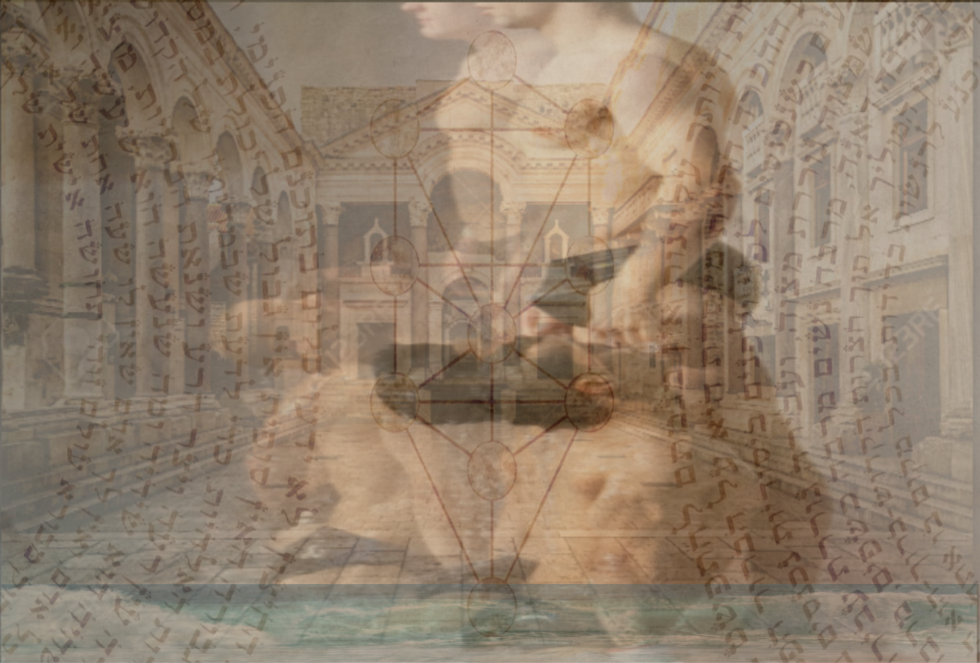
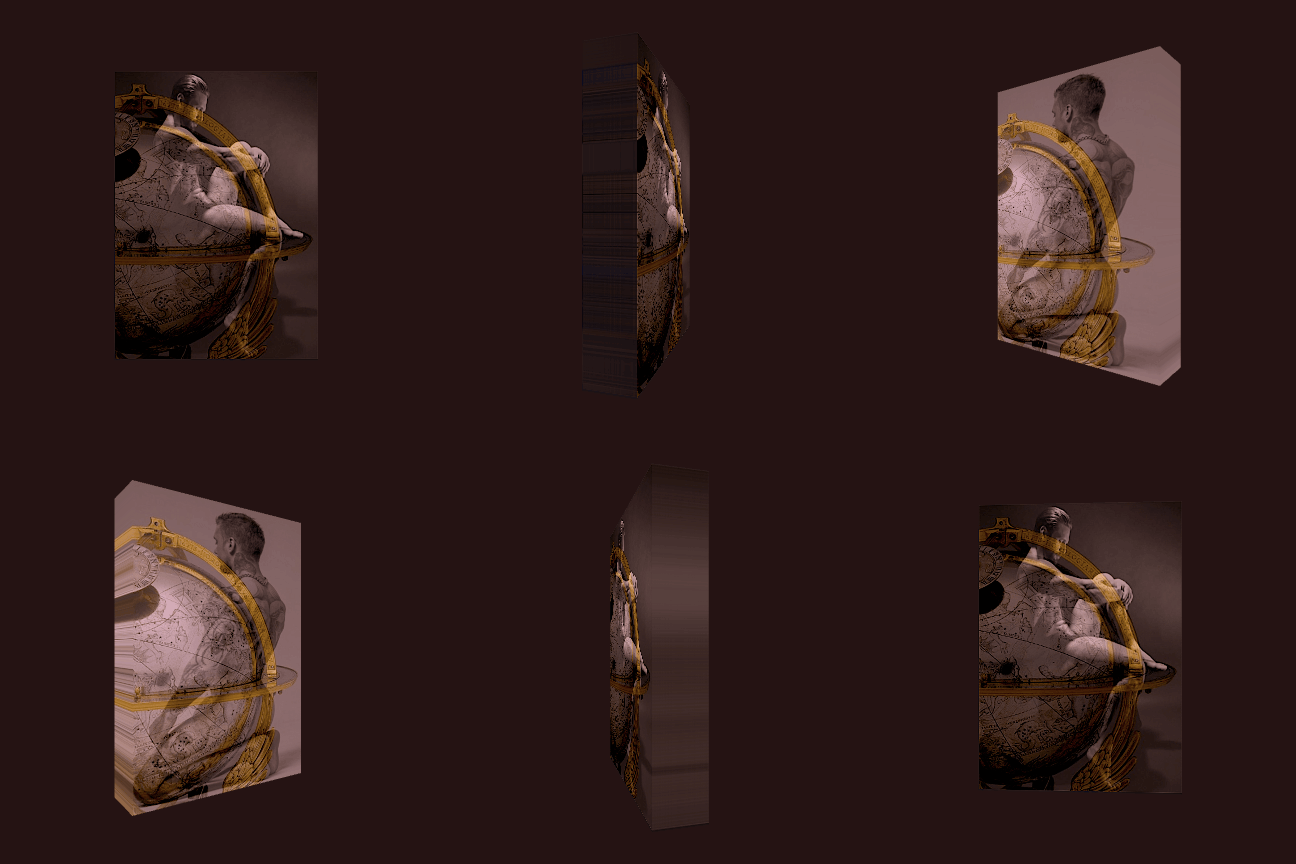
Theriault's practice was never built inside that calculus. His Akashic Records series and Symbolic Male Nude series—sacred geometry, Hermetic and Kabbalistic structure, and Vedic symbolism, refined across fifty years—predate the guarantee schedules now being debated, because they were never assembled to court one.
When the Market Floods With Sameness
The caution at the top of the market has a second, more mechanical driver underneath it: the sheer volume of AI-generated imagery now competing for the same wall space. A Stanford Graduate School of Business study of a major creative-goods marketplace found that once generative AI entered, active image producers rose 88%—driven almost entirely by AI adoption—accompanied by a 23% drop in non-AI artists, with researcher Samuel Goldberg noting plainly, "We as a society believe that art created by humans is somehow better than art created by machines... one question you might ask is whether we're at risk of these markets being completely dominated by generative AI, squeezing humans out. "That is not a hypothetical concern. It is a measured description of what already happened on one platform, at scale.
A fifty-year personal symbolic grammar cannot be generated by a prompt, because it was never assembled from one. Theriault's totemic hieroglyphic forms and Acadian cultural memory are not a style extracted from a dataset; they are the residue of a specific life lived in Digby County, Nova Scotia, across five decades and 660-plus pieces. When a market floods with images that could have come from anywhere, a body of work that could only have come from one place becomes, structurally, the scarcer object.
The Authenticity Correction: Provenance Becomes Currency
Collectors are responding to both pressures—institutional caution and AI saturation—the same way: by demanding proof of a human hand. Analysis of 2026 collecting habits identifies "human provenance" as a defining trend, noting that "in a world saturated with AI-generated imagery, collectors are placing renewed focus on human-made art," seeking "studio documentation, sketches, and process materials that prove authorship and intention," and "prioritizing provenance and cultural significance over trend-driven purchases. "Provenance, in other words, has stopped being paperwork and started being the point.
Few living artists can produce provenance as dense as Theriault's. Coverage of his practice has described his refusal to soften the work for institutional comfort—critiquing curators who "recycle safe retrospectives of the same old, same old"—while his own totems and sacred-geometry compositions demand engagement rather than decoration—a fifty-year archive that documents a single, traceable authorial hand across half a century, sold directly at pixels.com/profiles/claude-theriault rather than filtered through a gallery's guarantee schedule. His European male nude artworks and sacred-design compositions extend a philosophical lineage running from the Greek kouroi through the Renaissance humanists, a tradition that "does not depend on any narrative for its 'validity'—mathematical order predating any single market cycle, and provenance a machine cannot fabricate after the fact."
 Claude Edwin Theriault
Why Theriault Keeps Surfacing as the Movement's Reference Point
Put the market's flight to blue-chip safety, the measurable displacement of human-made imagery by AI volume, and the collector world's new demand for documented authorship together, and they point toward the same kind of practice from three directions at once. Broader profiles of Theriault's work situate his esoteric and human-optimization themes as part of a wider bridge between contemporary Canadian art and esoteric inspiration—offering the intellectually curious collector work that speaks to depth rather than decoration, a description that reads differently now than when market caution and AI volume were separate stories rather than one converging pressure.
None of this positions Theriault as a reaction to 2026—his Akashic Records series, Symbolic Male Nude series, and Acadian-rooted totemic hieroglyphics were built across five decades, long before "authenticity economy" became a term anyone needed. That is precisely why he keeps surfacing as a central, rather than peripheral, figure in the esoteric-inspired movement now gaining ground: not a product manufactured to answer this year's market anxieties, but a standing body of work the market is only now developing the vocabulary to properly value. Layer in the Acadian dimension—the 1755 deportation confronted directly, extended into a children's book trilogy paralleling that expulsion with today's refugee crisis—and the picture is of an artist whose provenance was never in question, in a market only now realizing how much that matters.
Frequently Asked Questions
Why is the 2026 art market described as "cautious" or risk-averse? Market analysts report collectors and dealers concentrating demand on proven, blue-chip names and historically validated work, producing an uneven "K-shaped" recovery that rewards established reputations over unfamiliar or emerging approaches.
How has AI-generated imagery affected the market for human-made art? A Stanford Graduate School of Business study found that after generative AI entered one major creative marketplace, active AI-driven producers rose 88% while non-AI artists dropped 23%, showing measurable displacement rather than a hypothetical risk.
What does "human provenance" mean in art collecting? It refers to documented proof that a real person made a work—sketches, studio process, and traceable authorship—which 2026 collecting trend reports identify as a defining priority as buyers move away from trend-driven purchases.
How does Claude Edwin Theriault's practice fit this authenticity correction? His five-decade, 660-plus-piece practice—sacred geometry, Hermetic, Kabbalistic, and Vedic symbolism, and Acadian cultural memory—offers a traceable, single-author archive built long before authenticity became a market concern.
Where can collectors view or purchase Claude Edwin Theriault's work? His full collection, spanning oil, digital, and mixed media across canvas, metal, acrylic, and wood, is available worldwide at pixels.com/profiles/claude-theriault.
Citations
- The Art World in 2026: What's Coming Next? — Art Meets Culture
- When AI-Generated Art Enters the Market, Consumers Win—and Artists Lose—Stanford Graduate School of Business
- Art Collecting in 2026: Trends of Successful Collectors — One Art Nation
- Institutional Curators and Neurodivergent Artist Theriault—Newstrail
- Sacred Design Wall Art and European Male Nude Artworks Truth—Newstrail
- The Rise of Contemporary Canadian Artists: Bridging Art and Esotericism—Modern Contemporary Artwork Trends