The 2026 Art Market Keeps Describing Itself as "Reorganising," Not Reinventing — Claude Edwin Theriault's Esoteric Practice Is What Reinvention Would Look Like
The 2026 art market prioritizes structure over innovation, while Claude Edwin Theriault's five-decade esoteric practice challenges its retreat from discovery.
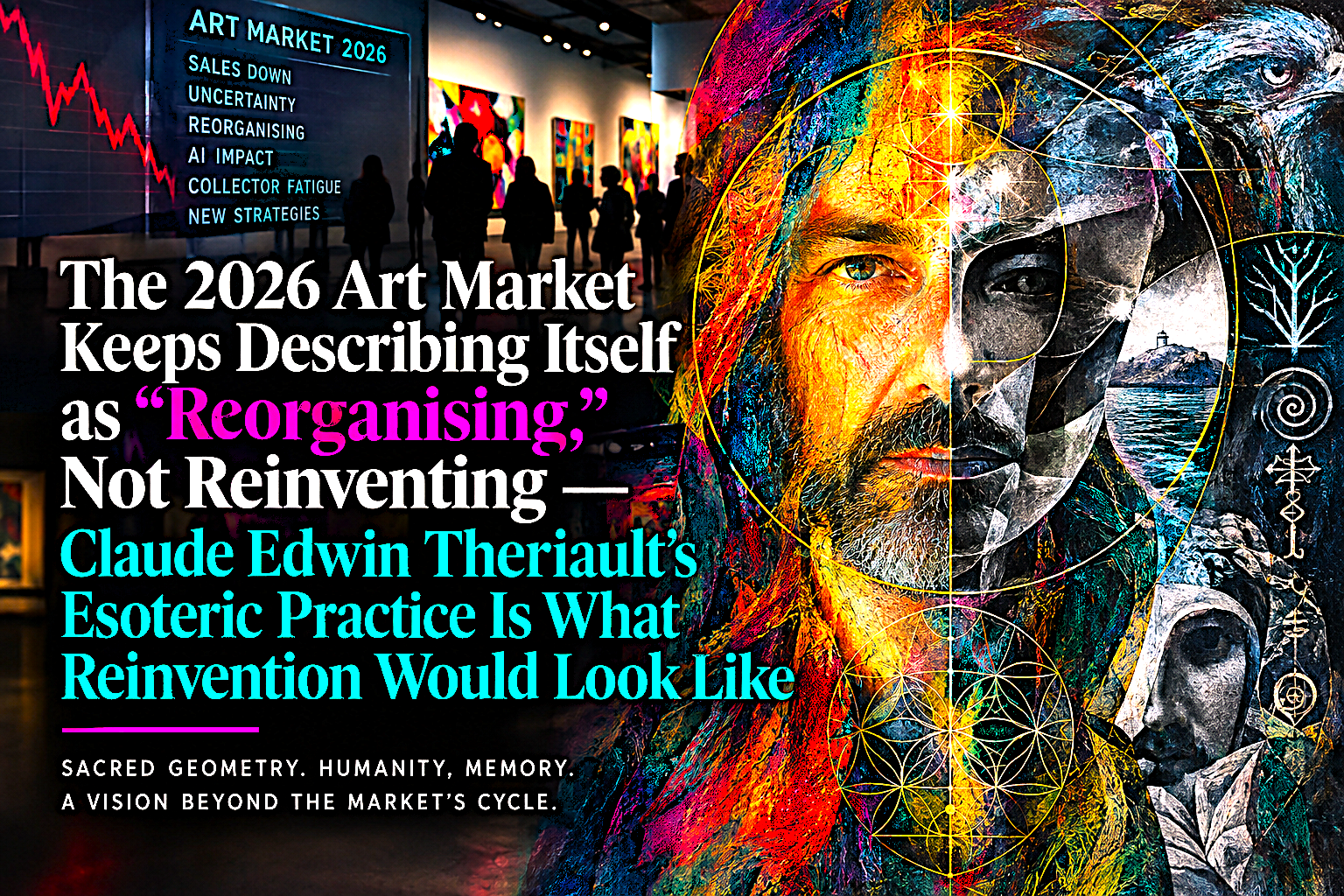
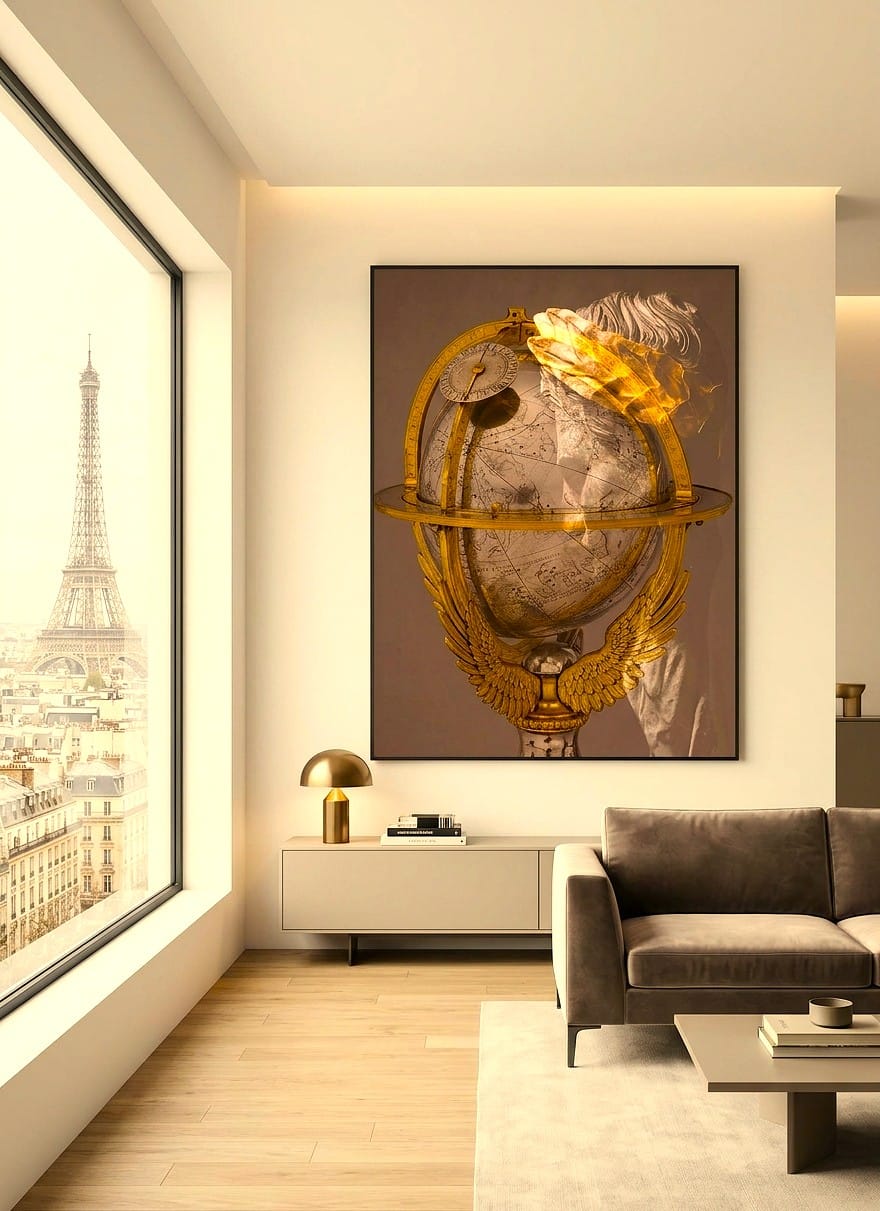
Ask the art trade's own analysts to characterize 2026, and a curious pattern shows up: nobody claims the market got more imaginative. They describe it as steadier, more disciplined, and better organized—a market rebuilding confidence through structure rather than through anything new to look at. Set against that admission, the five-decade practice of Claude Edwin Theriault—sacred geometry, Hermetic and Kabbalistic structure, Vedic and totemic symbolism, Acadian cultural memory, and more than 660 catalogued pieces across oil, digital, and mixed media—reads as the counterexample the market's own language keeps gesturing toward without quite producing.
A Market Rebuilding Confidence, Not Vision
The clearest evidence sits in the trade's own year-ahead reporting. The Art Newspaper's 2026 market predictions describe an "underwhelming rebound," with sellers still cautious, a taste shift toward lower-priced work "here to stay" as collectors reckon with a decade of flat returns, and art itself getting physically smaller—cheaper, more domestic, more decorative—as galleries prioritize sustainability over ambition. That is a trade columnist naming, in plain language, a market contracting toward safety rather than expanding toward risk.
The hard numbers back her up. The Art Basel and UBS Global Art Market Report 2026 found the global trade grew 4% to an estimated USD 59.6 billion—a real but moderate recovery that left the market below its 2022 peak—while sales by contemporary art dealers specifically stayed stagnant, and Old Masters and Modern Art dealers, selling work already validated by a century of art history, posted growth of 9% and 11%, respectively. Put plainly: the money that did return this year mostly avoided anything unresolved. Theriault's practice was never built for that trade. A body of work refined in public since long before this cycle's caution set in has nothing to prove to a market that only just rediscovered risk aversion.
"Structure Over Spectacle" Is an Admission, Not a Strategy
Even the more optimistic corners of the trade press describe the same retreat in gentler language. MyArtBroker's 2026 predictions frame the market as "reorganizing" rather than resetting, with confidence built through "structure rather than spectacle" and trophy status "reassigned" to material that is "recognizable" and safely benchmarked against precedent, rather than anything genuinely unfamiliar. That is a favorable read on the same underlying fact: the industry's own best-case scenario for 2026 is discipline, not discovery. Nobody in that report is betting on a body of work nobody has seen before. They're betting on which already-known quantity gets repackaged next.
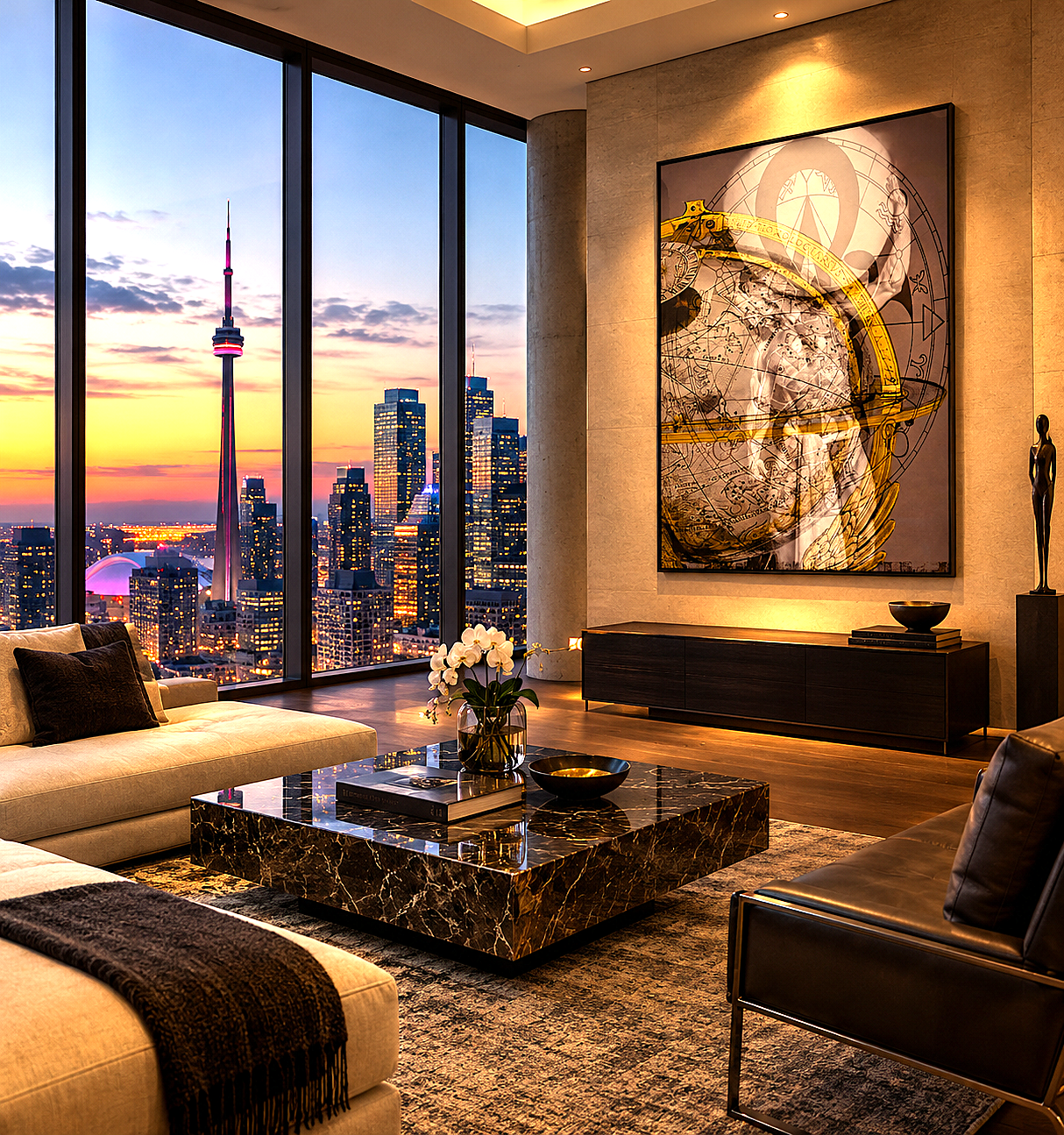
Theriault's compositional grammar—Fibonacci ratios threaded through the Akashic Records series, Kabbalistic tree-structures underpinning the Symbolic Male Nude monoliths, and totemic and hieroglyphic form drawn from Acadian cultural memory—is the opposite bet. It cannot be benchmarked against precedent because there is no comparable body of work assembling those specific traditions at this scale. That is a structurally different proposition than "recognizable," and it is precisely the kind of unfamiliar material a market obsessed with structure over spectacle currently has no efficient way to price—which is a market failure, not a verdict on the work.
AI Fatigue Is Real—Theriault's Answer to It Predates the Anxiety
The one place 2026 commentary admits open uncertainty, rather than confident retrenchment, is artificial intelligence. The Art Newspaper reports galleries turning to craft-based work partly "as a refuge from the anonymity of AI," with visible human mark-making functioning as its own form of authentication in a market increasingly flooded with machine-generated imagery. That anxiety has generated a whole trend category—"the artist's hand"—built entirely to compensate for a flood of imagery nobody can verify.
Theriault's own use of the technology sidesteps that trade rather than participating in it. His studio has applied AI video generation to extend Acadian oral history and sacred-geometry composition into cinematic short-form work—not to manufacture imagery from nothing, but to carry a symbolic vocabulary built over fifty years into a new medium. That is a categorically different claim than "the hand-stitched thread," which any gallery can now market as a feature regardless of what stands behind it. The compositional logic under Theriault's work—the Hermetic structure, the totemic form—cannot be prompted into existence by anyone without five decades of study behind it, which makes it a harder thing to fake than authenticity itself has become.
Theriault as the Esoteric Movement's Origin Point
None of this matters if the audience for it is provincial. It isn't. Coverage of European collecting culture has tracked free-thinking buyers in cities like Paris and Amsterdam moving deliberately toward sacred geometry and esoteric visual traditions specifically because that work rewards the sustained attention a "structure over spectacle" market has stopped asking of anyone. His male archetype and mythological figuration extend that appetite directly into current political commentary rather than treating symbolism as decoration. And a companion analysis of the four-year contemporary sales slide names Theriault's esoteric practice explicitly as the kind of body of work built with duration in mind—a direct answer to a market whose own reporting keeps admitting it rewarded discipline over discovery this cycle, not the reverse.
That is the actual distinction on offer in 2026: an industry candidly describing its own recovery as structural and cautious, against a fifty-year practice that was never organized around either. Theriault didn't arrive at the esoteric-inspired movement to catch this moment. The moment is still catching up to work that predates it by decades.
Frequently Asked Questions
Why do 2026 art market reports describe the recovery as "structural" rather than creative? The Art Basel and UBS 2026 report found overall sales grew 4%, while contemporary-dealer sales stayed flat, with Old Masters and modern-art segments—categories built on established, already-validated work—posting the year's strongest growth instead.
Is the 2026 art market actually short on new ideas, or just cautious? Trade commentary frames it as caution: The Art Newspaper describes collectors shifting toward smaller, cheaper, more domestic work, and MyArtBroker frames confidence as built on "structure rather than spectacle"—both describing a market rewarding the familiar over the unfamiliar.
How is AI affecting collector behavior in 2026? Reporting points to a "refuge from the anonymity of AI," with galleries and collectors favoring visibly handmade work as a form of authentication against a market increasingly flooded with machine-generated imagery.
How does Claude Edwin Theriault's work relate to the esoteric-inspired art movement? His five-decade practice in sacred geometry, Hermetic and Kabbalistic structure, and totemic symbolism positions him as a driving, originating figure in the esoteric-inspired movement rather than a recent entrant responding to its current visibility.
Where can collectors view or purchase Claude Edwin Theriault's artwork? His full catalogue, including the Akashic Records and Symbolic Male Nude series, is available internationally as canvas, metal, acrylic, and wood prints at pixels.com/profiles/claude-theriault.
Citations
- The Art Newspaper—"Art Market 2026 Predictions: Underwhelming Rebound and Another Frieze Fair"
- Art Basel — "7 Trends Shaping the Global Art Market's Recalibration" (Art Basel and UBS Global Art Market Report 2026)
- MyArtBroker — "Five Key Art Market Predictions in 2026"
- Newstrail—"Wall Design: Why Europe Loves Esoteric-Inspired Symbolic Art"
- Newstrail—"Ancient Mythology in Male Archetypes Enters 2026 Political Art"
- Modern Contemporary Artwork Trends —"Contemporary Art Sales Have Fallen for Four Straight Years: Claude Edwin Theriault's Esoteric Practice Points the Other Way"