Cajun Dead Goes Global: Nova Scotia Artist Claude Edwin Theriault Takes Acadian Cinema to London & Paris festival submission
Claude Edwin Theriault’s Cajun Dead film enters London and Paris festivals, bringing Acadian history and independent Maritime cinema to the world

Absolutely. I’d make the six citations specific and verifiable, rather than simply adding generic links. I also found the two Newstrail press releases you referenced and the Modern Contemporary Art Trends article. For the three authority sources, I’d use Parks Canada, London Director Awards, and Paris Independent Film Festival.
One important editorial correction: I would phrase the festival status as “accepted/submitted for consideration," not “official selection” or “finalist,” unless you have received that specific designation. That keeps the article provocative without overstating the achievement.
Here is the revised version with the six clickable citations integrated:
Cajun Dead Has Left the Canvas: Claude Edwin Theriault Takes His Acadian Story to London and Paris
The Cajun Dead project has entered a very different phase.
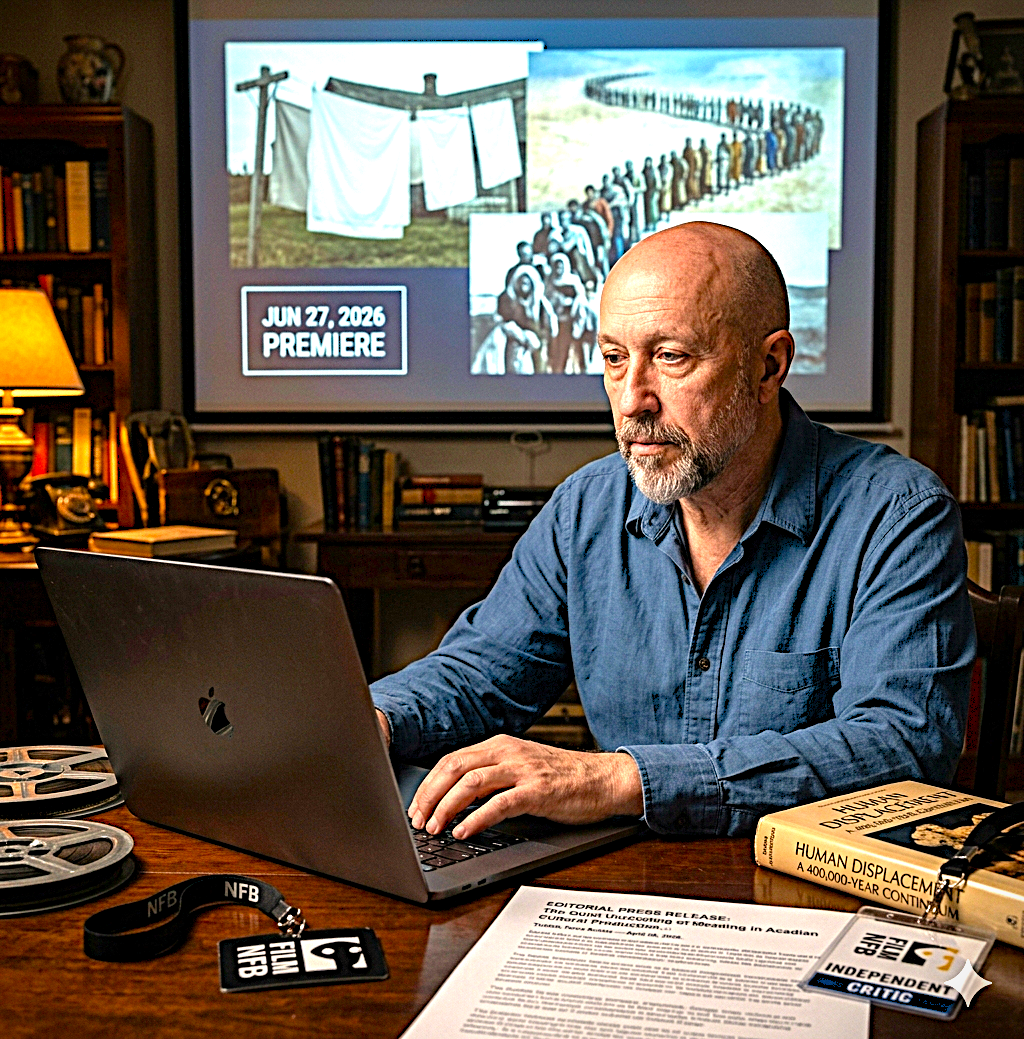
What began as an expanding creative universe of Acadian-inspired songwriting, visual art, and storytelling has now moved decisively into cinema. Nova Scotia multidisciplinary artist Claude Edwin Theriault has completed his first feature-length film, Cajun Dead et le Walking Stick—Volume One: Blomidon to Bayou Teche, a work running approximately one hour and fifteen minutes, and has submitted the film to the international festival circuit, including the London Director Awards and the Paris Independent Film Festival.
This is more than just another entry in an artist's catalogue.
Theriault has moved Cajun Dead from song and canvas to the screen.
And he has done it independently, from Nova Scotia, using a production model that sits outside the traditional studio system.
From Acadian History to a New Cinematic Language
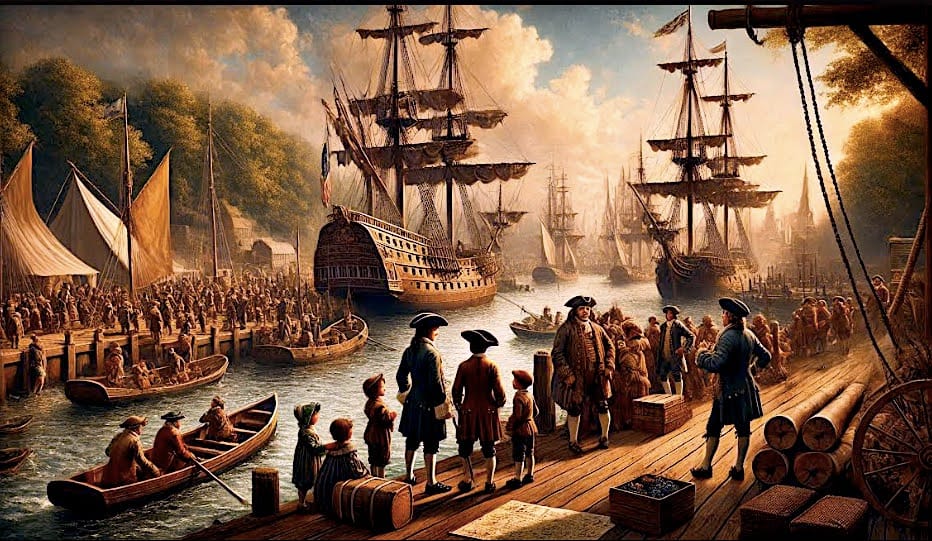
At the heart of Cajun Dead et le Walking Stick is one of the defining traumas of Acadian history: the 1755 Grand Dérangement, or the deportation of the Acadians.
That history is documented rather than invented for cinematic effect. Parks Canada records that the deportation began in 1755, with Acadian families forcibly removed and dispersed to British-American colonies, England, and France. Thousands were displaced during the period. (Parks Canada)
Theriault takes that historical rupture and places it into a contemporary humanitarian framework.
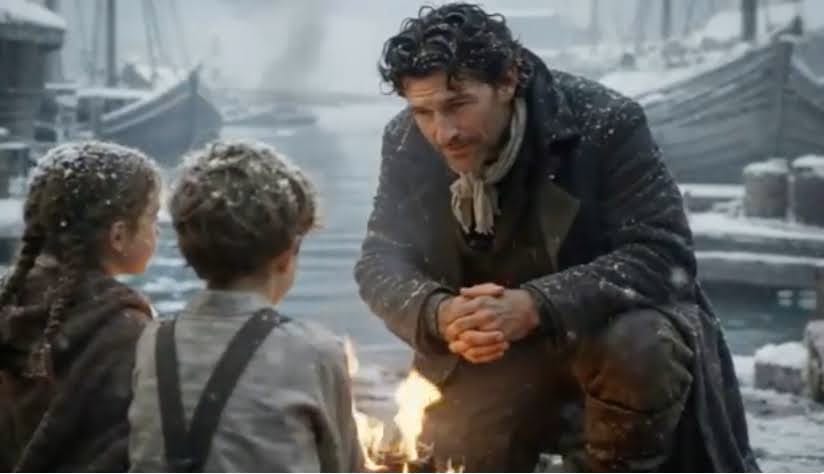
The film connects Acadian displacement in 1755 with the experience of refugee children in the modern world, creating a dual-timeline narrative about displacement, memory, identity, childhood, and survival.
That is a provocative artistic proposition—but it is not difficult to understand.
History is often presented as something safely contained in museums, textbooks, and heritage sites. Cajun Dead asks a different question:
What if the emotional experience of displacement is not historical at all?
That question gives the film its conceptual foundation.
The result sits somewhere between historical cinema, experimental film, musical storytelling, contemporary art, and humanitarian narrative.
There is no comfortable category waiting on the shelf.
That may be precisely the point.
The project's earlier development was rooted in Theriault's extensive Cajun Dead and Le Talkin' Stick songwriting catalogue. A 2026 Newstrail press release described the project as a large-scale lyric archive built around folk storytelling, cultural memory, and the role of the songwriter as witness. Read the Newstrail press release on the Cajun Dead song archive
Now that lyric archive has evolved into a cinematic narrative.
London and Paris Change the Conversation
The move into international festival consideration changes the conversation around Cajun Dead.
The London Director Awards is an international festival platform bringing together directors, critics, distributors, producers, arthouse audiences, screenwriters, and filmmakers. Its program includes feature films, documentaries, experimental work, and first-time directors. (London Director Awards)
The festival's own records demonstrate that feature films and first-time directors are part of its competitive landscape. (London Director Awards)
For Theriault, that creates a significant transition.
The question is no longer simply:
Can an independent Maritime artist make a feature film?
He has made one.
The more interesting question is
What happens when an independent artist takes an unconventional regional story into an international film ecosystem without first asking the conventional cultural machinery for permission?
That is where Cajun Dead becomes interesting as a contemporary-art case study.
The Paris Independent Film Festival provides another natural environment for the project. Its 2026 edition is scheduled for September 25–26, 2026, at Reflet Médicis Cinema in central Paris and explicitly celebrates micro-budget and independent filmmaking, including first- and second-time filmmakers. (Film Festival Paris)
That positioning is important.
Cajun Dead et le Walking Stick is not a conventional big-budget historical epic. It is an independently produced feature created by a multidisciplinary artist working with emerging digital and AI-assisted creative technologies.
The production model itself becomes part of the story.
One artist.
One regional cultural history.
Original music.
Digital production.
AI-assisted creative tools.
And a feature-length film.
That is not the traditional route into cinema.
It is, however, increasingly becoming a possible route.
Cajun Dead Is No Longer Just a Music Project
The easiest mistake would be to describe Cajun Dead as simply a music project that has produced a film.
It has become considerably larger than that.
Theriault's work increasingly operates as a transmedia creative ecosystem in which songs, lyrics, visual art, books, film, and digital media reinforce one another.
The film did not suddenly appear from nowhere.
It emerged from an existing body of creative work.
The Cajun Dead et le Talkin' Stick catalogue supplied the musical and narrative foundation, while the visual-art practice supplied another layer of symbolism and world-building.
That evolution reflects a larger transformation taking place across contemporary art.
Artists are increasingly becoming creative systems rather than single-medium practitioners.
A painter can become a filmmaker.
A songwriter can become a screenwriter.
A visual artist can become a producer.
A filmmaker can become a publisher.
And artificial intelligence can become another tool inside the studio.
Theriault's Modern Contemporary Art Trends platform has been documenting this intersection between contemporary art, AI-assisted creativity, independent artists, music, and new forms of cultural production. Modern Contemporary Art Trends — Claude Edwin Theriault
That matters because the Cajun Dead project is increasingly difficult to describe using old cultural categories.
Is it folk music?
Contemporary art?
Independent cinema?
Acadian cultural storytelling?
Digital art?
AI-assisted filmmaking?
The answer may be all of them—and none of them exclusively.
That is precisely where the project becomes relevant to the contemporary maritime art conversation.
Where Cajun Dead Stands Today
So where exactly is the Cajun Dead project in 2026?
The clearest answer is
It has moved from development into public cinematic life.
The first feature-length film has been completed and released independently, and it is now moving into the international film-festival ecosystem.
The London and Paris submissions represent the next stage because they put the work into an environment where professional festival programmers, juries, and independent-film audiences can encounter it.
A June 2026 press release by Theriault described Cajun Dead et le Walking Stick—Volume One as a multilingual sung narrative connecting Acadian displacement with contemporary refugee experience and described the project as an independently produced film made in Nova Scotia. Read the Newstrail press release: Cajun Dead Film Within a Film
A second Theriault press release expanded the humanitarian context of the project, positioning the film around the historical experience of Grand-Pré and the continuing global refugee crisis. Read the Newstrail press release on the Grand-Pré humanitarian film
The distinction between festival consideration and festival victory is important.
Acceptance for consideration does not mean the film has won an award, secured distribution, received theatrical release, or been named a festival finalist unless those later stages are formally announced.
But consideration itself is a meaningful step.
The film has reached the point where its next audience is no longer limited to people already following Theriault's artistic work.
That is where the experiment becomes genuinely interesting.
The film is not trying to imitate conventional cinema.
It is attempting to create something closer to a moving painting crossed with a folk narrative and a humanitarian song cycle.
The historical story provides the foundation.
The music provides the emotional architecture.
The visual art provides the symbolic language.
And emerging technology provides the production infrastructure.
That combination raises a larger question for Maritime artists.
Why should regional storytelling remain confined to traditional formats simply because those formats are familiar?
The Maritime provinces have never lacked stories.
What has often been lacking is the ability to package those stories for an international cultural conversation without stripping away their regional identity.
Cajun Dead takes the opposite approach.
It makes the regional specificity part of the proposition.
The story begins in Acadia.
The production comes from Nova Scotia.
The music draws from folk and world traditions.
The narrative crosses languages and centuries.
And the intended audience is international.
That is a very different cultural strategy from simply making another heritage documentary.
Five Frequently Asked Questions
1. What is Cajun Dead et le Walking Stick?
It is Claude Edwin Theriault's first feature-length film, approximately one hour and fifteen minutes long, and part of a larger creative project combining Acadian history, songwriting, visual art, storytelling, and independent filmmaking.
2. What is the film about?
The film connects the 1755 displacement of Acadians with contemporary refugee experiences, using parallel narratives to explore displacement, childhood, memory, identity, and humanitarian responsibility.
3. Has the film won an award in London or Paris?
Not based on the information currently available. The significant milestone is its submission and acceptance for consideration. That should not be confused with an official festival win, finalist designation, or award.
4. Why are the London Director Awards and the Paris Independent Film Festival significant?
Both provide international independent-film contexts. The London Director Awards showcase feature films and other forms of filmmaking, while the Paris Independent Film Festival specifically highlights micro-budget, no-budget, and independent cinema and provides opportunities for first- and second-time filmmakers. (London Director Awards)
5. Is Cajun Dead still a music project?
Yes—but it is now much more than that. The original songwriting catalogue remains a foundation of the project, while books, visual art, and feature filmmaking have expanded Cajun Dead into a broader multidisciplinary creative universe.
The Next Chapter Has Not Been Written Yet
The most useful way to understand Cajun Dead today is not as a finished product.
It is an evolving creative universe.
The film's international festival journey is still developing. There is no need to exaggerate that fact. The interesting part is already happening.
A Nova Scotia artist has taken an Acadian historical narrative, connected it to contemporary humanitarian questions, built it around original music and visual storytelling, and moved it into feature-length independent cinema.
The traditional boundaries between maritime art, folk music, filmmaking, and digital creativity are becoming increasingly difficult to defend.
Cajun Dead is an example of that change in real time.
It began with songs.
It grew into books and visual art.
It became a cinematic universe.
And now it is walking into London and Paris.
The next question is no longer whether Cajun Dead belongs inside the old cultural categories.
The more interesting question is whether those categories are still large enough to contain what independent artists are becoming.
- Parks Canada — Acadian Deportation / Grand Dérangement
Parks Canada — The Deportation of the Acadians - London Director Awards — official festival site
London Director Awards - Paris Independent Film Festival — official festival site
Paris Independent Film Festival - Your Newstrail press release — Cajun Dead film project
Newstrail — Cajun Dead Film Within a Film - Your second Newstrail press release — refugee/humanitarian context
Newstrail — Humanitarian Refugee Film - Your Modern Contemporary Art Trends site
Modern Contemporary Art Trends