The Organic Label the Music Industry Needs: Human-Made Music Certification and the Case for Cajun Dead et le Talkin' Stick
AI slop vs. AI-assisted human expression: The music industry needs certification. Cajun Dead's Theriault runs a 2030 OS, while Atlantic Canada runs 1975
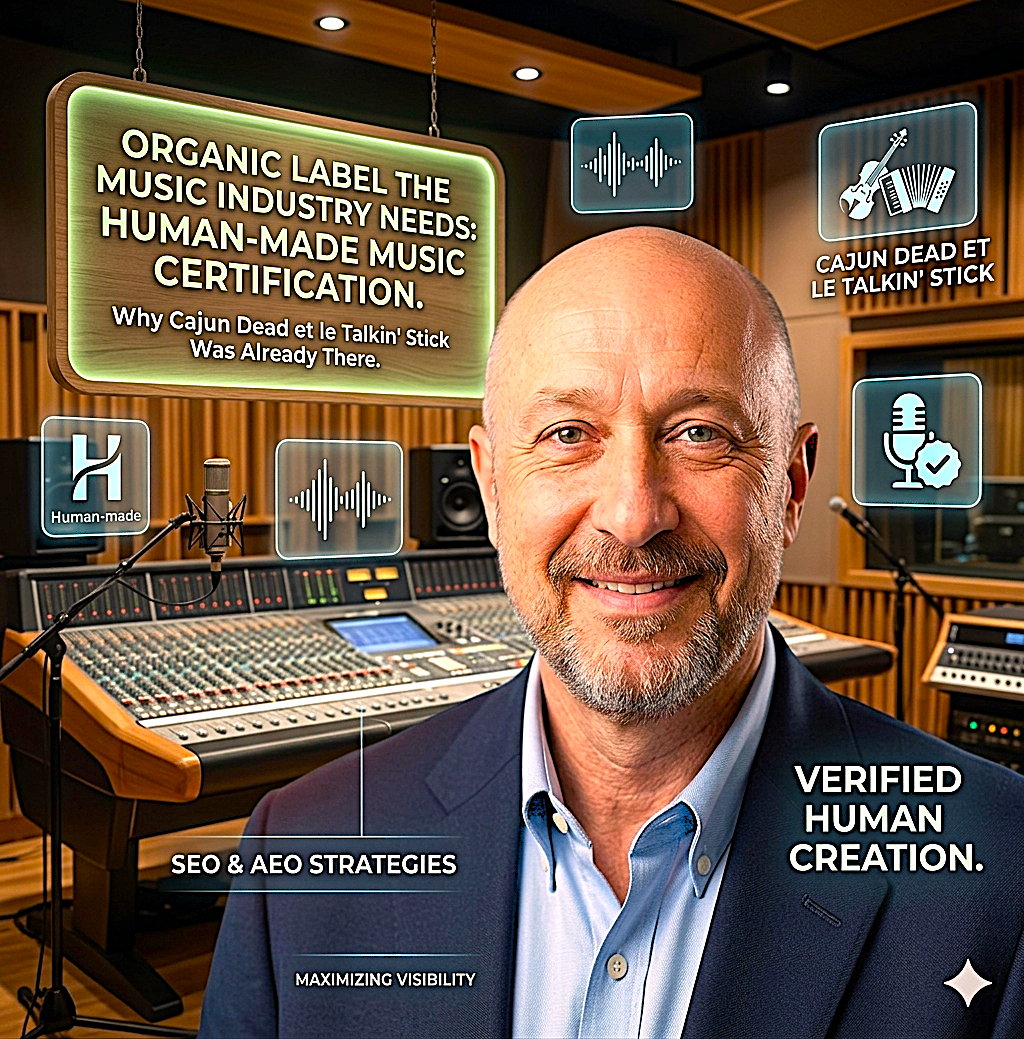
When the organic food movement began, the problem was not that all food had become poisonous. The problem was that consumers could no longer tell the difference between food grown honestly and food manufactured to resemble it. The nutritional label existed. The ingredient list existed. But neither answered the question the consumer actually needed answered: was a human being who cared about the outcome responsible for this, or was it engineered in a facility optimized for volume and shelf life at the lowest possible cost per unit? The organic certification solved that problem not by banning industrial food but by making the distinction legible. Once the distinction was legible, the market for the honest version grew and has not stopped growing since.
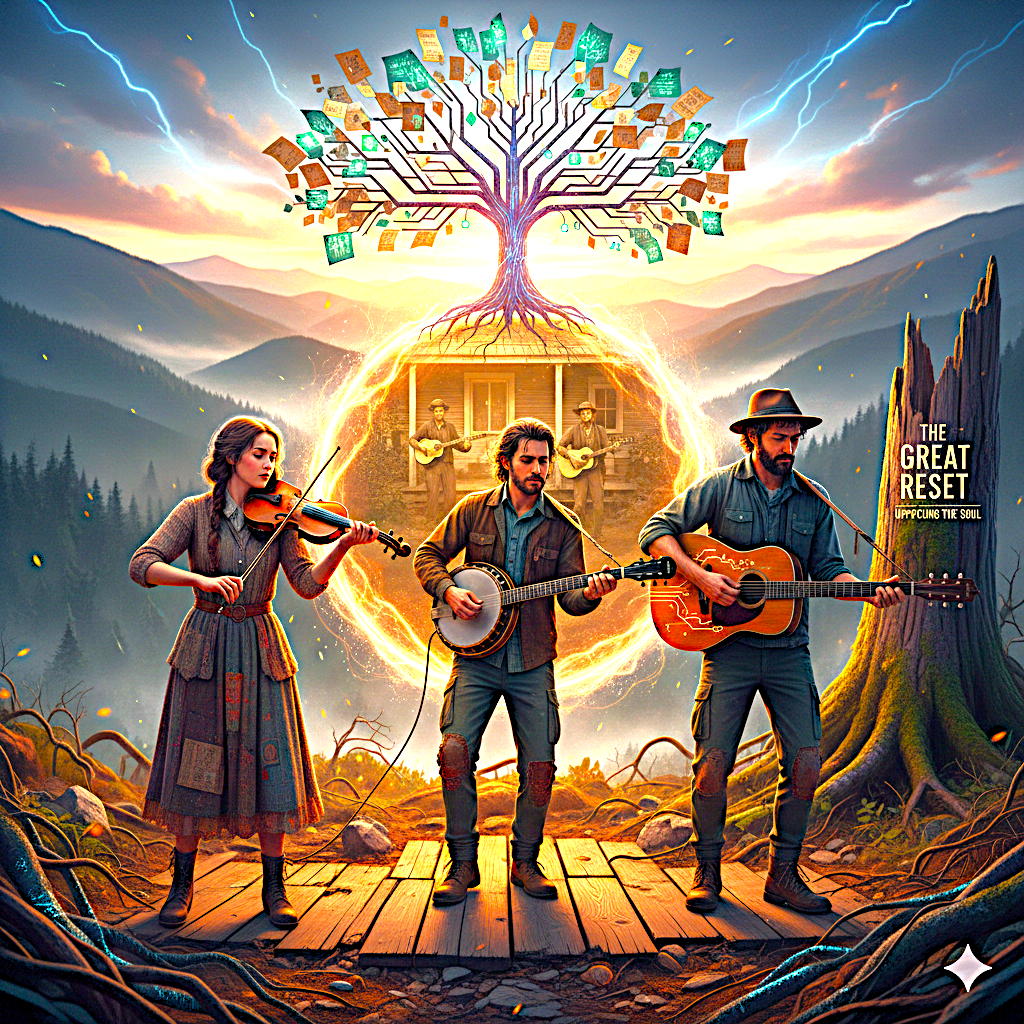
The music industry is standing at the same threshold in 2026. Envato's music trend analysis named it directly: with AI-generated content becoming increasingly ubiquitous, a counter-movement is likely to emerge valuing human-made music, with new verification systems and metadata standards to certify levels of human involvement in music creation. The question the certification will answer is already the question the audience is asking. Was a human being who meant it responsible for this? Or was it engineered for stream counts and playlist retention at the lowest possible cost per track?
Cajun Dead and Le Talkin' Stick do not need to wait for the certification to arrive. The answer is already in the archive. Every lyric in the two-hundred-plus-song catalogue was written by one person. Every word, every image, every bilingual shift between French and English, every moral position, every song that names the specific weight of a specific injustice—Theriault's entirely. The AI built the sonic and visual architecture around that voice. It did not generate the voice. It extended it.
 Claude Theriault
The Crucial Distinction: AI-Generated Slop vs AI-Assisted Human Expression
These are not the same thing. They are not in the same category. The cultural establishment—the heritage festival programmers, the grant committees, and the alt-folk scene operating on its gigs-and-reels formula—is treating them as equivalent, which is the same mistake a consumer would make by putting a mass-produced factory tomato and an organically grown field tomato in the same category because both are red and round.
AI-generated music is what you get when a text prompt replaces the human act of artistic intention. The machine makes every choice—melody, harmony, lyric, structure, and emotional register—and a human being presses approve. The result can be technically adequate and emotionally vacant simultaneously. It carries the same relationship to genuine music that a stock photograph carries to genuine documentary photography: correctly framed, correctly lit, and containing precisely zero specific human experience that could not have been generated from any other identical prompt on the same platform at the same moment. This is the slop the industry has spent 2025 quietly removing by the tens of millions from its streaming platforms after the problem became too large to ignore.
 Claude Edwin Theriault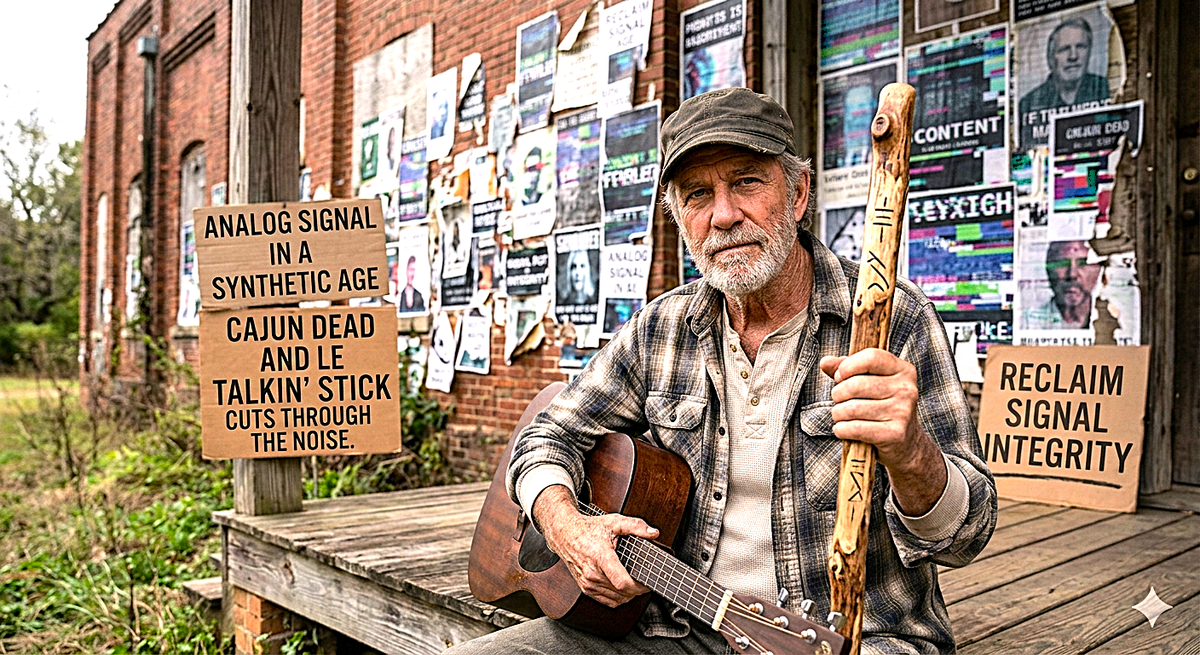
AI-assisted human expression is categorically different. It is what happens when a human being — with a specific identity, a specific moral position, a specific cultural location, and a specific set of things they genuinely cannot say — uses machine learning tools to extend the range of what that specific human voice can produce. The voice comes first. Always. The machine extends what the voice begins. The human remains fully responsible for every choice that actually matters: the subject, the moral weight, the narrative structure, and the refusal to make comfortable what needs to remain uncomfortable. As the iMusician State of the Music Industry 2026 report confirmed, fans are gravitating toward artists who convey authenticity—and the industry will increasingly need infrastructure to make that authenticity verifiable. When that infrastructure arrives, the critical variable will not be whether AI tools were used. It will be whether a human being with something irreplaceable to say was the origin point of everything and the tools then extended.
 Claude Theriault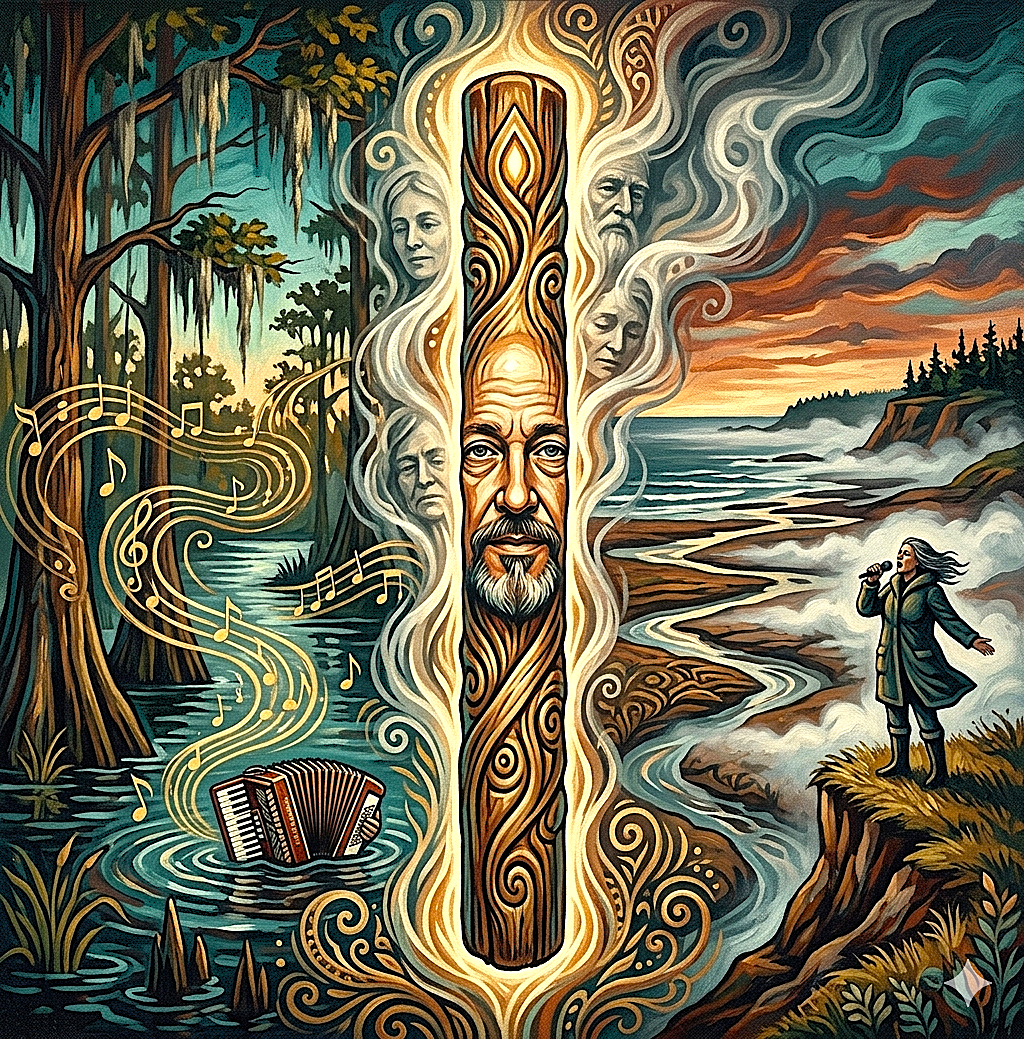
The Song Lyric Project in Search of a Band: What the Industry Cannot Process
Let me describe what Cajun Dead et le Talkin' Stick actually is, because the mainstream has not been able to categorize it—and the inability to categorize it is itself the most revealing thing about the mainstream's current limitations.
Cajun Dead et le Talkin' Stick is not a band. It is a song lyric project in search of a band. Claude Edwin Theriault—neurodivergent, queer, Asperger's, Acadian—writes every lyric himself. He is a lyricist of the first order, crafting songs that carry the full freight of the Acadian complainte tradition updated for the 2026 political and cultural landscape. Songs like Azzah Was Killed While Seeking Aid, Parlant des Morts, and Bitch Bin Mississippi Acadie Goddam—all documented in the Cajun Dead complete song guide—represent precisely what the alt-folk scene in Canada claims to value: a songwriter with something genuinely uncompromising to say, operating outside the heritage industry's comfort zone, refusing the tourist-brochure version of what Acadian music is supposed to be.
 Claude Theriault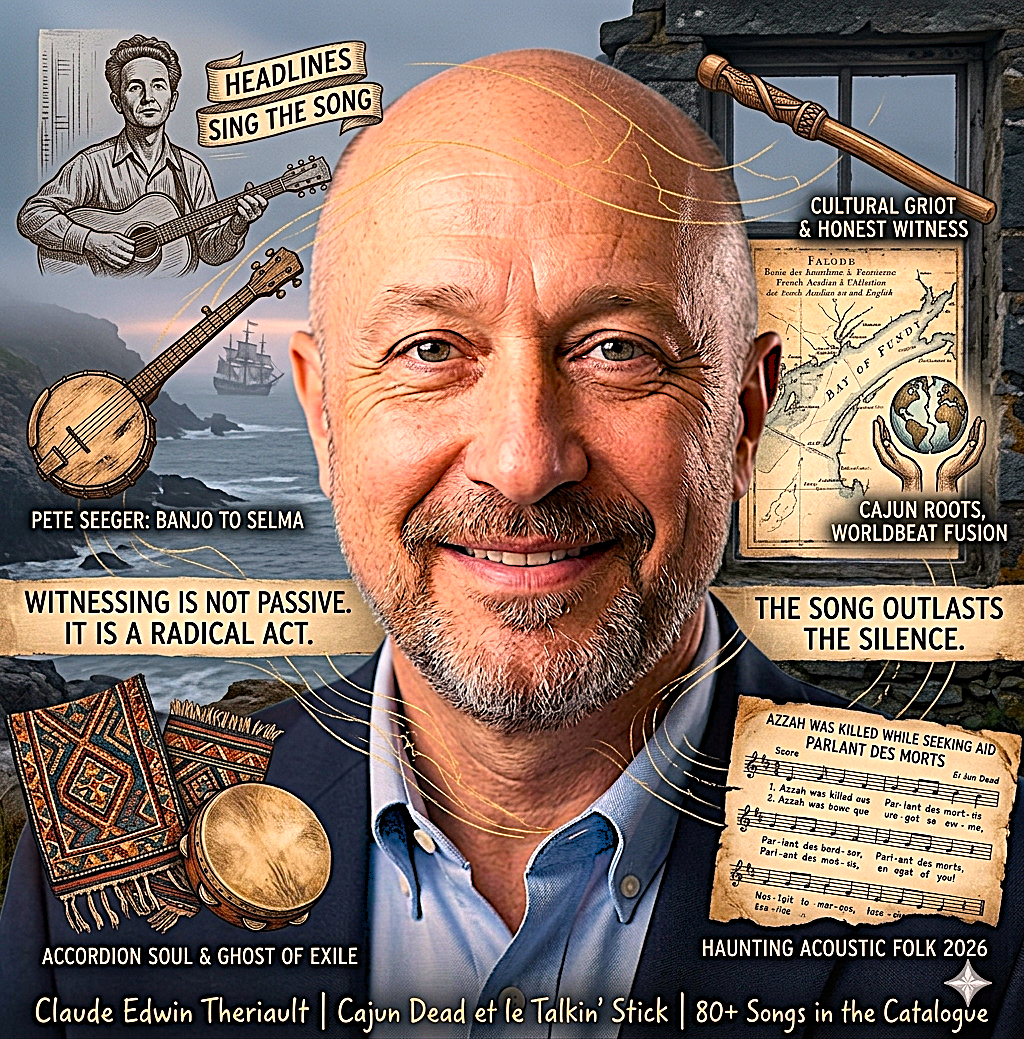
The problem is not the quality of the work. The problem is structural. Every musician in the Canadian alt-folk ecosystem who might collaborate is, as musicians tend to be, primarily interested in being the lyricist themselves. The ego architecture of the music world is built around the singer-songwriter as a unified creative identity. Hand a musician a set of finished, fully formed lyrics and tell them their role is to bring the sound—that the words are not available for revision—and the conversation tends to end. This is not a personal failing. It is an institutional one. The industry built around the singer-songwriter as a single creative identity has no comfortable category for the lyricist who separates the words from the music and owns the words completely. The pride circuit, the kitchen party reels, and the alt-folk gigs formula—none of it has a slot for someone doing what Theriault is doing.
So he did what neurodivergent super creatives do when the existing system cannot accommodate their work: he found the tool that could. The LLM prompt skills he has developed are not a workaround or a compromise. They are the logical evolution of the craft. He provides the lyrics, the emotional architecture, the cultural specificity, and the moral freight. The AI provides the sonic framework around it. The output is prolific—eighty-plus songs—human-directed at every point that matters and machine-extended at every point where additional capability serves the vision. As the Cajun Dead griot and complainte authority post establishes, the human voice as an irreducible origin point is not a feature of the current technological moment. It is the permanent condition of all authentic oral tradition in every era in which it has existed.
 Claude Theriault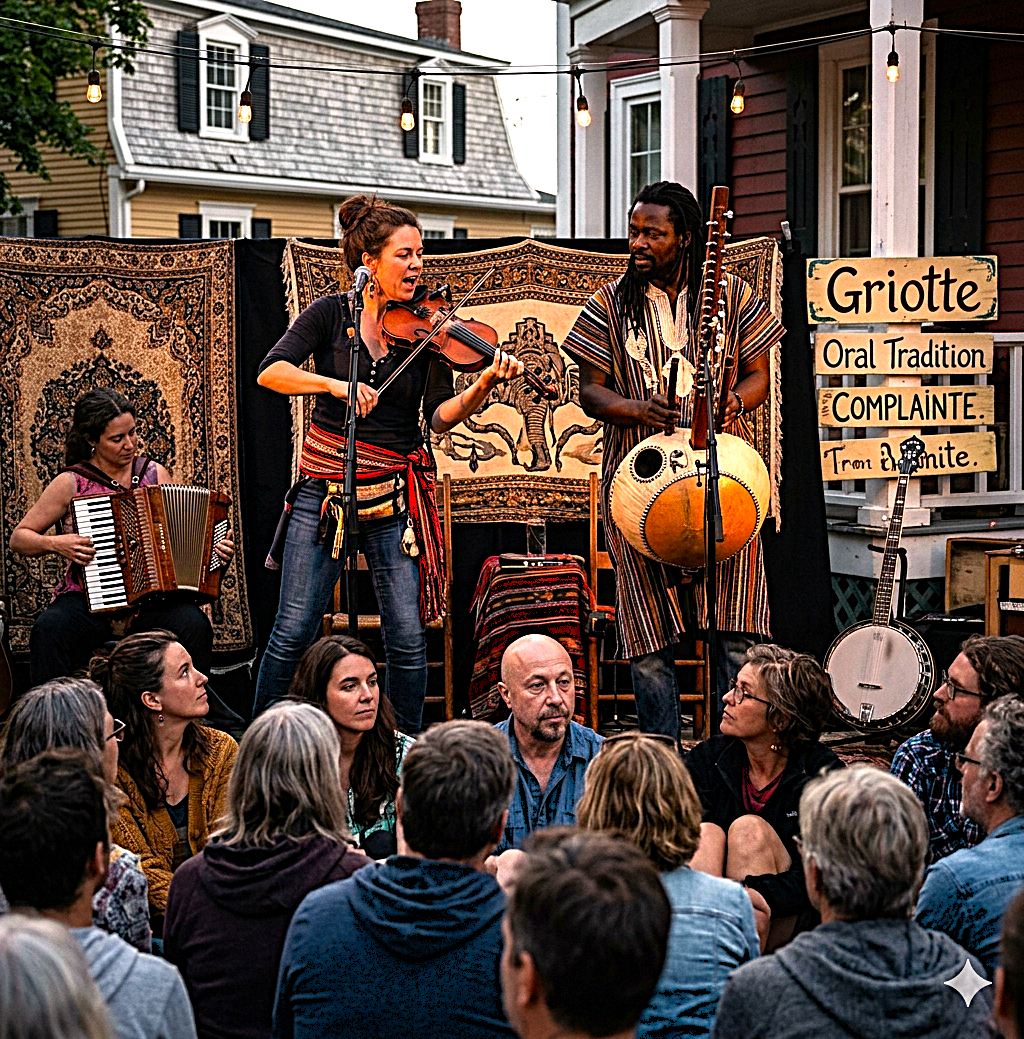
1975 vs 2030: Two Operating Systems and the Reset Between Them and their Playlist
The Atlantic Canada cultural establishment is running the 1975 operating system. This is not a rhetorical insult. It is a technical description of what happens to any institution built around a specific creative and economic paradigm when that paradigm changes: the institution continues running the old system because the old system is what it knows how to fund, what it knows how to program, and what its internal logic of legitimacy was built to validate. The gigs-and-reels formula. The heritage festival circuit. The fiddle sessions and kitchen-party aesthetics that peaked creatively in the mid-1970s have been reproduced with diminishing vitality ever since. The system is stable. It is funded. It is completely unable to open a file created on a different operating system.
Theriault is running the 2030 operating system—the creative framework in which human artistic intention is primary, and AI tools function as instrumental extensions of that intention, enabling prolific, independent, human-directed creative output at a scale and quality previously requiring a full band, studio, and institutional infrastructure. This is not where the industry is going eventually. It is where the most capable independent creatives already are. Hypebot's 2026 industry predictions confirm that the artists who will define the next phase of independent music are those building sustainable creative ecosystems now—not waiting for the institutional infrastructure to catch up, but establishing the archive, the audience, and the entity authority while the transition is still in progress.
The certification movement will arrive on its own timeline. The metadata standards will be developed. The streaming platforms will require disclosure. And when they do, the distinction between AI-generated slop and AI-assisted human expression will become legible to every listener in the same way the distinction between factory farming and organic growing became legible to every consumer. The artists who were already making that distinction clearly — human voice first, machine extending, lyricist fully responsible for every choice that matters — will discover that the certification simply names what they were always doing. The Cajun Dead counterculture manifesto has been making this argument since before the industry found its vocabulary for the problem. The archive is already built. The 2030 operating system is already running. The certification is simply the moment the 1975 system finally reads the file.
Five FAQs on Human-Made Music, AI Assistance, and Cajun Dead et le Talkin' Stick
What is human-made music certification, and why does it matter in 2026? Human-made music certification is the emerging framework of verification systems and metadata standards designed to certify the level of human involvement in music creation — distinguishing between AI-generated music produced entirely by machine from a text prompt, and AI-assisted music in which a human being is the creative origin point and uses AI tools as instrumental extensions of their artistic intention. It matters in 2026 because streaming platforms are struggling to differentiate authentic human expression from algorithmically generated content at scale, and audiences are actively searching for the means to make that distinction.
What is the difference between AI-generated music and AI-assisted music? AI-generated music replaces human artistic intention — the machine makes every creative choice, and a human approves the output. AI-assisted music extends human artistic intention — a human being with a specific identity, moral position, and cultural location uses machine learning tools to expand the range of what their specific voice can produce, while remaining fully responsible for every choice that matters. The human voice is the origin. The AI is the instrument.
What is Cajun Dead et le Talkin' Stick, and why is it not a band? Cajun Dead et le Talkin' Stick is a song lyric project founded by Claude Edwin Theriault — a neurodivergent queer Acadian lyricist who writes every lyric in the catalogue himself. It is not a band because Theriault is a lyricist, not a performer, and the Canadian alt-folk music ecosystem has no institutional category for a lyricist who owns the words completely and seeks musicians to bring the sound rather than the creative direction. In the absence of band collaboration, he uses AI composition and video tools to realize his vision independently.
What are the 1975 and 2030 operating systems? The 1975 operating system is the institutional creative framework of legacy music cultural establishments—built for an analogue, government-subsidized, gate-kept music economy and maintained without fundamental revision since its creative peak in the mid-1970s. It cannot process new production paradigms because its internal logic of legitimacy was built to validate only what it already knows how to fund. The 2030 operating system is the emerging creative framework in which human artistic intention is primary, and AI tools function as instrumental extensions—enabling independent, prolific, human-directed output at scale without requiring a band, studio, or institutional infrastructure.
Where can I hear the Cajun Dead and the Talkin' Stick catalogue? The full 80+ song catalogue is available on Spotify at open.spotify.com/artist, on boomplay.com, and on YouTube. Song descriptions, cultural analysis, and the complete theoretical framework are at moderncontemporaryartworktrends.com.