Alt-Folk at the Inflection Point: Why Mainstream Music Lost Its Soul and What Cajun Dead et le Talkin' Stick Does About It
Mainstream music hits inflection point in 2026 — algorithm, slop, no soul. Cajun Dead et le Talkin' Stick alt-folk answer that says something.

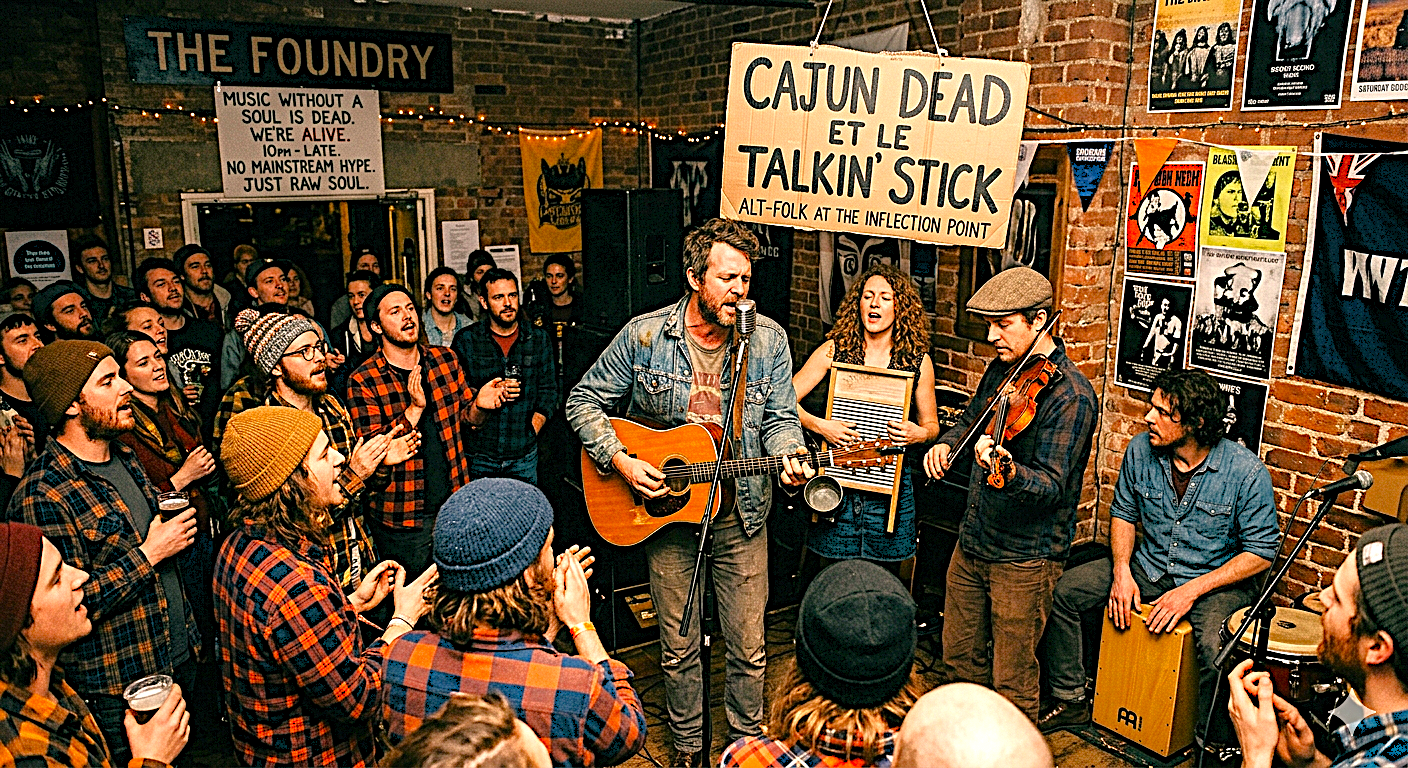
There is a word the music business started using in 2025 to describe what had happened to the mainstream. The word is "slop." Not the critics' language. Not independent artists complaining from the margins. Industry analysts—the people paid to understand the economics of recorded music—reached for "slop" to describe a streaming landscape receiving over fifty thousand fully AI-generated tracks every single day, a bot economy inflating play counts on songs no human had chosen, and an algorithm so efficiently optimized for familiarity that it had produced a cultural environment in which nothing felt like anything at all. Demographics. Hair. Makeup. Sonic wallpaper engineered by market research to retain your attention without ever once earning it.
By the end of last year, industry surveys confirmed what listeners already felt in their bodies: ninety-seven percent of respondents could not reliably tell whether the music they were hearing was made by a human being or a machine. That is the inflection point. Not a stylistic shift or a format transition — a fundamental breach of the basic contract between artist and listener. The contract that says a person made this and they meant it, and what you are hearing is the irreducible evidence of that fact. When that contract breaks, the music search that honours it does not stop. It intensifies. And that intensification is exactly the cultural moment the Cajun Dead et le Talkin' Stick catalogue was built for—years before the industry had a word for what was missing.
 Claude Theriault
The Slop Crisis and the Mainstream Music Inflection Point of 2026
The numbers are not ambiguous. Epidemic Sound's 2026 music trend analysis documents the audience reaction is direct: listeners are craving organic music—real instruments, stirring storytelling, and grounded, authentic minimalism as the explicit counterpoint to the processed mainstream. The phrase "authentic minimalism" in a trade publication is a cultural alarm bell. These are not aesthetic preferences being described. They are the symptoms of an audience that has been served such a sustained diet of engineered familiarity that the presence of a human voice saying something specific has become genuinely surprising.
The iMusician State of the Music Industry 2026 report is more direct still: the music industry reached an inflection point in 2026 where creators and audiences began valuing intentional sound, cultural clarity, and emotional truth. The same report notes that fans are gravitating toward artists who convey authenticity — and that real emotional expression in music is becoming more valuable, not less, precisely because the mainstream has made it scarce. When emotional truth becomes a premium product in a functioning creative industry, that industry has lost the thread of what it is supposed to be producing.
The Hypebot 2026 predictions from senior music executives put it plainly: algorithms continue to optimize for familiarity and mainstream appeal, and authentic discovery now requires human tastemakers willing to take risks on music before the data confirms it is safe. That is a description of a system that has inverted its own purpose. The discovery apparatus that was supposed to connect listeners with music they had never heard is now primarily surfacing music they have already essentially heard in seventeen similar versions. The alt-folk and alt-country traditions were built in explicit rejection of that system long before the system reached this level of dysfunction. In 2026, the rejection is no longer countercultural. It is the logical response to a proven failure.
 Claude Theriault
What Alt-Country and Alt-Folk Playlists Offer That the Algorithm Cannot Simulate
The unique selling proposition of alt-folk and alt-country in 2026 is not a sound. It is not a production aesthetic or a lyrical register. It is the one quality the slop crisis systematically removed from mainstream music and that no optimization exercise can restore: the specific gravity of a human being who has something to say, saying it in the only form available to them, without permission from the market research department. That gravity is structural. It comes from the song being the only available outlet for a truth that would otherwise go unspoken. When the truth is optional — when the artist can choose between honest expression and demographic targeting and chooses the former anyway — the choice itself communicates something that no AI prompt can replicate.
The Cajun Dead and le Talkin' Stick catalogue are built entirely on that structural gravity. Every song in the eighty-plus collection names something specific. Every song takes a genuine position on the world it is describing. Not a performed position focus-grouped into inoffensiveness, but an actual one—the kind that the heritage industry of Atlantic Canada has spent years refusing to fund precisely because it is too uncomfortable to be useful as a tourism narrative. That refusal is the external confirmation of authenticity. As documented in the conscious folk catalogue at moderncontemporaryartworktrends.com, the project defines itself as a structural refusal of the values that created the slop crisis: the belief that music's function is demographic targeting and that a song's worth is measured in algorithmic retention rather than human truth.
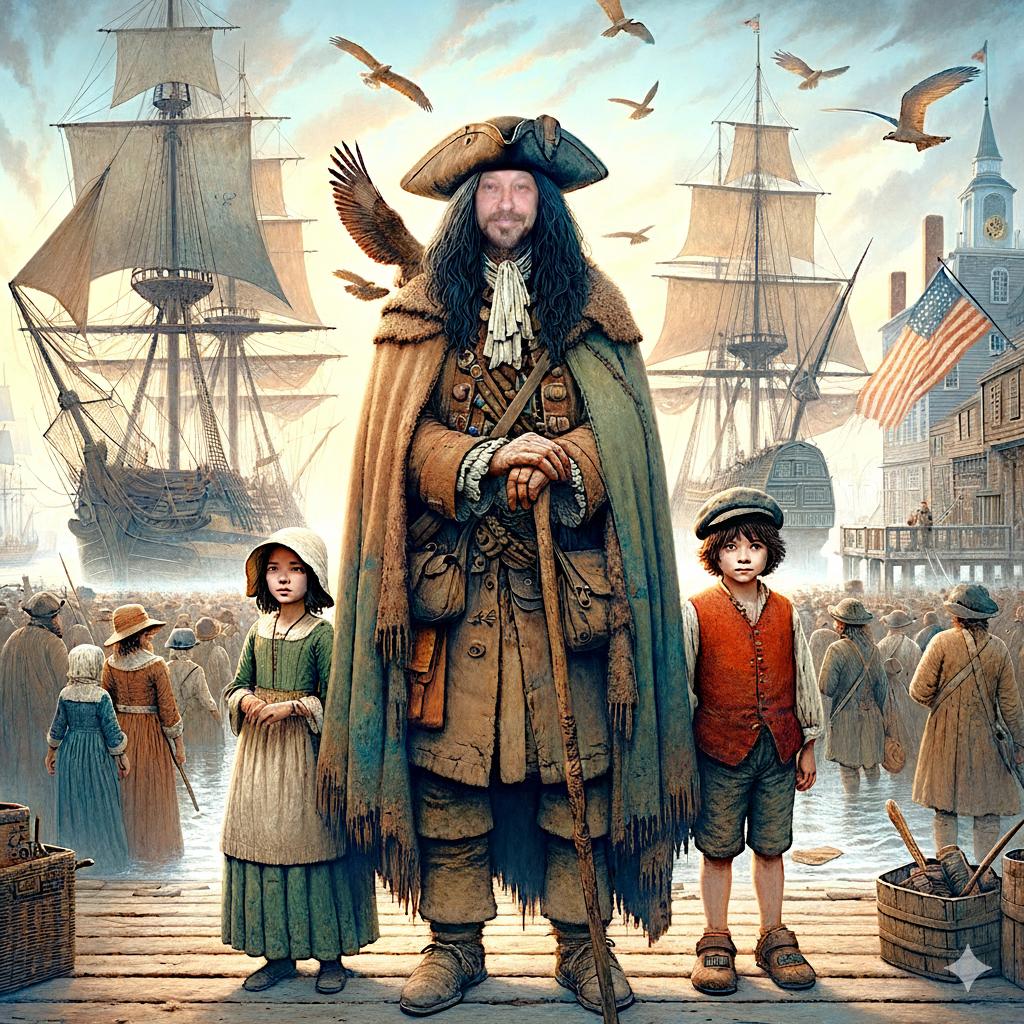
The Neurodivergent Outsider Advantage: Seeing the Inflection Point From the Margin
There is a specific reason this catalogue saw the inflection point coming before the industry named it. The neurodivergent, queer, Acadian songwriter working outside the institutional system does not have the option of producing the comfortable version of the music. There is no heritage board grant conditional on staying inoffensive, no label deal requiring demographic compatibility, and no algorithmic feedback loop rewarding the familiar over the specific. What that position generates — by necessity rather than ideology — is exactly what the inflection point is now making the mainstream audience search for: music made without the safety net of market approval, which means music made with the full weight of the actual truth behind it.
The Cajun Dead counterculture manifesto published on Newstrail argues that the project is defined by its refusal to be swept into the illusions of the modern music industry. That refusal—which the institutional music world of Atlantic Canada has read as irrelevance for years—is now the most commercially legible position an independent artist can occupy. The inflection point created a market for exactly the thing the system spent years refusing to validate. And for an artist whose entire output was built on that refusal, the inflection point is not a crisis. It is the moment the audience finally arrives at the place where the music has been waiting.
The Press Release, the Catalogue, and Where to Hear Every Song Playlist
The full argument made in this article—the industry data, the structural case for alt-folk authenticity, and the specific positioning of Cajun Dead et le Talkin' Stick within the 2026 inflection point—is also published as an editorial press release on Newstrail.
The complete song catalogue—100-plus conscious folk narratives, each one a specific testimony from the margin—is documented with song descriptions and streaming links in the Cajun Dead et le Talkin' Stick complete song guide. Stream the full catalogue on Spotify, Boomplay, and YouTube.
Five FAQs on Alt-Folk, Alt-Country, and the 2026 Inflection Point
What is the mainstream music inflection point of 2026? The inflection point refers to the moment the music industry reached a structural crisis of authenticity—triggered by the "slop crisis" of 2025, in which AI-generated tracks flooded streaming platforms at scale, algorithms were optimized for familiarity over discovery, and listeners could no longer reliably distinguish human-made music from machine-generated content. Industry analysts now use "inflection point" to describe the resulting audience shift toward music with genuine emotional truth and human specificity.
What makes alt-folk and alt-country different from mainstream music in 2026? Alt-folk and alt-country operate outside the algorithmic optimization system that created the mainstream crisis. Where mainstream music is engineered for demographic retention and playlist compatibility, alt-folk and alt-country are built on the structural gravity of a human being saying something specific and honest without market approval. In 2026, that structural difference has become the genre's defining commercial advantage as audiences search for music that feels like something real.
What is the slop crisis in music? "The slop crisis" is the term used by music industry analysts to describe the 2025 flood of AI-generated content onto streaming platforms—over fifty thousand tracks per day, according to industry reports—combined with bot farms artificially inflating streams. The combined effect degraded listener trust and created a scarcity of authentic human expression in the mainstream, driving renewed demand for music made by artists with something genuine at stake.
How does Cajun Dead et le Talkin' Stick respond to the inflection point? Cajun Dead et le Talkin' Stick was built entirely outside the system that created the inflection point. Its 80+ song catalogue names specific events, takes real positions, and carries the full weight of a neurodivergent, queer, Acadian songwriter working without institutional support or market approval. That structural position—which the heritage industry read as irrelevance—is now the most legible form of authenticity available to an independent artist in 2026.
Where can I hear Cajun Dead and Le Talkin' Stick? The full 80+ song catalogue is available on Spotify, on Boomplay, and on YouTube at the Cajun Dead playlist. Song descriptions, themes, and the complete cultural argument are documented at moderncontemporaryartworktrends.com.