The Closed Circle: How Hyper-Insularity in Acadian Cultural Leadership Perpetuates a Museum-Piece Mentality
French Acadian heritage patrimonial industry operates under the control of approximately ten bureaucratic straight white roman catholic oligarchs
It may be news to you, but the French Acadian heritage patrimonial industry operates under the control of approximately ten bureaucratic straight white roman catholic oligarchs whose ethnocentric approach has created what can only be described as hyper-insularity—a complete self-referential closed culture that actively rejects external ideas and innovation with a smile. While these administrators ostensibly serve as cultural guardians, their xenophobic isolationism has transformed a once-vibrant culture into a static museum exhibit frozen in 1975, complete with dull, uninspired kitchen parties and folksy pride rhetoric that no longer resonates with contemporary TikTok and Fakebook realities.
This isn't about heritage preservation. It's about the stark difference between operating systems: the heritage patrimonial industry runs on obsolete software from 1975, while contemporary creators like myself operate on the platform of the 2030 new world order. The disconnect isn't generational—it's ideological.
The Anatomy of Pathological Cultural Withdrawal, Lawfare and Black shelfing
The French Acadian cultural apparatus demonstrates every indicator of extreme insularity outlined in social anthropology: unilateral consciousness that reduces all cultural discourse to an "us versus them" binary, pathological social withdrawal from mainstream Canadian arts discourse, and the forced pursuit of cultural homogeneity that excludes any voice not aligned with their narrow definition of Acadian identity.

Consider the Congress Mondial Acadian 2024, where seven million dollars of provincial and federal all-you-can-eat drink and screw funds poured into an event that systematically excluded visual artists—particularly queer and neurodivergent artists—from their "Our Artists from the Bay" roster. The executive committee, composed entirely of straight white there for the paycheck Catholic academics, demonstrated their commitment to parochialism by ghosting contemporary creators while promoting the same tired repertoire of hillbilly musicians singing about Acadian pride year after year.
La version française est également bonne.
This isn't cultural preservation. It's cultural stagnation masquerading as tradition. When organizations like La Société acadienne de Clare, the Federation acadienne de la Nouvelle-Écosse (FANE), and the Congress Mondial Acadian administration operate from insular Roman Catholic ideologies, they create a walled garden where innovation cannot take root. The heritage patrimonial industry has become unchanging and dominated by stagnant cultural narratives that prioritize committee paychecks over authentic cultural evolution.
 Follow
Xenophobic Isolationism as Cultural Policy
The xenophobic do you know who I am isolationism practiced by these cultural oligarchs manifests in deliberate, hostile cutting off of ties with progressive artistic voices. When I approached executives at cultural organizations with innovative projects—contemporary art that honours our history while embracing blockchain technology, AI-driven narratives, and Web3 ecosystems—the response was literal physical avoidance. Heads turned ninety degrees away, eyes fixed on the ground, body language screaming discomfort with anything that doesn't fit their 1975 operating system.
This behaviour pattern reflects what anthropologists call extreme narrowness of mind—a parochialism that rejects all external ideas simply because they're external. The oligarchs controlling organizations like FANE and the Société Promotion Grand-Pré have created what I call the Zombicadian future: government committees producing nothing of value year after year while contemporary Cajun Dead et le talkin stick creators deliver tangible cultural output daily.
 Claude Theriault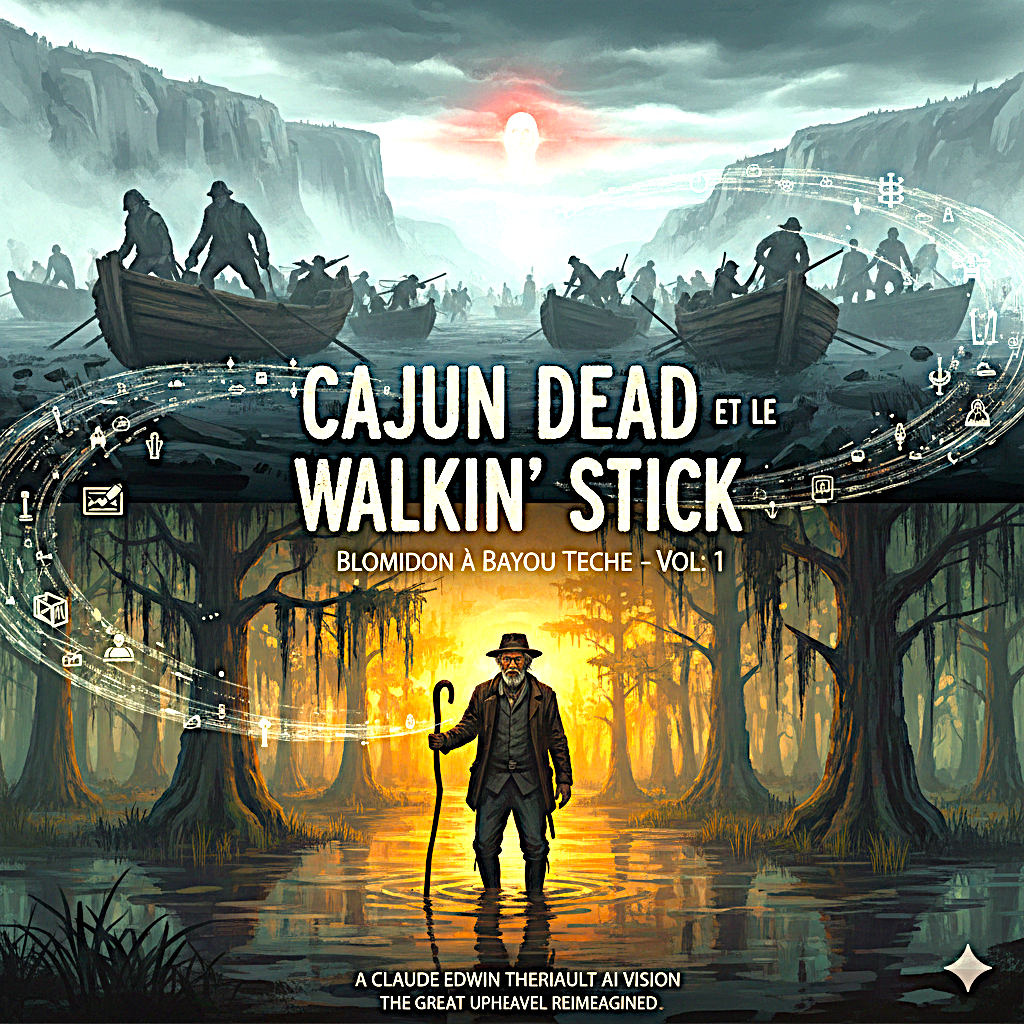
Press release du jour
The two Cajun Dead projects are bending reality.
The toxic culture mirrors broader dysfunction in Atlantic Canadian heritage industries, where power consolidation trumps cultural advancement. When Celtic Colours fired its entire board of directors for creating a toxic work culture, it exposed the same dynamics plaguing Acadian institutions—egos prioritized over mission, innovation stifled in favour of control, and authentic voices silenced to maintain power structures.
The reality is stark: French Acadian communities face poverty, substance abuse, and a massive social divide, yet the oligarchs remain insulated in their bubbles of phony partisan politics. They siphon disproportionate financial resources to maintain their positions while the culture they claim to protect faces extinction through assimilation into Halifax-centric Bell Media's uninspired news cycle.
Cultural Autonomy Versus Cultural Autocracy
There's a critical distinction between cultural autonomy—the healthy pursuit of self-determination—and the extreme form practiced by these bureaucrats. True cultural autonomy allows for evolution, welcomes diverse voices, and adapts to contemporary realities. What we're witnessing instead is cultural autocracy: complete separation and self-governance wielded not to protect culture but to protect administrative fiefdoms.
The ten oligarchs who run the French Acadian cultural apparatus exercise what can only be described as monopolistic control over cultural narratives. They determine which artists receive recognition, which stories get told, which traditions get preserved, and critically, which voices get silenced. This clique-driven institutional monopoly has created a "museum-piece" version of Acadian culture disconnected from the lived realities of contemporary Acadians.
The heritage patrimonial industry's approach creates cultural homogeneity through exclusion. When queer artists, neurodivergent creators, or anyone challenging the established narrative approaches these gatekeepers, they encounter systematic ghosting. The message is clear: conform to our 1975 vision of Acadian identity, or be erased from the cultural record.
This forced uniformity extends beyond artistic expression into the very definition of what constitutes Acadian culture. The oligarchs promote rappie pie festivals and fiddle music as if these alone encapsulate centuries of cultural evolution. They present a Pleasantville version of Acadie—gosh darn golly good times sanitized of Claregyle Ghetto complexity, struggle, and diversity. Meanwhile, the culture they're allegedly preserving erodes under the weight of their neglect.
The 1975 Operating System Versus the 2030 New World Order
Here's where the fundamental incompatibility becomes undeniable. The heritage patrimonial industry operates on an operating system from 1975—a world of physical gatekeepers, centralized control, and cultural narratives shaped by committee consensus. This is Web 2.0 thinking: hierarchical, exclusive, and dependent on institutional validation.
Contemporary creators operate on the platform of the 2030 new world order—decentralized, technologically integrated, and globally connected. This is Web 3.0 reality: blockchain authentication, NFT tokenization, AI-assisted creation, and direct artist-to-audience relationships that bypass traditional gatekeepers entirely.
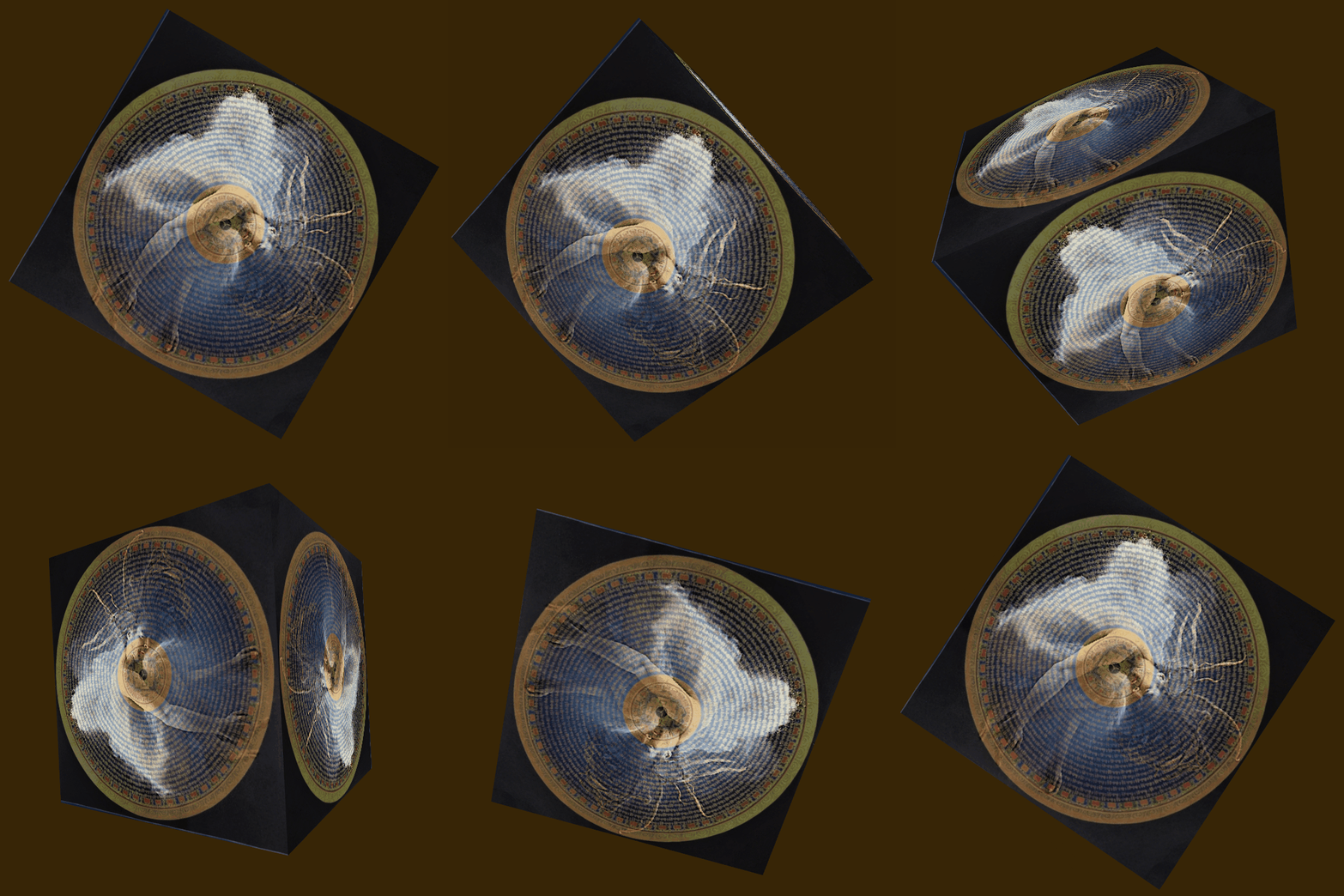
The oligarchs can't comprehend this shift because it threatens their control. When I integrate sacred geometry, esoteric archetypal imagery, and First Nations shamanic-inspired elements into NFT smart contract narratives, I'm not abandoning Acadian heritage—I'm evolving it for contemporary relevance. When I create 3D motion graphic visual narratives on the Ethereum blockchain, I'm ensuring cultural preservation through digital scarcity and collector utility that will outlast any government-funded committee.
Innovation and technology integration represent the future of cultural expression, yet the heritage patrimonial industry treats these tools with suspicion bordering on hostility. They remain committed to looking backward, to kitchen parties and pride rhetoric, while the world moves forward into metaverse ecosystems and decentralized finance models for art ownership.
This isn't a rejection of tradition—it's a recognition that tradition must breathe, must adapt, must engage with the present to have any future. The 1975 operating system can't process this reality, so it defaults to its core programming: exclude, ignore, maintain status quo.
From French Acadian Art to French Canadian Art
This fundamental incompatibility has led me to a significant shift in how I identify my work. I no longer characterize my art as French Acadian art. Instead, I describe it as French Canadian art—and the distinction matters profoundly.
French Canadian Quebec society is liberal, forward-thinking, and uninhibited. Quebec's cultural apparatus welcomes innovation, celebrates diversity, and operates on contemporary platforms. Quebec artists engage with global arts discourse, embrace technological integration, and receive institutional support for pushing boundaries rather than punishment for it.
In stark contrast, French Acadian culture—at least as managed by its current oligarchic leadership—is conservative, backward-thinking, and prudish. The cultural gatekeepers maintain an oppressive moral framework rooted in outdated Roman Catholic orthodoxy that polices artistic expression, excludes queer voices, and rejects any narrative that doesn't align with their sanitized heritage vision.
The contrast between Quebec's cultural openness and Acadian cultural insularity isn't accidental—it's the direct result of differing operating systems. Quebec moved beyond its 1975 mentality decades ago. The Acadian heritage patrimonial industry remains stubbornly committed to it.
By identifying my work as French Canadian rather than French Acadian, I align myself with cultural institutions that value innovation over preservation of power structures. I position my art within a discourse that welcomes technological integration, celebrates diverse voices, and operates on the principles of the 2030 new world order, Prime Minister Mark Carney spoke of in Davos, Switzerland, in January 2026; rather than clinging to the fading echoes of 1975.
This isn't abandoning my heritage—it's refusing to let ten bureaucrats define what that heritage means. The Acadian experience includes resilience, migration, cultural preservation, and adaptation to new circumstances. My art embodies those values more authentically than any rappie pie festival ever could.
Cajun Dead movie, Breaking the Closed Circle.
The hyper-insularity of French Acadian cultural oligarchs creates a self-perpetuating cycle of irrelevance. By excluding contemporary voices, they ensure their institutions remain disconnected from lived cultural realities. By rejecting technological innovation, they guarantee their obsolescence. By practicing xenophobic isolationism, they accelerate the very cultural assimilation they claim to prevent.
The solution isn't to plead for inclusion in their closed circle. The solution is to build alternative platforms that bypass their gatekeeping entirely. Through self-publishing, digital distribution, blockchain authentication, and direct audience engagement, contemporary creators can preserve and evolve Acadian cultural narratives without seeking permission from bureaucrats still running 1975 software.
The heritage patrimonial industry will collapse under the weight of its own insularity. You can only have phony posturing bastards at the wheel for so long before reality asserts itself. The question isn't whether the current system will fail—it's whether authentic Acadian voices will have established viable alternatives when it does.
I've chosen my path. I operate on the 2030 new world order platform, creating French Canadian art that honours my heritage while refusing to be constrained by the narrow definitions imposed by the ten oligarchs protecting their administrative fiefdoms. The pen is more powerful than the sword, and ideas—particularly written ideas—are the most valuable resource on this small planet.
Let the bureaucrats cling to their kitchen parties and pride rhetoric while the acadian youth scroll on TikTok, message themselves in English, and watch Halifax-centric Jive at Five news without a single mention of Acadian culture. The future of French Canadian cultural expression is being written in smart contracts, minted on blockchains, and distributed through decentralized networks they can neither control nor comprehend.
Frequently Asked Questions
Q: What is hyper-insularity in the context of French Acadian cultural institutions?
Hyper-insularity refers to an extreme level of cultural closure where French Acadian heritage organizations operate as completely self-referential systems, rejecting external ideas and maintaining a "closed culture" mentality. This manifests through xenophobic isolationism driven by fear of outsiders, parochialism that rejects all external ideas, and pathological social withdrawal from mainstream Canadian arts discourse. The approximately ten bureaucratic oligarchs who control these institutions demonstrate unilateral consciousness that reduces cultural dialogue to "us versus them" binaries while pursuing forced cultural homogeneity.
Q: Why does Claude Edwin Theriault now identify his work as French Canadian art rather than French Acadian art?
The distinction reflects fundamental differences in cultural operating systems. French Canadian Quebec society is liberal, forward-thinking, and uninhibited, welcoming innovation and diversity in artistic expression. In contrast, the French Acadian cultural apparatus—as managed by its current oligarchic leadership—operates conservatively, backward-thinking, and prudishly, maintaining oppressive frameworks that exclude queer voices and reject contemporary artistic approaches. By identifying work as French Canadian, artists align with institutions that value innovation over preservation of administrative power structures.
Q: What does it mean to operate on a "1975 operating system" versus the "2030 new world order"?
The 1975 operating system represents hierarchical, centralized control through physical gatekeepers and committee-driven cultural narratives—essentially Web 2.0 thinking applied to heritage preservation. The 2030 new world order represents decentralized, technologically integrated, globally connected approaches using blockchain authentication, NFT tokenization, AI-assisted creation, and direct artist-to-audience relationships—Web 3.0 reality. The heritage patrimonial industry remains committed to 1975 methodologies while contemporary creators operate on 2030 platforms, creating fundamental incompatibility.
Q: How do French Acadian cultural oligarchs maintain their control over heritage narratives?
Approximately ten bureaucratic administrators control organizations like the Federation acadienne de la Nouvelle-Écosse (FANE), La Société acadienne de Clare, and the Congress Mondial Acadian, exercising monopolistic control over which artists receive recognition, which stories get told, and which voices get silenced. They maintain power through systematic exclusion of non-conforming voices, control of government funding allocations, and creation of a "walled garden" cultural ecosystem where innovation cannot flourish without their approval. This clique-driven institutional monopoly prioritizes administrative fiefdoms over authentic cultural evolution.
Q: What are the consequences of extreme insularity for French Acadian cultural preservation?
Extreme insularity accelerates the very cultural assimilation it claims to prevent. By excluding contemporary voices, these institutions become disconnected from lived cultural realities. By rejecting technological innovation, they guarantee their obsolescence. By practicing xenophobic isolationism, they create a "museum-piece" version of culture frozen in time rather than a living, evolving cultural expression. The result is communities facing poverty, substance abuse, and social division while billions in heritage funding produce static representations that fail to engage new generations or adapt to contemporary realities.
Citations
- French Canadian Contemporary Artwork and Heritage Culture
- Claude Edwin Theriault: The Visionary Force of Atlantic Canada's Contemporary Art Scene
- French Acadian Culture Industry in Atlantic Canada
- La Société acadienne de Clare and the French Acadian Heritage Patrimonial Industry
- Unmasking the Harmful Parallel Cultures of Celtic Colours Board of Directors and Acadian Oligarchs
- Fall of French Acadian Heritage Patrimonial Industry