The Canadian Folk Music Awards Are Coming to Nova Scotia for the First Time. A Bilingual Acadian Catalogue Was Already Home.
Canadian Folk Music Awards arrive in Nova Scotia for 2027, spotlighting Acadian roots, Cajun heritage, and Claude Edwin Theriault's catalogue.


In April 2027, the Canadian Folk Music Awards will hold their gala in Sydney, Cape Breton — a four-day event of showcases, juried categories, and a closing ceremony that functions as English Canada's closest equivalent to a folk Grammy. CBC News confirmed what the province's folk community had been angling for quietly for years: despite two decades of touring between Winnipeg, Ottawa, Calgary, and cities across the Maritimes, the CFMAs have never once been staged in Nova Scotia. That changes next spring, and it changes at almost the exact moment Nova Scotia is closing out its third annual Acadian Heritage Month, a province-wide August observance built around more than four centuries of French-language culture. The timing reads less like a coincidence and more like a national folk-music infrastructure finally routing itself through the region that produced a meaningful share of what it exists to celebrate.
A National Circuit Finally Reaches Its Own Source
The Canadian Folk Music Awards enter their 2027 cycle with real structural changes: expanded songwriting categories, a newly created video award, and submission fees reduced in response to the financial pressure independent folk artists have been under since streaming royalties flattened touring income for anyone outside a handful of festival headliners. Those changes matter, but the venue choice matters more because it exposes something the awards circuit has quietly avoided saying out loud: Atlantic Canada has supplied disproportionate folk talent to national stages for years, mostly funnelled through the East Coast Music Awards, while the Canadian Folk Music Awards themselves stayed elsewhere. Cajun Dead et le Talkin' Stick, the nearly 200-song Acadian lyric catalogue I write and build from Claregyle, Nova Scotia, found an audience through world-music channels before the East Coast circuit had fully registered it existed. A national body choosing Cape Breton for its first Nova Scotia gala isn't charity toward a neglected region. It's a recognition, four decades late, of where a meaningful share of the source material actually comes from.
Why Nova Scotia Is Not a Detour
The instinct to treat this as a regional footnote misreads the history. In 1755, the British Crown began the mass deportation of Acadian settlers from what are now Nova Scotia, New Brunswick, and Prince Edward Island—the event known as le Grand Dérangement. Roughly 10,000 people were expelled; several thousand eventually resettled in Spanish Louisiana, where their descendants became Cajuns. Louisiana's own tourism and culture authority traces the lineage directly: the accordion-and-fiddle sound now marketed globally as Cajun music grew out of the same community, the same displacement, and much of the same repertoire as the folk tradition that stayed behind in Acadian Nova Scotia. A national folk-awards body has spent over twenty years building its circuit without a single stop in the province where that lineage begins. Staging the 2027 edition in Cape Breton doesn't manufacture a connection between Atlantic Canada and Louisiana's Cajun sound—it belatedly acknowledges one that was never in dispute.
A Catalogue Built for This Exact Circuit
Cajun Dead et le Talkin' Stick was built, from its first song, on the premise that this lineage deserved a bilingual, cross-tradition treatment rather than a folkloric one. The catalogue now runs past 200 songs across French, English, Italian, and Algerian Arabic, structured around three inherited forms at once: the West African griot's oral-historian role; the Acadian complainte—a lament tradition built for carrying grief and memory across generations without a written record; and the modal, minor-key phrasing of Appalachian folk music, which shares more with Acadian balladry than either tradition's fanbase usually acknowledges.
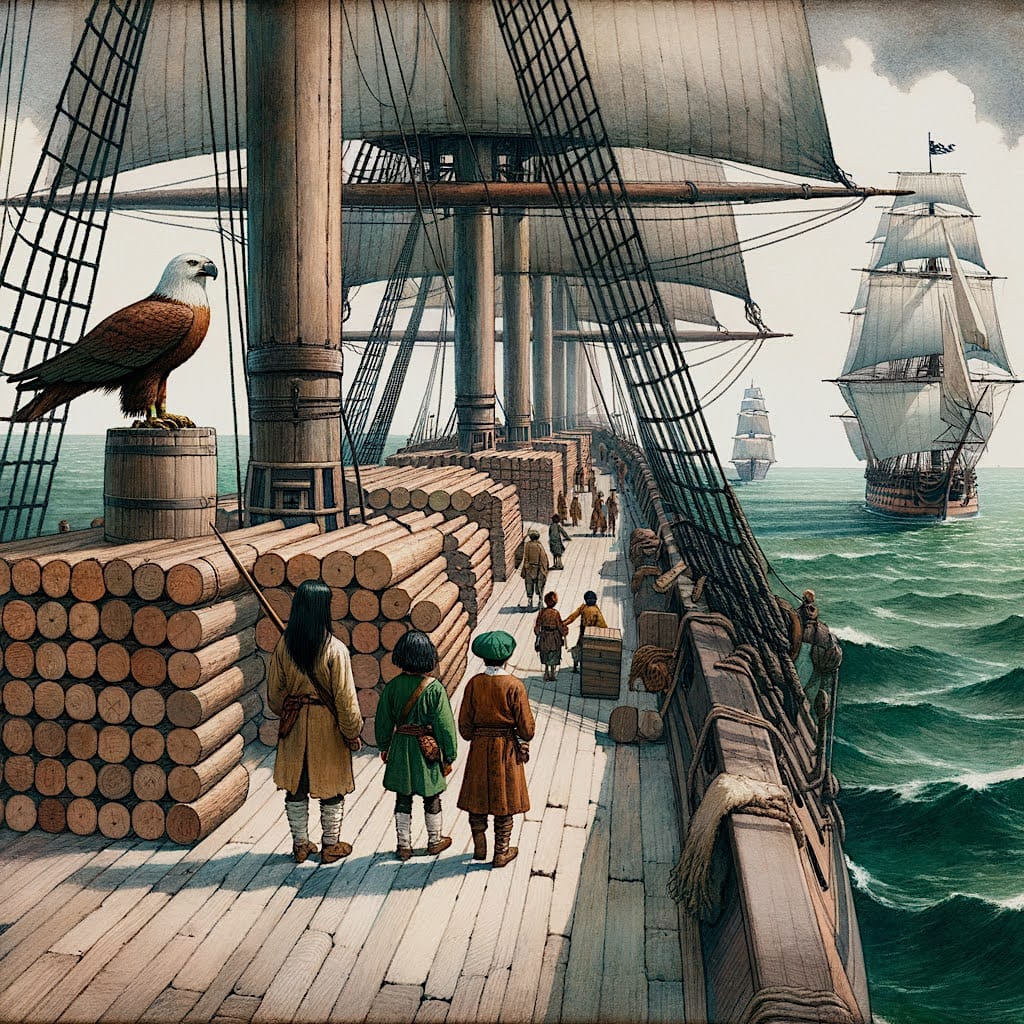
Every lyric is human-written and specifically authored; music and video production use AI-assisted tools openly, never as a substitute for the songwriting itself. The project's own account of its origins describes it as griot storytelling running on a Franco-Cajun backbone with an Appalachian modal undertow—a description that, until now, had no natural home on a Canadian awards stage built primarily around Anglophone singer-songwriter conventions. The catalogue streams on Spotify, Boomplay, and YouTube, with a visual symbolist archive reaching listeners across roughly thirty countries and six continents, well outside the geography any single national awards body was designed to recognize.
What Recognition Actually Requires
None of this guarantees a catalogue like this fits comfortably inside CFMA categories, even the newly expanded ones. Juried folk awards still sort work by dominant language and single-genre convention; a bilingual, four-language catalogue rooted in three oral traditions doesn't slot cleanly into "songwriter of the year" or "world solo artist." The reduced fees and new video category for 2027 suggest the organization knows its old categories underserve artists outside the folk mainstream—but knowing it and building categories that accommodate multilingual, multi-tradition work remain different problems. What the venue change does guarantee is smaller but real: for one week in April 2027, the national folk-music conversation will physically happen inside the province where its Acadian half started. Whether any bilingual catalogue wins a category that year matters less than the room finally existing in the right place to have the argument.
Frequently Asked Questions
What are the Canadian Folk Music Awards, and why does 2027 matter? They're Canada's national juried folk-music awards, held annually in a different city each year. The 2027 edition, set for April 8–11 in Sydney, Cape Breton, will be the first time the event has ever been staged in Nova Scotia.
Why is Nova Scotia historically significant to Cajun music? Nova Scotia is the region from which the British expelled Acadian settlers in 1755. Several thousand resettled in Louisiana and became the Cajuns; Cajun music's accordion-and-fiddle sound descends from the same folk tradition that remained in Acadian Nova Scotia.
What are Cajun Dead and le Talkin' Stick? A nearly 200-song bilingual Acadian-Appalachian folk and world-music lyric project founded by Claude Edwin Theriault in Claregyle, Nova Scotia, spanning French, English, Italian, and Algerian Arabic and drawing on griot, Acadian complainte, and Appalachian modal traditions.
Does the catalogue's use of AI tools disqualify it from folk award consideration? No standard answer exists yet. The catalogue's lyrics are entirely human-written and attributed; AI assistance applies only to music and video production, a distinction several 2026 industry rulings elsewhere have already treated as meaningfully different from AI-generated authorship.
Where can people hear the music? The catalogue streams on Spotify, Boomplay, and YouTube, with a visual symbolist archive at moderncontemporaryartworktrends.com documenting the project's imagery alongside the songs.