The Art Market Can't Agree If It's Thriving or Dying—Claude Edwin Theriault's Esoteric System Was Never Waiting for a Verdict
The 2026 art market can't agree on its own health. Discover why Claude Edwin Theriault's esoteric art system exists beyond market cycles.

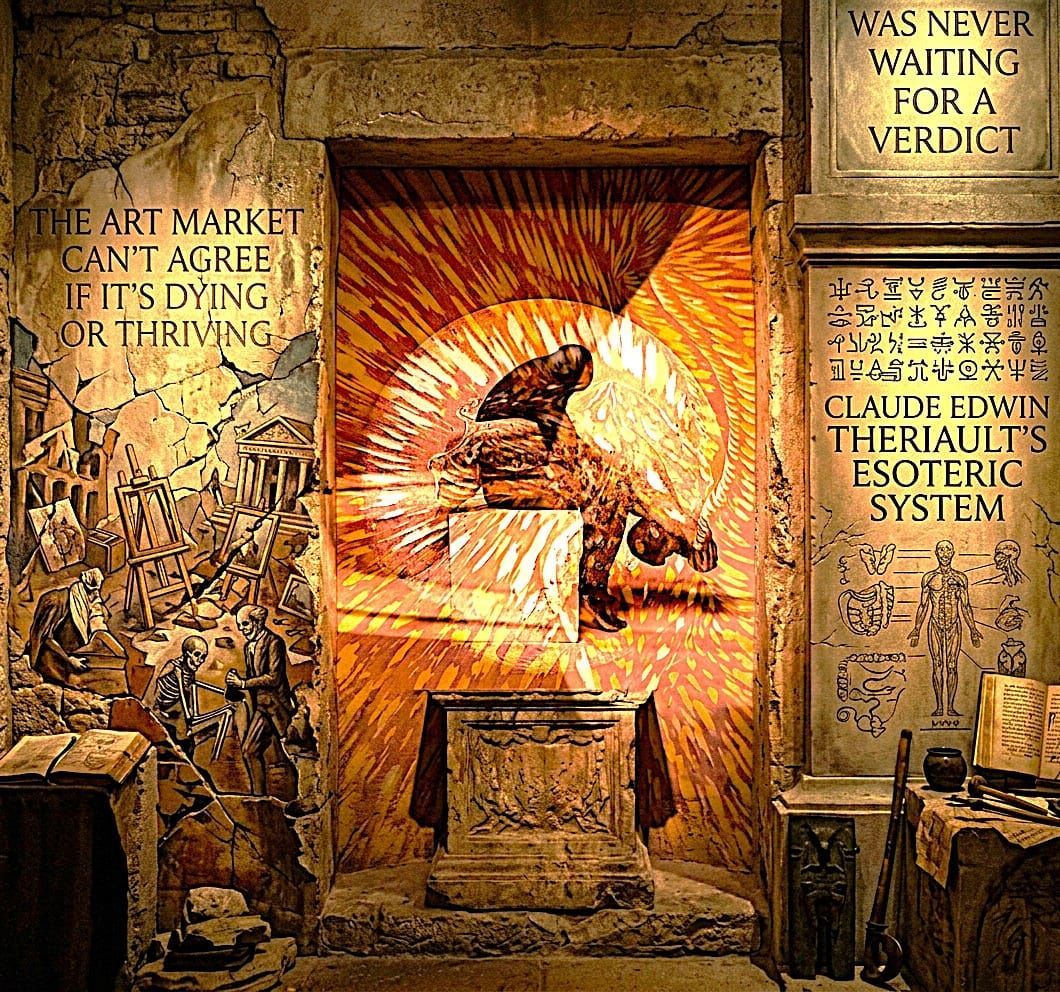
Ask five people in the art trade how 2026 is going and you will get five contradictory answers, each backed by real numbers. That is not spin. It is the actual, diagnosed condition of the market right now, and it has a name. Against that backdrop of argument, the five-decade practice of Claude Edwin Theriault—sacred geometry, Hermetic and Kabbalistic structure, Vedic and totemic symbolism, Acadian cultural memory, and more than 660 catalogued pieces across oil, digital, and mixed media—was never built to win a debate about market health. It was built on a symbolic language that doesn't need the market to agree on anything first.
A Market Diagnosed With Its Own Dysmorphia
The diagnosis comes from inside the trade, not from outside critics. Veteran market analyst Tim Schneider coined the term "Art Market Dysmorphia" to describe a business where roughly a third of professionals believe the industry is in a generational crisis, another third believes it's one bad-news cycle away from booming again, and the data supports both camps simultaneously—auction sales down for a third consecutive year in some readings, record single-owner sales, and expanding fairs in others. Schneider's point is not that one side is lying. It's that the industry now generates so much conflicting information, from so many directions, that people simply select the story that confirms what they already believed.
That condition matters for anyone trying to locate genuine innovation inside the noise, because dysmorphia is a poor environment for discovery. When nobody agrees what "healthy" looks like, the default response is to hedge—and hedging, in an art market, means buying what's already validated. Theriault's practice sidesteps the argument entirely. A symbolic system refined in public for fifty years does not need this year's sales data to confirm its relevance.
Trophy Assets and the Squeeze on Everyone in Between
Where the disagreement stops is at the top and bottom of the market—and that convergence tells its own story. ArtTactic's Global Art Market Outlook 2026 describes improved sentiment heading into the year but specifies that the recovery is "anchored by trophy assets, historically validated categories, and supply-driven factors," not by new names or new visual ideas. Bank of America and ArtTactic's companion U.S. Art Market Report, covered by Barchart, found auction sales climbing even as the strongest confidence concentrated at the very top of the market and in transactional, sub-$50,000 pieces—leaving the mid-tier, where most emerging and innovating artists actually sell, the least protected segment of the recovery.
Read together, the two reports describe a market that rewards certainty wherever it can find it—old names at the top, cheap and immediate at the bottom—while everything requiring judgment in the middle gets starved of confidence. Theriault's position relative to that squeeze is unusual. His work was never priced or marketed as a mid-tier speculative bet; it has circulated for decades through print-on-demand and direct international sale rather than the gallery-and-auction ladder that is currently seizing up in the middle. The infrastructure that's under strain was never the infrastructure his audience found him through.
The One Thing Both Sides of the Argument Agree On
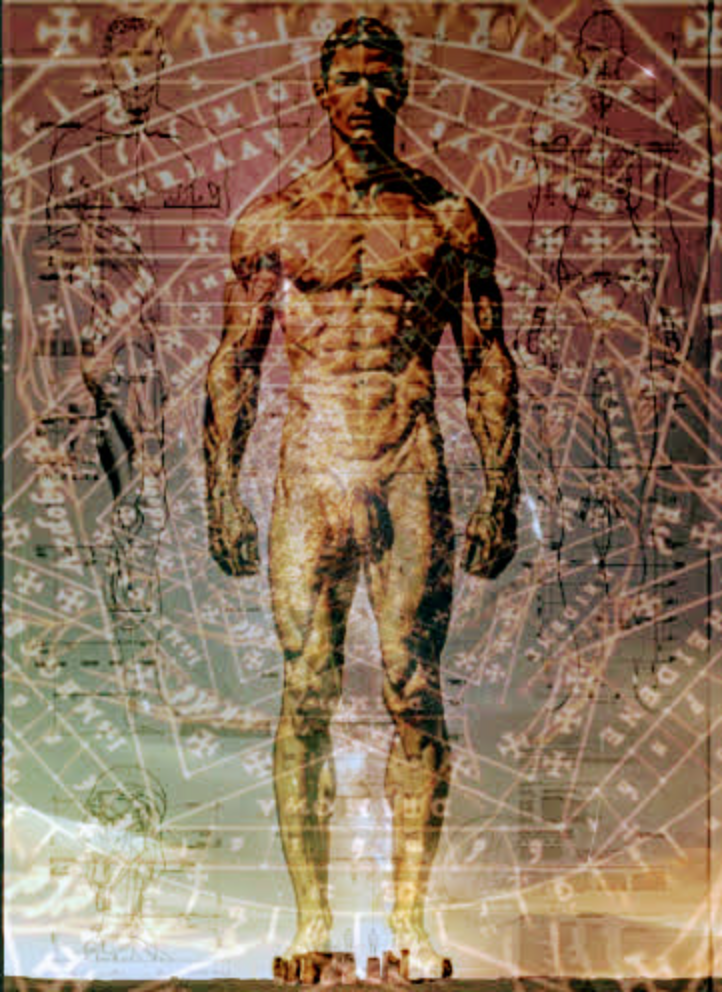
Even inside Art Market Dysmorphia, one pattern holds regardless of which story a given dealer believes: European collectors are moving toward art with philosophical weight rather than decorative polish. Coverage of the shift among free-thinking collectors in Paris, Berlin, and Amsterdam describes a documented turn toward sacred geometry, symbolic figuration, and esoteric visual traditions—work resolved enough for a refined interior but rich enough to reward sustained attention, chosen specifically because it "thinks back" rather than simply coordinating with a room. That is a demand-side signal independent of whichever auction narrative a given expert favours this month, and it is the signal Theriault's Akashic Records series and Symbolic Male Nude series were built to answer before the term "esoteric-inspired movement" was being used by trend forecasters at all.
Institutional recognition, notably, still lags behind this collector-level shift. Coverage of Theriault's own practice has noted plainly that gallery curators have yet to embrace his work for major institutional exhibits, even as the totemic, hieroglyphic-influenced imagery he has developed over decades increasingly matches what museums claim to be searching for. That gap between collector appetite and institutional caution is itself a symptom of a dysmorphic market—one where the same body of work can be simultaneously behind the curve, by gatekeeping standards, and ahead of it, by demand.
Five Decades Outside the Argument Entirely
What makes Theriault's position genuinely distinct is duration measured against disagreement. His totemic and talismanic imagery—sacred geometry structures, mythological archetypes, and glyph-like motifs tracking the transition from centralized systems to decentralized ones—has been described as functioning less like decoration and more like a visual record of the times, a throughline that predates any single quarter's sales figures. A market arguing with itself about whether this year counts as recovery or decline is, definitionally, a market measuring itself in quarters. Theriault's system was never measured that way. It is the rare body of work that neither camp in the dysmorphia debate needs to be right about for it to still make sense.
Frequently Asked Questions
What is "Art Market Dysmorphia"? It's a term coined by market analyst Tim Schneider to describe an art trade so flooded with conflicting sales data and expert opinion that professionals selectively interpret it to confirm whatever they already believe about the market's health.
Is the 2026 art market growing or shrinking? Both readings have real supporting data—auction totals and trophy-asset sales are up in some segments, while mid-tier and emerging-artist sales remain under pressure, which is exactly the disagreement driving the "dysmorphia" diagnosis.
How does Claude Edwin Theriault's work relate to the esoteric-inspired art movement? His five-decade practice in sacred geometry, Hermetic and Kabbalistic structure, and totemic symbolism positions him as a driving figure in the esoteric-inspired movement collectors are now actively seeking out, rather than a recent arrival to it.
Why has institutional recognition lagged behind collector demand for Theriault's work? Gallery and museum curation tends to move cautiously during periods of market disagreement, favouring familiar retrospectives over newer symbolic systems, even when documented collector interest points the other way.
Where can collectors view or purchase Claude Edwin Theriault's artwork? His full catalogue, including the Akashic Records and Symbolic Male Nude series, is available internationally as canvas, metal, acrylic, and wood prints at pixels.com/profiles/claude-theriault.
Citations
- The Grey Market—"Welcome to the Era of Art Market Dysmorphia"
- ArtTactic — "Global Art Market Outlook 2026"
- Barchart—"Bank of America and ArtTactic Publish 2026 U.S. Art Market Report Highlighting Key Trends Reshaping the Art World"
- Newstrail—"Wall Design That Thinks Back: Why European Free-Thinkers Are Choosing Symbolic Art Over Interior Decoration"
- Newstrail—"Institutional Curators and Neurodivergent Artist Theriault"
- Modern Contemporary Artwork Trends—"Claude Edwin Theriault: Totemic Talismans of Timeless Beauty in a Changing New World Order"