No one's voicing it, so I will: The industry has hit a plateau. The next zeitgeist is already putting pen to paper.
Streaming growth is stalling, labels cut staff and the CD is back. Here is why Cajun Dead's 235-song human lyric bank fits music's new Zeitgeist.

At Sonic Boom, the record store on Spadina Avenue in Toronto, a Saturday afternoon saw a line at the till that didn't abate for two and a half hours. Jonathan Simkin, the co-founder of 604 Records in Vancouver, watched people purchasing vinyl, CDs, and shirts and saw happy strangers argue passionately about music. He recounted the day in a recent episode of his podcast, saying that afternoon reinstated his faith in his own trade. The rest of his three weeks in Toronto had, conversely, done the opposite. "Existential panic," he called the state of the Canadian music business.
He is correct about the panic, and I'd argue Simkin is also standing next to the solution.
The Five Pressures Behind the Panic
Simkin tallies the pressures. First, the major label lay-offs, which, by his rough estimate, have dropped Universal Canada, from a high-water mark in the CD era, from nearly a thousand staff to less than two hundred. He's calling it twenty years of post-Napster attrition, but each layoff engenders more panic.
Second, American capital is picking off Canadian indies. Los Angeles-based Create Music Group purchased Vancouver's Monstercat in 2025, and Simkin says there are at least two American suitors for 604 on this day. His greater fear is that Canadian culture resides more deeply in the indies than in the US-owned majors.
Third, rights bodies are centralizing. As reported by Billboard Canada, SOCAN agreed to purchase the Canadian Musical Reproduction Rights Agency from SoundExchange (which had owned it since 2017), thereby making mechanical and performing rights unified under one entity.
Fourth, streaming growth is plateauing. Music Business Worldwide reports, quoting MIDiA, that at the end of 2025, there were 921.6 million global streaming subscribers, but growth was below that of the previous year. Most of the new growth in streaming is in the Global South, with most other territories at a state of equilibrium. Fifth, AI looms on top of everything.
 Claude Edwin Theriault and Cajun Dead

A Plateau Is Where a Zeitgeist Changes Hands
Let me give you a guess. When a sector hits a plateau, the beat carries on. The authority over which tunes get airtime simply shifts location. Simkin recalls the era when radio was king, and tracks without a big label were near impossible to get played; that world is over, and the structure that has superseded it is also reaching its summit.
Watch what these young consumers at Sonic Boom are doing. Revenue for CDs surged 58.6% in H1 2026, and revenue from physical formats overall jumped 25.9%. When Simkin asked a young producer why he buys CDs that he can stream for free, the reply was that he wanted something tangible, some artifact.
That's what the zeitgeist is demanding. Real authors and artifacts. In the world of world music, that means back to the roots. Back to Appalachian. Back to the source. Every cycle of the saeculum sends music back to its source. In this one, that's mountain modes and the old Acadian complaint.
Cajun Dead et le Takin Stick Is Not A Band. It Is A Song Bank Waiting For Its Players
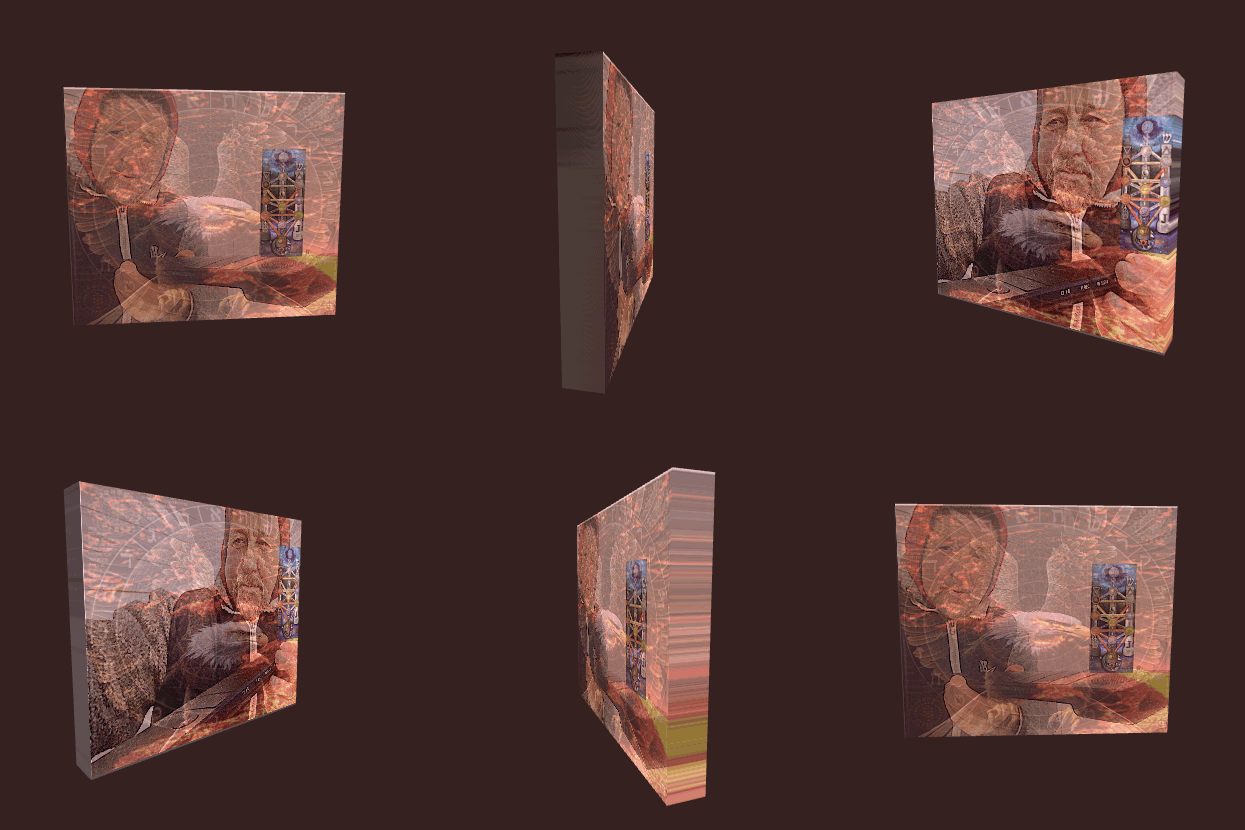
That's where I come in. Cajun Dead et le Talkin' Stick isn't a band. It's a lyric bank, with 235 songs and counting, over forty years, in French, English, Italian, and Algerian Arabic. Each word is human-authored. I'm a lyricist and a visual-conceptual artist from Nova Scotia, not a vocalist, and closed communities of musicians rarely make room for voices they feel are too much for their Insular and creatively bankrupt 1970 operating system to handle .
Consequently, I see Suno AI more as a studio desk extension than a threat to creativity. The lyrics are my scores. The prompts are orchestrations, putting North African Raï under a 1755 complaint or a modal Appalachian drone under a French couplet. The demos are a sales aid, illustrating how songs move, their tempo, and their emotional pitch. Ultimately, the song is available to the player, the performer might be. Simkin will soon forbid unlicensed AI use in his contracts. I get it. My approach is a clean, human story, machine scratch.
 Claude Edwin Theriault

Simkin can't find a band, so he's built demos that show how the songs function. He's now in search of his band. He's built demos that serve bar bands wanting to perform great songs, not mediocre self-penned efforts, for festival acts, for the Francophone or the Cajun, and for composers in need of songs for film, stage, or gaming without the hassle of finding the words themselves.
From Panic to Source: What Musicians Should Do Next
He's uncertain about the business direction. He's still searching for the next big artist. Here's the part that no one's willing to admit aloud: the next big song may have already been written; it just doesn't have a singer.
And there's a strong chance that Cajun Dead et le Talkin' Stick, who are registered with SOCAN as both songwriters and publisher (a solid standing as SOCAN grapples with mechanical rights), will benefit from them. Lyrics for these groups and more, for composers requiring lyrics for film, stage, and games who are tired of banging on empty notebooks. With music and heritage content that melds sound and vision drawing most interest this week, one of those archives contains 260 paintings, each of which wears a song like a second skin. I detail my approach to infusing life into Acadian musicians in my notes.
Refus Global, published in 1948 by Paul-Émile Borduas, cost him his teaching position within a few months. The gatekeepers are dead; the manifesto lives. Institutions get nervous, and songs survive.
Frequently Asked Questions
Has music streaming really plateaued? Subscriber growth is slowing in mature markets. MIDiA counted 921.6 million global subscribers at the end of 2025, and most new growth now comes from the Global South.
Why are CDs making a comeback? Younger buyers want something physical to own. US CD revenue rose 58.6% in the first half of 2026.
What did SOCAN's CMRRA acquisition change? Performing and mechanical rights in Canada are now handled under one organization.
Is Cajun Dead et le Talkin' Stick a band? No. It is a lyric project of 235 human-written songs by Claude Edwin Theriault, with AI-assisted demos that are offered to musicians to perform.
How can musicians use these songs? Performers, bands, and composers can adopt a song and make the music their own; the demos show the intended feel.
Citations
- The music industry is closing in on a billion global subscribers—Music Business Worldwide
- SOCAN Acquires Canadian Musical Reproduction Rights Agency (CMRRA)—Billboard Canada
- CD sales are making an unexpected comeback amid a retro tech boom—TechCrunch
- Cajun Dead and the Talkin' Stick: Reclaiming a Counter Culture—NewsTrail
- Art Singularity: Cajun Dead Talkin' Song Catalogue to Watch—NewsTrail
- Cajun Dead and the Talkin Stick: Breathing New Life into Acadian Musicians—Modern Contemporary Artwork Trends