A New Acadian Festival Is Coming to the Village Historique, and the Tradition It Honours Never Stood Still
A new Acadian music festival at Village Historique Acadien celebrates 50 years while asking how living tradition can evolve without losing its roots.

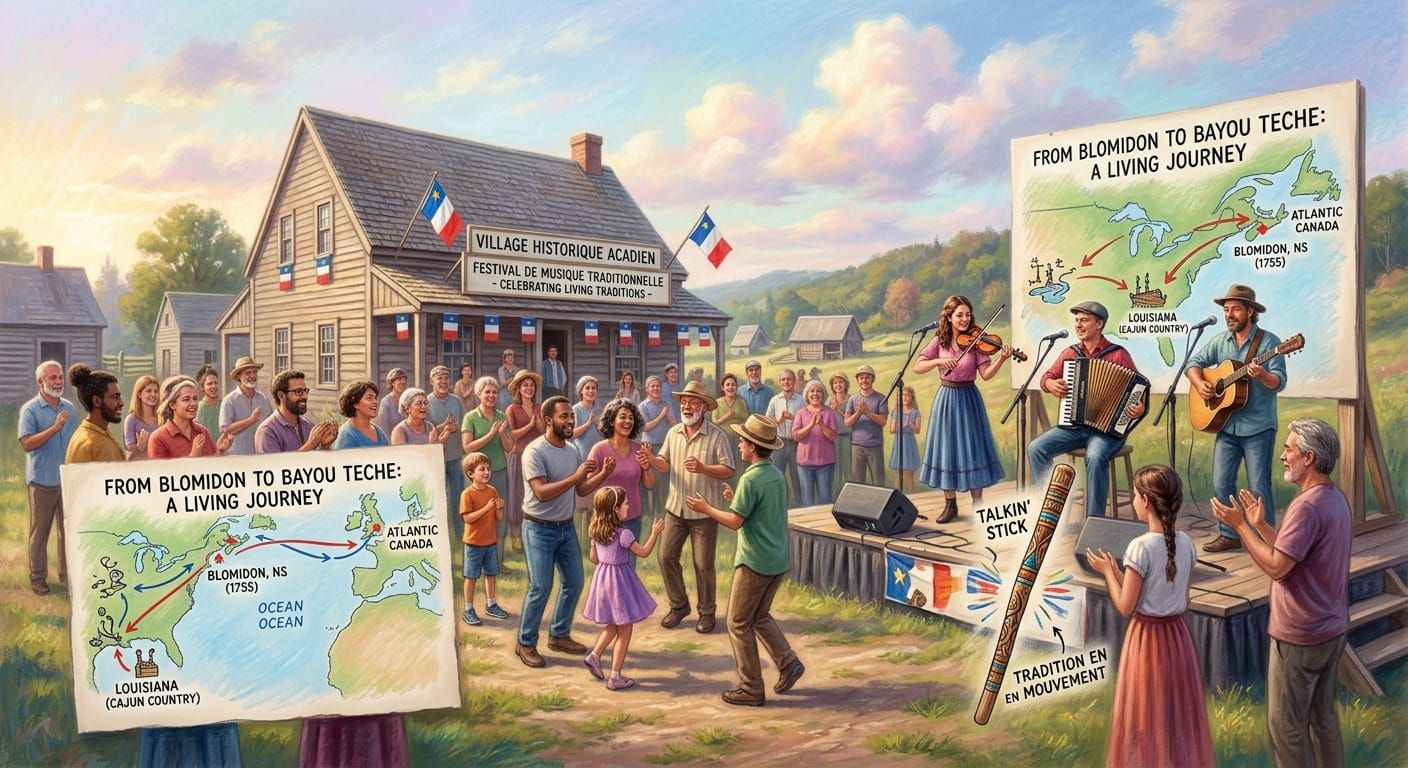
Heritage institutions rarely announce that a tradition is alive, because most of them were built to preserve what is finished. So it is worth noticing when one does. According to a report carried by Ground News from Acadie Nouvelle, the Village Historique Acadien in New Brunswick is marking its fiftieth anniversary by launching a festival of traditional music, with the first edition set for July 2 to 4. Performers have not yet been named. I write from Claregyle, Nova Scotia, and the news raises a question that sits at the centre of my own work: what does it mean to curate a living song tradition rather than a museum of it?
When a Heritage Site Becomes a Stage
The Village Historique Acadien has spent half a century reconstructing Acadian life through buildings, trades, and costumed interpreters. A festival changes the verb. Interpretation says this is how people lived; a festival says this is how people sing now. The program matters enormously here, because a traditional-music festival can be a showcase for the old repertoire, a launchpad for new writing in the same idiom, or a careful mixture of both.
World music has argued about this tension for decades. Programmers want authenticity that audiences can recognize, while artists want room to adapt the tradition to their own lives, languages, and instruments. The best festivals resolve the argument by treating tradition as a process. A complainte sung in a kitchen in 1850 and a complainte recorded in a bedroom studio in 2026 are links in one chain, and the festival's job is to let listeners hear the chain rather than one link.
There is also a commercial reality. Regional festivals are often the first rung on the touring ladder for Francophone and roots musicians in Atlantic Canada, offering paid stages, press attention, and live footage that international programmers watch before they book anyone.
The Acadian Root and the Louisiana Branch
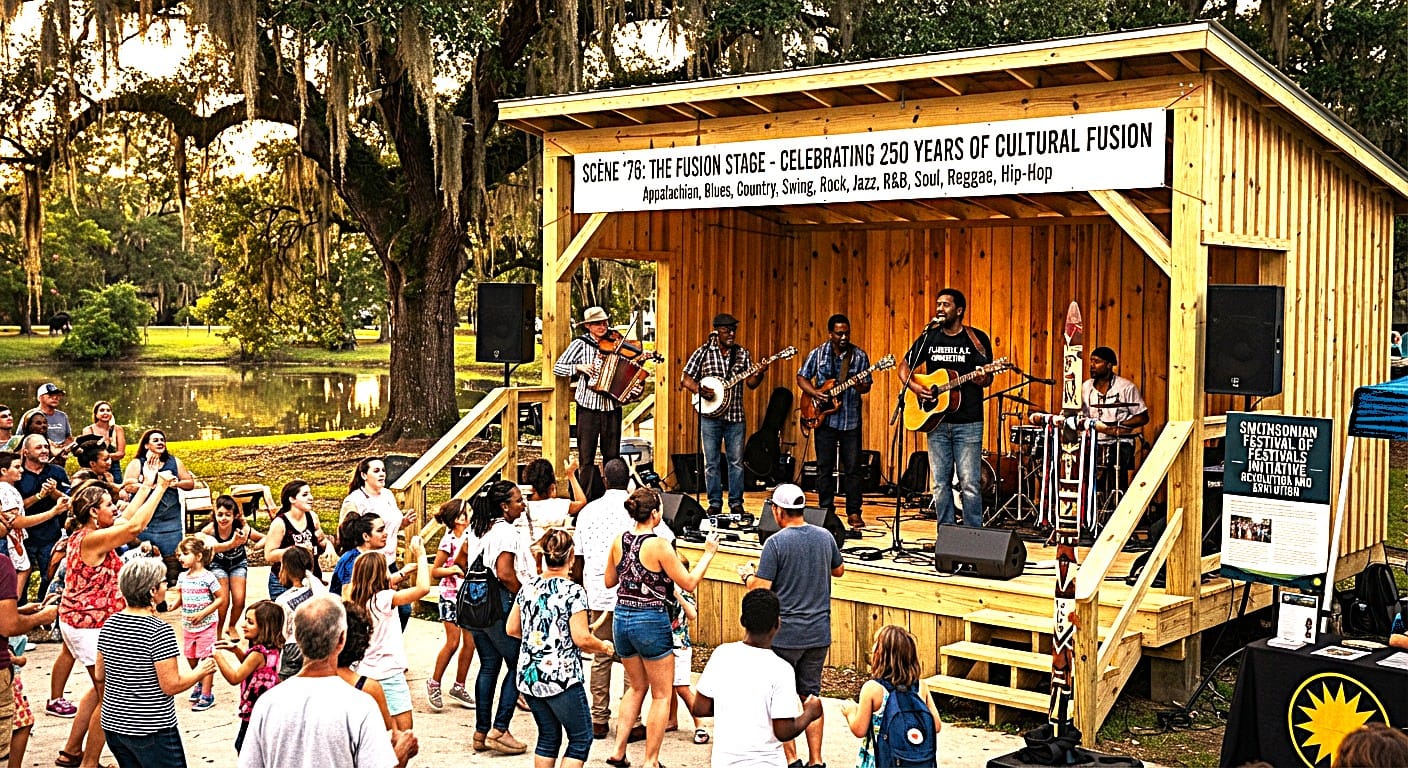
Any conversation about Acadian music eventually becomes a conversation about Louisiana, and the story is richer than the shorthand suggests. As 64 Parishes explains, Cajun music is often associated with Acadian settlers and their descendants, but it is in fact an indigenous mixture with complex roots in Irish, African, German, Appalachian, and Acadian traditions. That is an important correction. It tells us that the tradition survived by absorbing what it met and that a purist definition would have killed it.
The shared origin remains real. Both the Acadian communities of the Maritimes and the Cajun communities of Louisiana trace back to the people deported from Nova Scotia beginning in 1755. Some were scattered through Europe, some reached the bayous, and some returned to Atlantic Canada and rebuilt. The songs they carried, the ballads, laments, and dance tunes, took different shapes in different soil. A festival in New Brunswick that opens its doors to "Acadian and other traditional styles" is, whether it intends to or not, standing in the middle of that family tree.
For the wider world music audience, that family tree is exactly the kind of story that travels. It has a date, a route, a living language, and a sound. UNESCO's framework for safeguarding intangible cultural heritage treats songs and oral storytelling as living practices passed from generation to generation and constantly recreated by communities, which is the vocabulary a festival like this one will need.
Living Tradition Means Living Writers
The strongest test of any heritage festival is whether it makes room for new songs. A tradition that only repeats is a repertoire; a tradition that adds is a language. That is the principle behind Cajun Dead et le Talkin' Stick, the nearly 200-song bilingual English and French Acadian-Appalachian folk and world music lyric project I founded in Claregyle, Nova Scotia. It is rooted in the griot oral storytelling tradition, the Acadian complainte, and Appalachian modal folk, and it connects Francophone Europe, Louisiana, and Atlantic Canada in a single lyric tradition.
The griot comparison is useful for festival organizers. A griot is not a keeper of fixed texts; a griot is a living archive who reshapes genealogies and histories for each audience while remaining faithful to their core. The Acadian complainte works in a similar way, a sung record of loss that each generation retells in its own idiom. New writing in that spirit is not a betrayal of tradition. It is the mechanism by which tradition continues.
I have covered how this lineage plays out in the catalogue's imagery and structure in Newstrail, including the symbolist lyric structure behind the project and the arc from Blomidon to Bayou Teche, which follows the deportation route that Acadian song itself travelled. The catalogue is available on Spotify, Boomplay, and YouTube, and its visual archive lives at moderncontemporaryartworktrends.com. The project uses AI-assisted production and says so openly, while the lyrics remain human-written testimony.
What Independent Artists Can Do Now
With the first edition nine months away, the window is open. Artists should watch for a call for submissions, prepare a bilingual bio, and keep their best recordings current and easy to find. Songwriters should think about presenting new material beside older forms, since programmers listen for both continuity and fresh voices.
Frequently Asked Questions
What is the new festival at the Village Historique Acadien?
It is a traditional-music festival launched for the village's fiftieth anniversary, with its first edition scheduled for July 2 to 4, according to Acadie Nouvelle.
Who is performing?
No performers had been named in the coverage available at the time of writing, so watch the village's official announcements.
How are Acadian and Cajun music related?
Both descend from the Acadian community deported from Nova Scotia in 1755, though Cajun music in Louisiana also absorbed Irish, African, German, and Appalachian influences.
Why does living tradition matter for world music?
Audiences and programmers increasingly want songs that connect to history yet speak in a present-day voice, and new writing is how a tradition stays alive.
What is Cajun Dead and le Talkin' Stick?
It is a more than 200-song bilingual English and French lyric project by Claude Edwin Theriault of Claregyle, Nova Scotia, rooted in the griot tradition, the Acadian complainte, and Appalachian modal folk.
Sources
- Acadie Nouvelle via Ground News: Historic Acadian Village 50th anniversary festival
- 64 Parishes: Cajun Music
- UNESCO: Convention for the Safeguarding of the Intangible Cultural Heritage
- Newstrail: Cajun Dead symbolist lyrics world music song
- Newstrail: From Blomidon to Bayou Teche
- Modern Contemporary Artwork Trends: What is a griot