From Grand-Pré to Gaza: How the Cajun Dead et le Talkin' Stick Raï film within a film Soundtrack Connects 1755 and 2026 in a Single Song of Timeless Displacement
Two Acadian children in 1755. Two Arab children in Gaza 2026. Raï soundtrack in Arabic, English, and Algerian French. One timeless refugee story

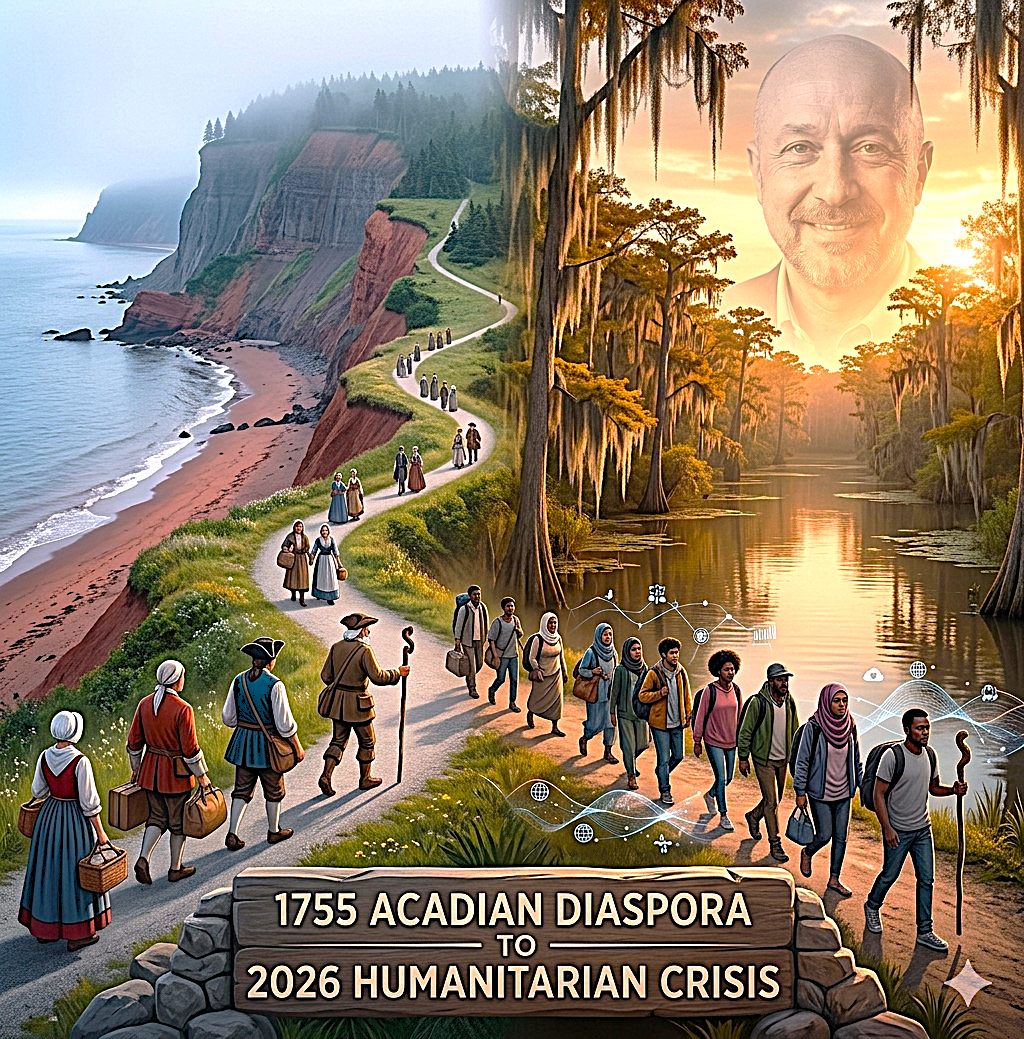
There is a word in Algerian Arabic that names the entire artistic philosophy of the Cajun Dead et le Talkin' Stick project, though the word belongs to a tradition a continent and an ocean away from the Bay of Fundy coast where the project was built. The word is "raï." It means "opinion." It means the insistence on stating the thing that the official culture, the polite society, and the approved aesthetic have decided should not be stated—the raw, unmediated, specific testimony of a community whose experience the dominant culture has systematically excluded from its record. Raï emerged in the early twentieth century in the port city of Oran in French-occupied Algeria as the voice of poor and underheard communities—giving voice to a whole segment of Algerian society entirely absent from mainstream discourse.
It was the music of the marginalized singing their specific truth in the specific language of their specific experience—French colonial occupation, urban poverty, and the suppression of Berber and Arabic expression by the administrative apparatus that had decided what Algerian culture was allowed to sound like. It was, in every structural sense, the Algerian complainte. And now it is the sonic language of the most ambitious project in the Cajun Dead catalogue: a bilingual film within a film whose soundtrack carries the story of two Acadian children displaced in 1755 and two Arab children displaced in Gaza in 2026 in a single score that holds both testimonies in the same breath.
The Film Within a Film: Two Displacements, One Ancient Story
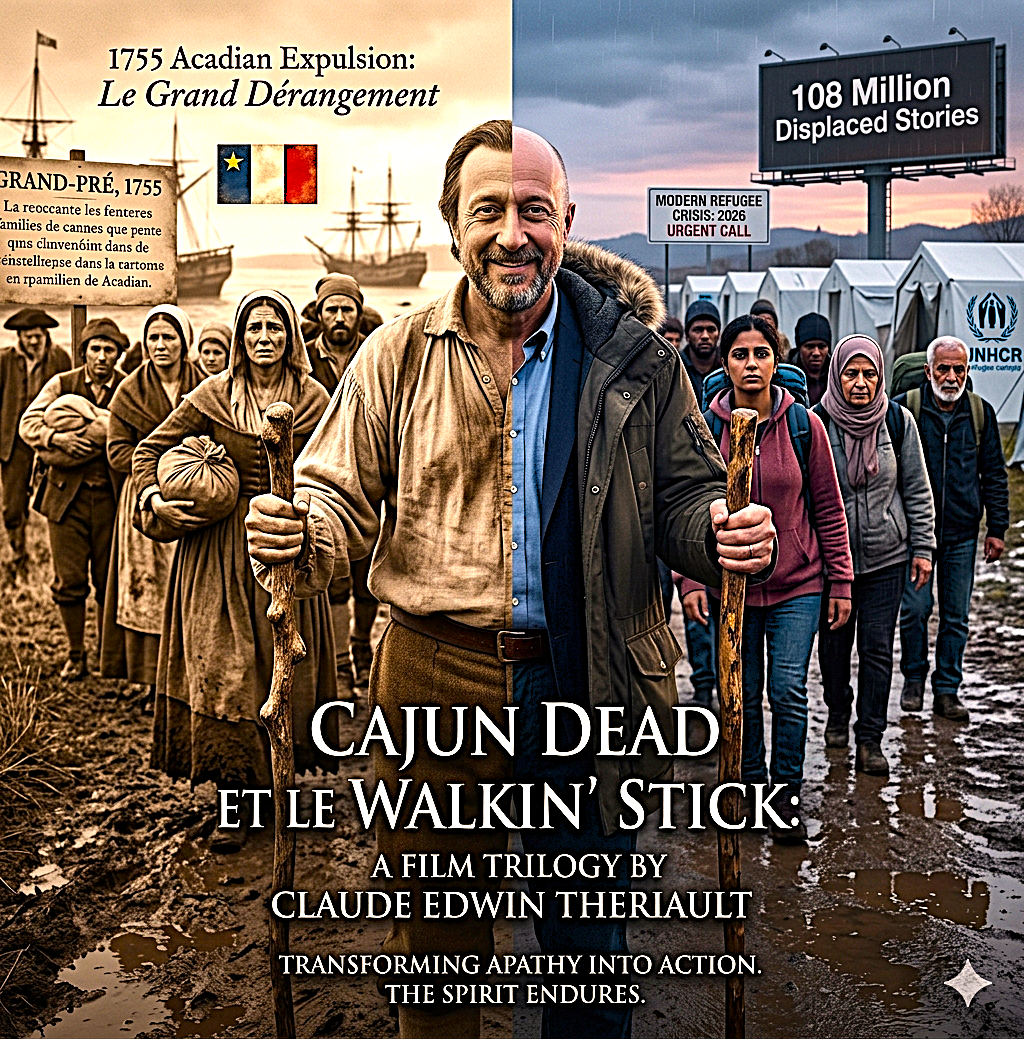
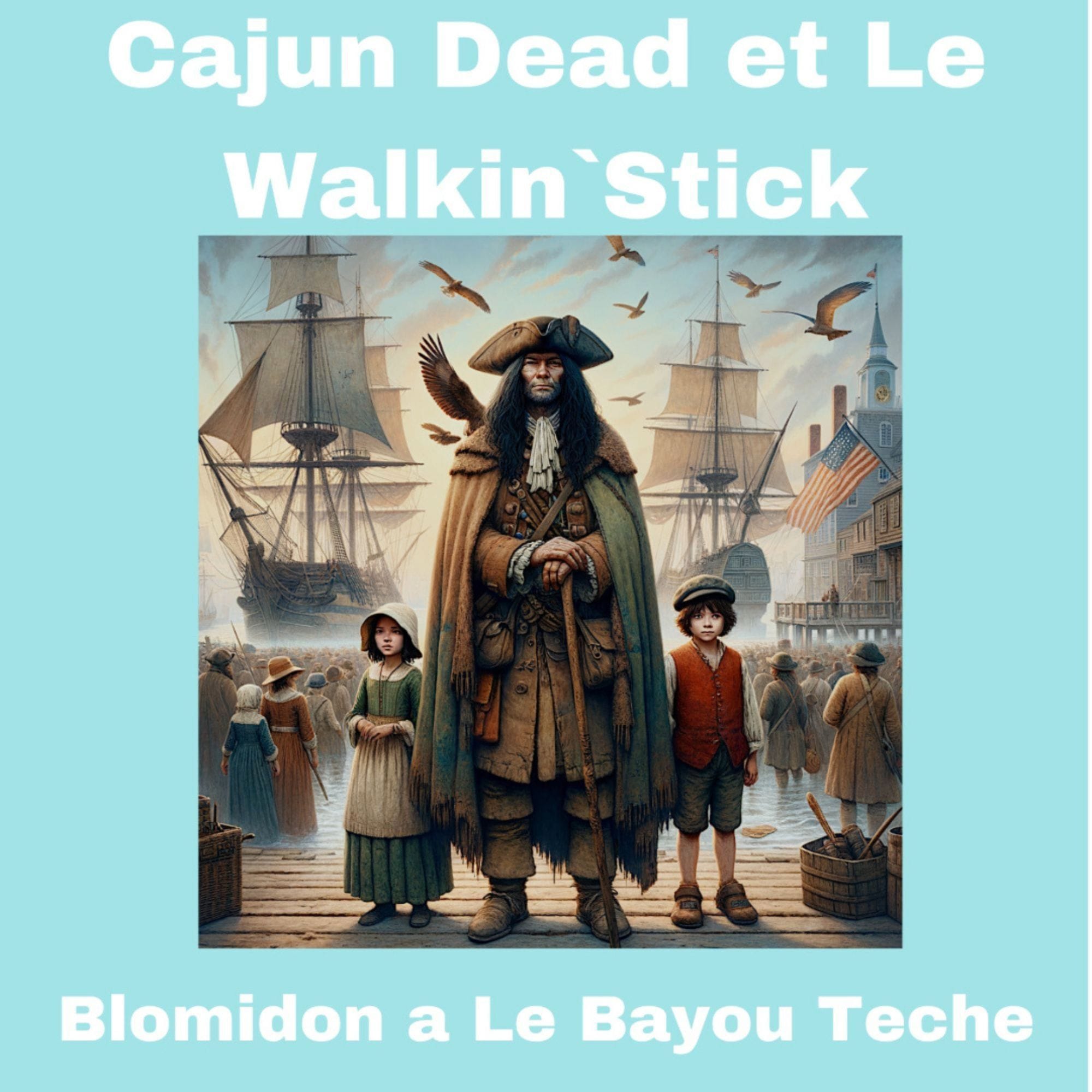
The structural concept of the film is as precise as any music theory argument the series has produced. The film is two films simultaneously—the English-language film and the French-language film—each one carrying the same story from its own linguistic and cultural angle, each one scored with its own sonic architecture, the two versions together constituting a unified artistic statement about the one human experience that no language has been able to contain alone. Two African Acadian children in 1755, expelled from the headland of Blomidon by a British colonial administration that did not consider their humanity a constraint on its military logistics. Two Arab twin children in Gaza in 2026, internally displaced—often multiple times—in a conflict that the ICMC's April 2026 report documents as having displaced 1.9 million people, killed 70,000, and destroyed the infrastructure of an entire civilization in two years. The 1755 children and the 2026 children do not meet in the film. They do not need to. The displacement is the same displacement. The fear is the same fear. The specific weight of the child who does not understand why they have to leave the only home they have ever known is the same weight across two hundred and seventy-one years and two continents. The film within a film is the form that holds both without reducing either to an illustration of the other.
The English-language film soundtrack carries two songs that are part English and part Arabic—the bilingual structure of the Cajun Dead catalogue applied to the ancient modal language that connects the two traditions. The French-language film soundtrack carries a song that is partially Algerian Arabic and partially Algerian French—the specific hybrid of the Raï tradition, the music that crossed the Mediterranean in the luggage of Algerian immigrants who came to settle in France and that was inscribed by UNESCO on the Intangible Cultural Heritage of Humanity list in 2022, carrying the memory of colonial occupation and displacement in the specific bilingual French-Arabic texture that the Acadian experience mirrors from the other side of the colonial relationship.
The Modal Thread: From Granada's 1492 Expulsion to Oran to the Bay of Fundy
The musicological connection between the Acadian complainte tradition and the Raï tradition is not a stylistic choice or a world-music borrowing. It is an ancient genealogy. The Arabs of Oran were known for al-Andalous music—a classical style imported from Southern Spain after 1492, the year the Moorish and Jewish communities were expelled from Granada by the same Reconquista that produced the colonial administrative mindset that would later produce the Acadian deportation of 1755. The Moorish modal grammar that arrived in Oran from Granada in 1492 is the same modal system—the maqam tradition, the Hijaz and Dorian intervals, and the augmented second that produces the simultaneous sensation of familiarity and ancient depth—that travelled westward through Celtic music into the Acadian Dorian scale of the Nova Scotia oral tradition. The Raï soundtrack of the Cajun Dead film is not crossing genres. It is following the modal thread home—back to the moment in 1492 when Granada fell, the Moorish musicians carried their modal grammar to Oran, and the same grammar was simultaneously being carried northward through Flanders and Brittany to the Nova Scotia coast by the French settlers who would become the Acadian community. The two children in the film—the Acadian child of 1755 and the Arab child of 2026—are singing in the same modal space because their ancestors played the same instruments for the same reasons in the same tradition before the borders that separated them had been drawn.
The structure of each song in the soundtrack follows the specific quadripartite architecture of the Raï tradition adapted to the film's bilingual logic. The English-language film songs move from English through Arabic through Algerian Arabic and back to English—the colonial language bracketing the indigenous testimony, the Arabic filling the interior of the song with the specific gravity of a community that has been required to carry its truth in a language the colonial administration did not understand well enough to suppress. The French-language film songs move from Arabic through Algerian French through Arabic and back to French—the same architecture from the other side of the colonial relationship, the language of the Acadian community and the language of the colonial administration of Algeria occupying the same formal space, the Arabic testimony moving between them like the displacement narrative that both communities share.
Raï, Displacement, and the Soundtrack the World Music Press Has Not Yet Heard
The Raï tradition has a specific and documented relationship to the experience of displacement that makes it the precise sonic language for a film about two children expelled from their homes two hundred and seventy-one years apart. Cheikha Rimitti—one of Raï's earliest and most enduring stars—said in a 2001 interview: "I sang all the subjects back then. I sang about misery. I sang about love. I sang about the condition of women. I sang about ordinary life, about concrete things. I sang the life I had seen, my own history. Raï music has always been a music of rebellion, a music that looks ahead." That is the Cajun Dead position in its most compressed available form. The displacement songs in this soundtrack are not protests. They are testimonies—the specific weight of specific children in specific places in specific historical moments, sung in the languages those children would have known, in the modal grammar that connects their traditions across the centuries and the continents that separated them.
How the Cajun Dead et le Talkin' Stick film within a film, Raï Soundtrack, Connects 1755 and 2026 in a Single Song of Timeless Displacement From Grand-Pré to Gaza:
The complete Cajun Dead song catalogue has always been moving toward this film. The nearly 200 songs are the archive from which the screenplay draws—each one a chapter of the testimony that the film is now assembling into a narrative that the three-volume book trilogy will carry into literary form and the Raï soundtrack will carry into the ancient modal space where the Acadian and Algerian and Palestinian oral traditions have always, without knowing it, been singing the same song. As the Cajun Dead griot and complainte tradition has documented from the beginning: the griot does not invent the story. The griot witnesses it. The film within a film is the witness at a civilizational scale—the two children, the two displacements, and the one ancient song that has been waiting for this specific form since the first community was expelled from the first home by the first administration that decided the community's presence was inconvenient.
Five FAQs on the Raï Soundtrack, the Film Within a Film, and Cajun Dead
What is Raï music, and why is it the right sonic language for this film? Raï is a form of Algerian folk music that originated in the 1920s in the port city of Oran—a multiethnic city under French colonial occupation where French, Spanish, Jewish, Berber, and Arab communities converged. The word means "opinion" in Algerian Arabic—the insistence on stating the specific truth the dominant culture has decided should not be stated. It was inscribed on the UNESCO Intangible Cultural Heritage of Humanity list in 2022. Its specific combination of Arabic and Algerian French, its modal roots in the al-Andalous tradition expelled from Granada in 1492, and its historical function as the voice of the displaced and the marginalized make it the precise sonic language for a film about two children expelled from their homes—one in 1755 and one in 2026—by colonial administrations that shared the same fundamental logic.
What is the film-within-a-film concept, and how does the soundtrack serve it? The film exists in two simultaneous versions — an English-language film and a French-language film — each carrying the same story from its own linguistic angle. The English soundtrack carries two songs structured in English-Arabic-Algerian Arabic-English quadripartite form. The French soundtrack carries songs structured in Arabic-Algerian French-Arabic-French form. The two versions together constitute a unified statement about the one human experience of displacement that no single language can contain—the two Acadian children of 1755 and the two Arab twin children of Gaza 2026 sharing the same modal space because their oral traditions share the same ancient ancestry.
What is the musical connection between the Acadian complainte and Algerian Raï? Both traditions descend from the al-Andalous modal grammar expelled from Granada in 1492—the Moorish musical system that travelled to Oran and became the foundation of Raï while simultaneously travelling northward through Brittany and Normandy to Nova Scotia and becoming the modal foundation of the Acadian complainte. The Hicaz makam intervals, the Dorian modal scale, and the specific augmented second that produces the sensation of ancient depth in both traditions are the same intervals travelling two different routes from the same 1492 source.
Who are the two sets of children in the film? Two African Acadian children displaced from the Bay of Fundy coast in the 1755 Grand Dérangement — the largest forced deportation in North American history before the twentieth century. Two Arab twin children in Gaza in 2026 — internally displaced, often multiple times, in a conflict that has killed 70,000 people and displaced 1.9 million. The film holds both without reducing either to an illustration of the other. The displacement is the same displacement across two hundred and seventy-one years and two continents.
Where can I hear the Cajun Dead et le Talkin' Stick catalogue? The full catalogue streams on Spotify at open.spotify.com/artist/2CIE6ZlMfwMGdwkRgCYbsd, on Boomplay at boomplay.com/artists/106018570, and on YouTube. The complete annotated song guide and full cultural framework are at moderncontemporaryartworktrends.com.