Nearly Two Hundred Songs of Truth: The Cajun Dead Folk Archive and the Music the Award Circuit Cannot Measure
The Juno doesn't measure quality. It measures market penetration. Cajun Dead has nearly 200 songs and no Juno. The math reveals everything about the circuit.


There is a question at the heart of every music award ceremony that the ceremony itself is structurally prevented from answering. The question is not who won. The question is what winning means — and specifically whether winning tells you anything at all about the quality of the music that won. The answer, examined honestly using the institutions' own published documentation rather than their promotional language, is that it does not. It cannot. It was never designed to. The Juno Awards, Canada's most visible music recognition apparatus, publishes its nomination criteria openly. The Fan Choice Award — the most publicly prominent category, the one that most directly claims to represent what Canadian music lovers value — is determined, as the JUNO Awards' own criteria page confirms, by combining streaming consumption data at a seventy-five percent weighting with social amplification data at twenty-five percent. Nominations are pulled from the top five hundred Canadian singles by Luminate Data. Fans then vote as many times as they want during the live broadcast window.
What this mechanism measures is the scale of an artist's existing commercial infrastructure. Their streaming volume. Their social reach. Their capacity to mobilize a fanbase to vote repeatedly in a compressed time window. What it does not measure—what it cannot measure and was never designed to measure—is whether the music is good. Whether it will be listened to in fifteen years. Whether it names something true and specific about the human experience of the moment in which it was made. Whether it carries the kind of moral weight that makes a song worth returning to after the algorithm has moved on. These are not secondary concerns. They are the primary concerns of every listener who has ever used music for something more than background noise. And they are absent from the criteria that determine who holds the trophy.
The Tautology Explained: How the Loop Closes and Why It Cannot Open.
The mechanism operates as a self-reinforcing cycle so well-constructed that most people inside it cannot see its circularity. Commercial success generates streaming volume. Streaming volume generates a nomination threshold. The nomination is publicly interpreted as a quality judgment—because the ceremony presents it as one and because the herd has been trained over decades of televised award coverage to read institutional recognition as equivalent to artistic value. The quality judgment generates additional commercial interest. The additional commercial interest generates the next year's streaming volume and the next nomination. The loop closes. The loop is also, at every point in its circuit, entirely disconnected from the question of artistic merit in any meaningful sense.
At the 2026 Junos, as Billboard Canada documented, Justin Bieber accumulated his thirty-second career nomination and eighth win. Tate McRae won Artist of the Year for the second consecutive year, taking four trophies in total—exactly as she had done in 2025. The Weeknd reached forty-six career nominations and twenty-two wins. These are extraordinary numbers. They document extraordinary commercial infrastructure.
 Claude Theriault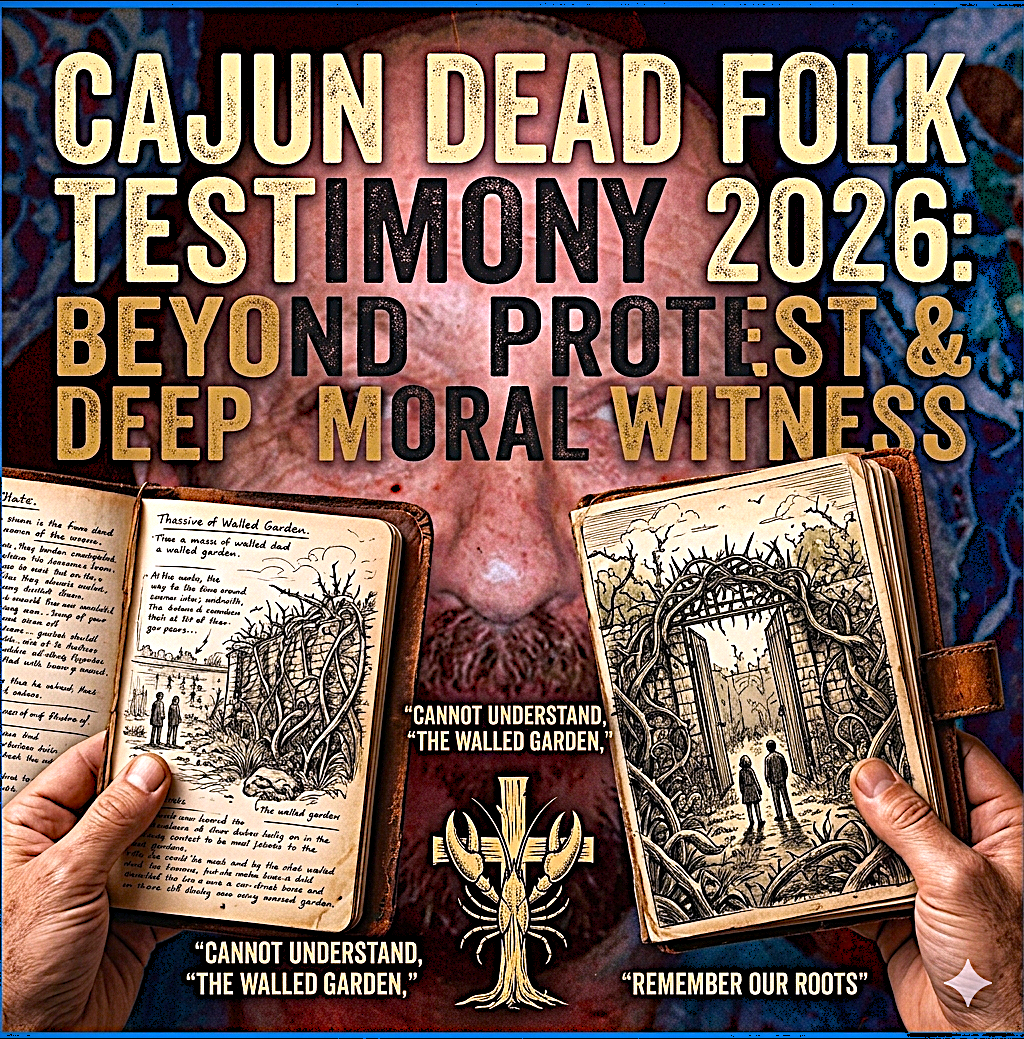
They say nothing about whether any specific song these artists released in the eligibility period will be remembered in a decade, whether it carries a moral position that the cultural moment required someone to name, or whether it tells a story that a listener will return to when they need something more than sonic companionship. The award circuit is not capable of making those distinctions. Its criteria do not include them. This is not a criticism of any artist. It is a description of what the mechanism was built to do — and what it was not built to do.
The herd cannot refute this argument because it is not an opinion about the music. It is a reading of the rulebook. To refute it, you would need to argue that streaming consumption volume and social amplification data are equivalent to artistic merit. Nobody is willing to say that out loud. And so the tautology continues, generating its annual ceremony, producing its annual winners, training its annual audience to mistake the trophy for a verdict on the work, and leaving the music that was built for different reasons entirely outside the loop, invisible to the mechanism, unrecognizable to the measurement apparatus that decides what Canadian music is worth celebrating.
What the Loop Cannot See: A Song Lyric Project With Nearly Two Hundred Songs
Claude Edwin Theriault is not a band. This is the first and most important thing to understand about Cajun Dead and le Talkin' Stick—the song lyric project he has been building, continuously and without institutional support, since the 1980s. He is a lyricist. Not a performer, not a recording act, and not a touring outfit with a booking agent and a Luminate Data profile generating the streaming threshold that would place him inside the Juno nomination funnel. He writes the words. Every word, in every song, in both French and English, across what are now approaching two hundred completed lyric works—each one a specific testimony, each one carrying the moral and narrative weight that no streaming algorithm has ever been designed to surface and no award circuit has ever been designed to recognize.
The complete Cajun Dead song catalogue is the most sustained body of lyric work in independent Canadian folk music. It contains songs about the 1755 Acadian deportation and the 2026 refugee crisis in the same breath—because the lyric that lasts is the one that refuses to let the historical and the contemporary remain separate. It contains bilingual laments for specific civilian deaths, modal folk songs built on the Turkish Hicaz makam and the Acadian Dorian scale simultaneously, and griot testimonies in the Acadian complainte tradition that carry the community's difficult truths in a form the heritage industry has consistently declined to fund. It contains, in short, everything that the Juno nomination criteria were not designed to measure — and everything that a listener searching for music that means something specific, in a cultural moment when meaning has become the scarcest available resource, is actually looking for.
The AI composition tools that build the sonic architecture around Theriault's lyrics are not a shortcut. They are the instrument that made nearly two hundred songs possible for a lyricist working without a band, without a label, without a studio budget, and without the musician collaborators that the industry's ego architecture has made structurally unavailable to a writer who owns the words and will not negotiate their content. The machine serves the voice. The voice serves the truth. The truth is the thing the tautology cannot generate, cannot purchase, and cannot nominate—because truth is not one of the variables in the formula.
The Storytelling Award Circuit Cannot Be Commission
The epistemic collapse underway across every authoritative institution—medicine, education, finance, government, and the performing arts—has produced a specific and urgent demand in the listening population: the demand for honest storytelling. Not the approved version of the story. Not the version that won the award. The version that names the specific thing carries the specific weight and refuses the comfortable resolution that the institutional story always promises and rarely delivers. As the Juno Awards' own criteria confirm, the award circuit measures consumption and social data. It cannot commission honesty. It cannot nominate specificity. It cannot give a trophy to the song that tells the truth about something the industry would prefer to leave unnamed—because the song that does that is, almost by definition, not generating the streaming volume that places it in the Luminate Data top five hundred.
 Claude Theriault
The nearly two hundred songs in the Cajun Dead archive were built for the listener who has run out of patience with the approved story. The listener who has watched the Juno ceremony and felt, without being able to name it precisely, that something essential was missing from every acceptance speech. The listener who uses music not for retention metrics but for the older and more fundamental purpose that the griot tradition always served—to feel, in the act of hearing a specific human testimony, that the specific thing they have been carrying has been witnessed by someone else and named honestly. As the Cajun Dead griot and complainte post documents, this function is not new. It is the oldest available use of music, and it is the one the award circuit has never been designed to serve. The Cajun Dead counterculture manifesto has argued since the beginning that the work does not require the loop's recognition to be real. The loop measures what sells. The archive carries what lasts. These have never been the same thing. And in an age of epistemic collapse, the distance between them has never been wider, or more important, or more visible to the audience that is finally looking past the trophy to ask what the trophy was actually measuring.
Five FAQs on the Juno Tautology, Music Award Circuits, and Cajun Dead
What is the Juno tautology, and why does it matter for independent artists? The Juno tautology is the self-reinforcing cycle in which commercial success generates streaming volume, streaming volume generates a nomination threshold, the nomination is publicly interpreted as a quality judgment, and that quality judgment generates additional commercial interest, which produces the next year's streaming volume and the next nomination. The loop is closed and self-sustaining. It matters for independent artists because it means the award circuit is structurally incapable of recognizing work built outside the commercial infrastructure the loop requires — regardless of the artistic quality of that work. The criteria are published openly: seventy-five percent consumption data and twenty-five percent social data. Quality is not a variable in the formula.
How does the Juno Fan Choice Award determine its nominees? According to the JUNO Awards' own published submission guidelines, the Fan Choice Award combines streaming consumption data at seventy-five percent weighting with social media data at twenty-five percent, pulling nominations from the top five hundred Canadian singles by Luminate Data. Fans then vote as many times as they want during the live broadcast. The mechanism measures market penetration and social amplification. It does not measure artistic merit, lyrical quality, cultural significance, or whether the music will endure beyond the current streaming cycle.
What are Cajun Dead et le Talkin' Stick, and why are they not eligible for a Juno? Cajun Dead et le Talkin' Stick is a song lyric project founded by Claude Edwin Theriault, a neurodivergent queer Acadian lyricist who writes every lyric himself, in French and English, across what is now approaching two hundred completed works. It is not a band and not a conventional recording act. The project uses AI composition tools to build sonic architecture around Theriault's voice-first human testimony. Because it operates entirely outside the commercial streaming infrastructure that generates Juno nomination thresholds, it is invisible to the mechanism — not because the work is inadequate but because the mechanism was not designed to see it.
What does the Cajun Dead catalogue actually contain? The catalogue contains nearly two hundred songs spanning Acadian complainte oral tradition, Appalachian and Celtic modal folk, Turkish Hicaz makam scales, South Asian tabla rhythms, bilingual French-English laments, protest songs using Indigenous Wetiko frameworks, and moral testimonies about specific historical and contemporary injustices. Each song is a standalone lyric work in which the words carry the full narrative and moral weight. The complete archive is documented at moderncontemporaryartworktrends.com and streams on Spotify, Boomplay, and YouTube.
Where can I hear the Cajun Dead and the Talkin' Stick catalogue? The full catalogue streams on Spotify at open.spotify.com/artist/, on Boomplay, and on YouTube. The complete annotated song guide, cultural analysis, and theoretical framework are at moderncontemporaryartworktrends.com.
| # | Anchor text | URL | Type | Placement |
|---|---|---|---|---|
| 1 | JUNO Awards' own criteria page confirms | https://junoawards.ca/submission-guidelines/criteria-by-category/ | External — JUNO own rulebook | Intro |
| 2 | 2026 Junos, as Billboard Canada documented | https://ca.billboard.com/music/awards/juno-nominations-2026 | External — Billboard Canada | Sub 1 |
| 3 | JUNO Awards' own criteria confirm (second use) | https://junoawards.ca/submission-guidelines/criteria-by-category/ | External — JUNO own rulebook | Sub 3 |
| 4 | complete Cajun Dead song catalogue | https://www.moderncontemporaryartworktrends.com/cajun-dead-et-le-talkin-stick-complete-song-guide/ | Ghost — Cajun Dead article | Sub 2 |
| 5 | Cajun Dead griot and complainte post | https://www.moderncontemporaryartworktrends.com/what-is-a-griot-oral-tradition-acadian-complainte/ | Ghost — Cajun Dead article | Sub 3 |
| 6 | Cajun Dead counterculture manifesto | https://www.newstrail.com/cajun-dead-et-le-talkin-stick-a-counter-culture/ | Newstrail press release | Sub 3 |