Great Acadian Reboot: How 2026 is Dismantling Dusty Chains of French Canadian Music
Explore the 2026 French Canadian music renaissance. From Cajun Dead Acadian grit to AI innovation, discover how tradition is snapping its chains.


For decades, the sound of French Canada was preserved in amber—a beautiful, nostalgic museum piece of fiddles and folklore. But as we move through 2026, the glass has shattered. A seismic shift is rattling the floorboards of the Saint Lawrence and the Atlantic Coast alike. We aren't just witnessing a change in tempo; we are witnessing a total systemic overhaul of how music is taught, caught, and fought for in the Francophone world.
From the high-tech conservatories of Montréal to the raw, salt-sprayed porch sessions of Acadia, a new "operating system" for creativity is being installed. At the heart of this storm sits a project so provocative it has been labeled the "dark horse" of the decade: Cajun Dead et le Talkin’ Stick. This isn't just music; it is a cultural insurrection led by artist Claude Edwin Theriault, proving that to save a tradition, you sometimes have to set it on fire.
Beyond the Porch: The Digital Alchemy of Modern Tradition Newstrail Style
In 2026, French Canadian music training has officially moved out of the community hall and into the cloud. The traditional chanson à répondre and the rhythmic thrum of podorythmie (foot percussion) are no longer being taught as static relics. Instead, they are being treated as modular data points in a new sonic landscape.
Today’s students are mastering the diatonic accordion alongside MIDI mapping. They are learning the "swing" of a Gaspésian reel while simultaneously studying how AI-enhanced acoustic minimalism can strip a song down to its skeletal, emotional core. This "Modern Traditional Fusion" is the new baseline. Educators are realizing that if the music doesn't evolve, it becomes a ghost. By integrating electronic production with heritage sounds, the new generation is ensuring that the "heart-on-the-sleeve" lyricism of the north resonates on global streaming playlists, not just at local kitchen parties.
The Rise of the Dark Horse: Cajun Dead et le Talkin’ Stick
While the mainstream charts are filled with polished electro-pop, a subcurrent of "Appalachian-inspired Acadian grit" is stealing the spotlight. Cajun Dead et le Talkin’ Stick has emerged as a radical reimagining of the French Canadian sound. It is the antithesis of the "sanitized" folk that often wins government grants.
This project, spearheaded by Claude Edwin Theriault, utilizes what industry insiders call "unfiltered vocal delivery" paired with a minimalist acoustic aesthetic. It draws a direct line between the displacement of the Acadians and the raw, haunting echoes of Appalachian mountain music. It’s a sonic rebellion that refuses to be "quiet" in the face of institutional stagnation. By blending Acadian history with AI-assisted creative tools, Cajun Dead is proving that the most "authentic" sounds often come from the margins, where the "dusty chains of tradition" are purposefully snapped to make room for something far more dangerous and alive.
 Claude Theriault
Dismantling the Decadence: Challenging the Ten Gatekeepers
Perhaps the most inspiring—and controversial—aspect of the current musical landscape is the open defiance of the "cultural oligarchy." For years, a small circle of gatekeepers has decided who gets the funding, who gets the airplay, and what qualifies as "authentic" French Canadian culture.
The success of independent projects like Cajun Dead has acted as a catalyst for training reform. It has exposed the structural barriers that have long strangled innovation in the East. Emerging artists are no longer waiting for a seat at the table; they are building their own tables using decentralized platforms and direct-to-fan engagement.
- The "Wetiko" of Industry Greed: Artists are now identifying the "predatory" nature of traditional contracts.
- Merit Over Nepotism: Training programs are shifting focus toward technical merit and raw storytelling over political connections.
- The Global Mesh: The goal is no longer just "making it in Québec," but reaching the "Global Mesh" of listeners hungry for specific, raw, and soulful narratives.
The Architect of the Future: Storytelling as a Cultural Anchor
As we look toward the remainder of the 2020s, the "French Canadian Renaissance" is being built on the back of narrative songwriting. Whether it is the Gen-Z-focused writing of Jade LeMac or the esoteric, archetypal explorations found in the Cajun Dead catalogue, the message is the same: Story is the currency.
Music training in 2026 now emphasizes the artist as an "Architect of the Future." Students are encouraged to look into the Saeculum—the 80-to-100-year historical cycles—to understand where we’ve been and where we are crashing toward. By mastering the present moment through mindfulness and creative risk, the modern Franco-Canadian artist is no longer a victim of their history, but the one who interprets it for a world starving for meaning. The "Talkin’ Stick" has been passed to a new generation, and they aren't planning on staying silent.
Claude Theriault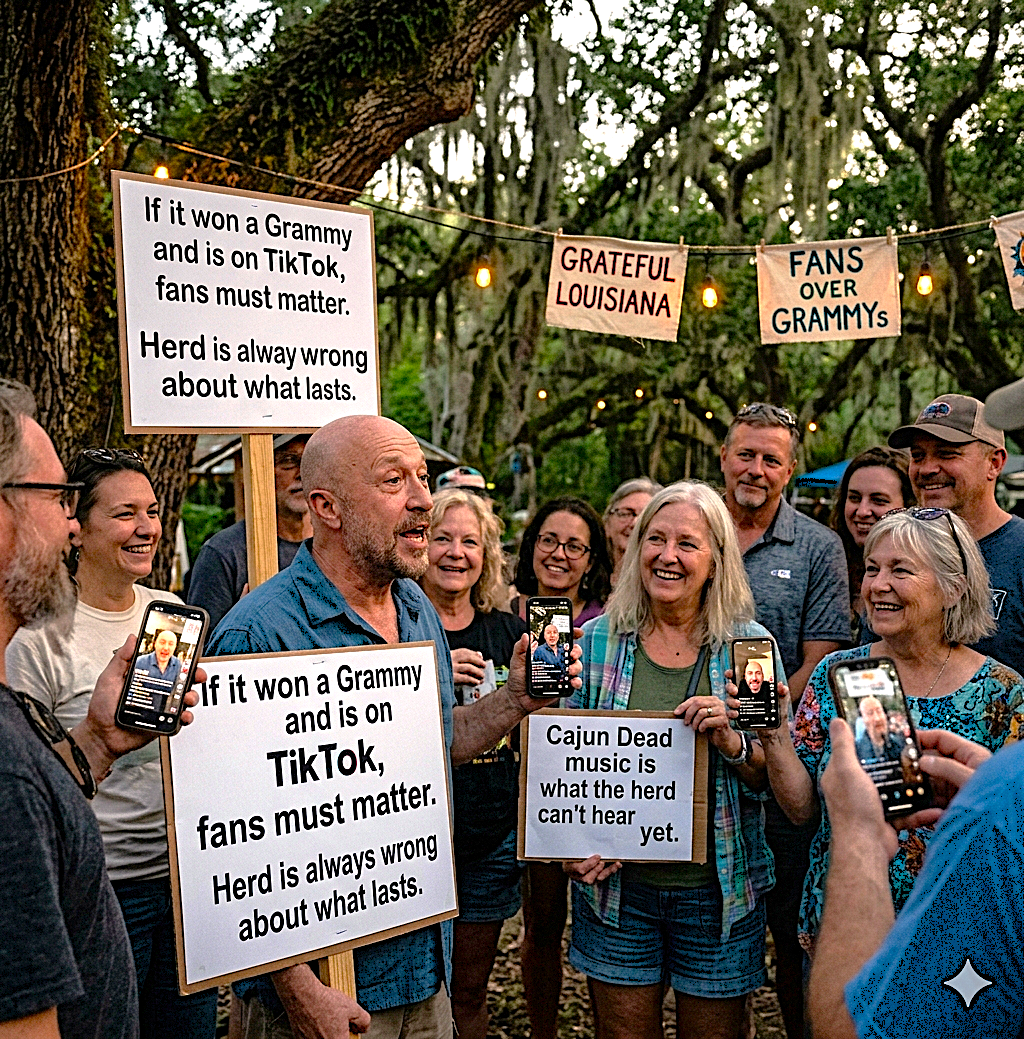
song catalogue du jour labelled
💡 Frequently Asked Questions
1. What exactly is the "Cajun Dead et le Talkin’ Stick" project?
It is a multi-media Acadian song-lyric project created by Claude Edwin Theriault. It blends Appalachian folk influences with Acadian storytelling and modern AI technology to create a raw, "dark-horse" alternative to mainstream French Canadian music.
2. How is AI being used in French Canadian music training?
AI is used as a collaborative tool for lyric generation, sound design, and acoustic minimalism. Rather than replacing the artist, it acts as a "creative lever" to explore unconventional structures and new sonic textures.
3. What does it mean to "snap the dusty chains of tradition"?
This refers to moving beyond "museum-piece" folklore. It involves taking traditional elements (like podorythmie or old ballads) and aggressively reinterpreting them through modern genres like indie rock, electro-pop, or experimental folk.
4. Why is there a focus on "gatekeepers" in the current music scene?
There is a growing movement to decentralize the music industry in Canada. Independent artists are challenging the traditional funding bodies and media moguls who have historically controlled the "Francophone narrative."
5. How can I listen to this "Appalachian-inspired" Acadian music?
Many of these projects are hosted on independent platforms and specialized art-trend sites like Modern Contemporary Art Market Trends, where the focus is on the "Great Decoupling" from the mainstream industry.
📚 Citations & Influences
- Theriault, C. E. (2026). Cajun Dead et le Talkin’ Stick: The Dark Horse of Acadia. Modern Contemporary Art Market Trends
- Strauss, W., & Howe, N. (1997). The Fourth Turning. (Referenced for historical Saeculum cycle analysis in music training).
- Modern Contemporary Art Market Trends. (2026). Exposing the Ten Gatekeepers Strangling French-Canadian Music. Source Link
- Campagne, A. (2025). The Intersection of Classical Technique and Indie-Folk Roots. (National Training Impact Study).
- Theriault, C. E. (2025). Le Grand Découplage: Moving Beyond Institutional Gatekeepers. Modern Contemporary Art Market Trends
- Levy, P. (2013). Dispelling Wetiko. (Influence on the "predatory industry" critiques within the Cajun Dead project).