Claude Edwin Theriault: The Acadian Artist Using AI to Revolutionize Filmmaking—And Why Heritage Gatekeepers Fear and despise Him
Discover how Claude Edwin Theriault uses AI to turn his Cajun Dead trilogy into a riveting film trailer despite heritage industry resistance.

 Claude Theriault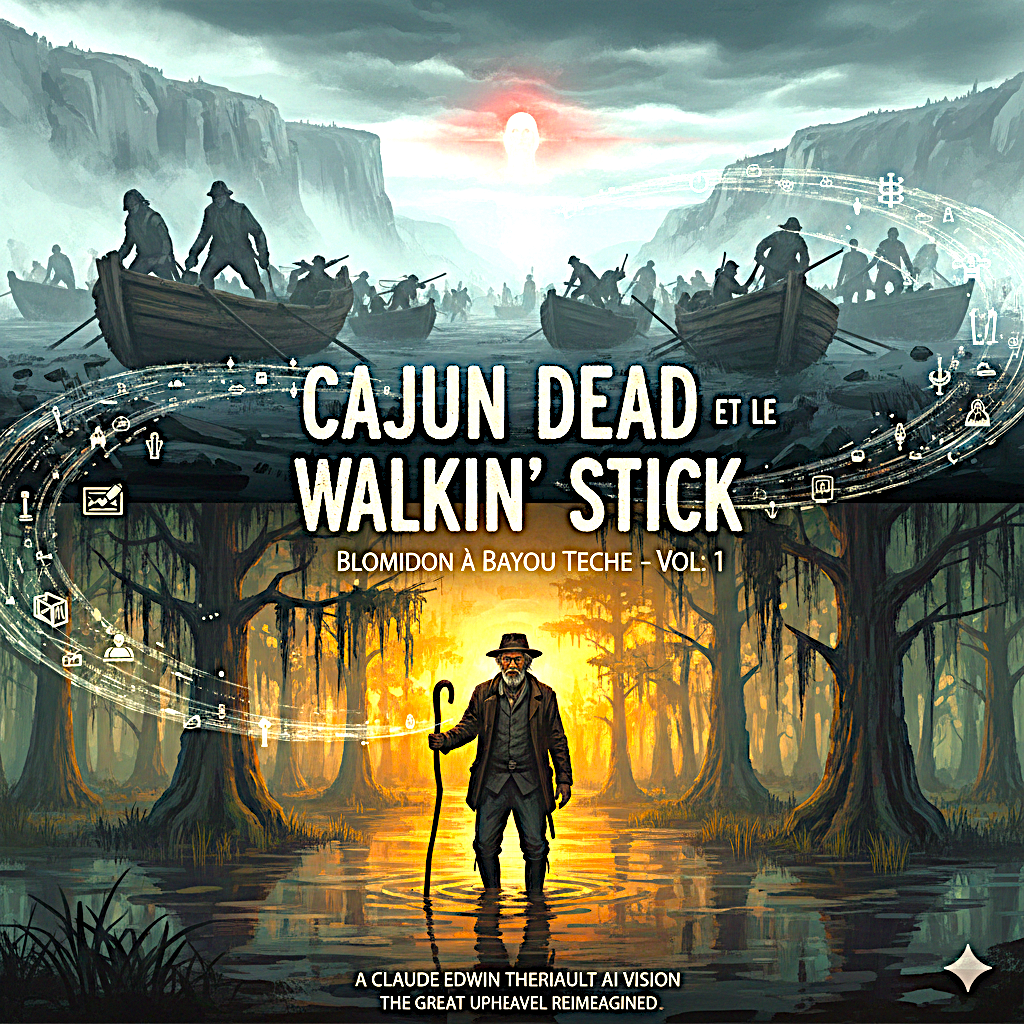
Claude Edwin Theriault: Revolutionizing French Acadian Storytelling Through AI-Powered Filmmaking
Discover how visionary artist Claude Edwin Theriault is using AI strategist skills to transform his "Cajun Dead et le Walkin' Stick" trilogy into a riveting movie trailer, despite resistance from heritage-patrimonial industry oligarchs.
Breaking Barriers: How AI is Democratizing the Film Industry for Independent Storytellers
Claude Edwin Theriault stands at the intersection of tradition and innovation, wielding artificial intelligence as a tool to bring centuries-old Acadian history to contemporary audiences. The French Canadian contemporary artist has recently unveiled a riveting five-minute trailer for Volume 1 of his trilogy, "Blomidon to Bayou Teche," showcasing his mastery of AI prompt engineering and video creation technologies.
French Version is quite interesting as well.
Unlike traditional filmmakers who require substantial budgets, expensive equipment, and large production crews, Theriault has harnessed Large Language Models (LLMs) and cutting-edge AI video platforms like OpenAI's Sora and Pika Labs to democratize the movie-making process. This revolutionary approach allows independent artists to bring their unique visions to life without the gatekeeping that has long characterized the entertainment industry.
The "Cajun Dead et le Walkin' Stick" trilogy chronicles the harrowing 1755 Acadian Expulsion (Le Grand Dérangement), when British authorities forcibly removed approximately 11,500 French-speaking Acadians from their Maritime Canada homelands in Grand Pré. Through the eyes of two young protagonists—Eva Lynn Theriault and Gabby Dev Dugas—the story captures the resilience, hope, and courage of children caught in the maelstrom of war and displacement. What makes Theriault's approach particularly innovative is his use of AI-powered storytelling techniques to create compelling visual narratives that resonate with contemporary audiences while honouring historical truth.
View the actual film here at a private crowdfunding link:
Theriault's AI strategist skill set extends beyond simple video generation. He approaches prompt engineering as an art form, describing it as "conducting an orchestra of algorithms" where human intent dances with machine potential. This creative synergy has enabled him to produce not just one, but three short video trailers as part of a comprehensive multimedia pitch deck designed to attract independent film studios willing to embrace innovation.
The accelerated development of AI technology is reshaping creative industries globally. While Hollywood remains hesitant to embrace AI in filmmaking fully, entrepreneurs like Theriault are pioneering a path forward. In India, Bollywood is poised to release complete AI movies in 2025, and studios worldwide are beginning to recognize the transformative potential of these technologies. Theriault's work positions him at the forefront of this revolution, demonstrating that the future belongs to those willing to adapt and leverage AI as an ally in the creative process.

The Heritage Patrimonial Industry's Silent Treatment: Cultural Gatekeeping in the Digital Age
Despite Theriault's innovative work and prolific output, he faces systematic exclusion from the Acadian heritage patrimonial industry—an industry controlled by what he describes as a clique of conservative oligarchs more concerned with maintaining comfortable narratives than celebrating contemporary Acadian voices.
The heritage sector in Nova Scotia has increasingly become less about authentic history and more about selling tourists a sanitized, "nice" narrative. It's a feel-good story perfect for cruise ship brochures: fiddles, butter churns, and hearty traditional meals. Yet behind the lace-curtained windows of these patrimonial theme park displays, a powerful group of gatekeepers controls both the narrative and access to cultural platforms. These cultural oligarchs masquerade as inclusive while practicing systematic exclusion of voices that challenge their preferred image—especially if those voices are queer, modern, or unapologetically bold.
Theriault's art, minted on the blockchain and fused with AI innovation, is miles ahead of the stagnant echo chamber of heritage museum curatorship. His books delve into the raw truth of Acadian identity, stripped of polite fictions. His music project, "Cajun Dead et le Talkin' Stick," offers a fresh take on French Acadian cultural resilience—confronting erasure rather than just commemorating survival. But despite his innovative and culturally relevant work, Theriault is excluded, a casualty of what appears to be junior-high-school-level jealousy and cultural mediocrity.
The oligarchs who control the Acadian narrative are, at their core, a self-serving cadre more concerned with government paychecks and pension security than actual cultural vitality. They view Theriault's boundary-pushing art, sheer creative output, and contemporary ordered viewpoint as threats to their comfortable positions. His work challenges the status quo and forces uncomfortable conversations about representation, authenticity, and who gets to tell Acadian stories in the 21st century.
This ghosting treatment extends beyond mere oversight. While government-funded initiatives like the Acadian Odyssey Commission install monuments and hold ceremonial ribbon-cuttings at places like Fort Anne National Historic Site in Annapolis Royal, these projects exist in a feedback loop that reinforces self-importance while doing nothing to foster real creative inclusion or engagement with living Acadian culture. Meanwhile, Theriault's work—which addresses contemporary refugee crises through historical parallels—receives no support or recognition from these same institutions.
The irony is profound. Theriault's trilogy connects the 400,000-year-old pattern of human displacement to current global humanitarian crises, with over 120 million people forcibly displaced worldwide. His work serves as both a cultural protest and a witness, using the Acadian experience as an accessible entry point for understanding contemporary refugee narratives. Yet the very institutions claiming to preserve Acadian heritage actively ignore one of its most innovative contemporary voices.
Turning Books into Blockbusters: Theriault's Strategic Multimedia Approach
Recognizing the limitations of traditional publishing in reaching broader audiences, Theriault has leveraged his creative skill set to develop a strategic multimedia approach that positions his trilogy for cinematic adaptation. His three short video trailers function as powerful promotional tools and proof-of-concept demonstrations for independent film studios willing to recognize the series' cinematic potential.
This strategic pivot acknowledges both challenges and opportunities in our visual-centric media landscape. While mainstream media outlets often overlook historical refugee narratives in favour of immediate crises—which themselves receive diminishing attention spans—visual storytelling offers pathways to broader cultural impact. Theriault's trailers distill the trilogy's core themes into compelling visual sequences that highlight the universal aspects of the refugee experience while maintaining the specific cultural authenticity of the Acadian story.
The recent five-minute trailer for "Blomidon to Bayou Teche" represents the culmination of Theriault's AI experimentation. By pushing platforms like Sora and Pika Labs to their limits, he has created a visual narrative that captures the emotional weight of family separation, the resilience of displaced communities, and the enduring power of cultural identity. The trailer demonstrates that AI-generated content can achieve cinematic quality when wielded by someone who understands both the technology and the story being told.
Theriault's approach to AI video creation goes beyond technical proficiency. He explores AI as a tool while simultaneously pushing it to discover its creative boundaries. This experimental mindset has allowed him to develop techniques and workflows that other artists can learn from. His work exemplifies the tremendous potential of AI to reshape the artistic and commercial landscape, serving as a beacon for Canadian artists and global creatives alike.
The multimedia pitch deck Theriault has assembled goes beyond the trailers themselves. It includes comprehensive story breakdowns, character development arcs, thematic analysis connecting historical displacement to contemporary issues, and a clear vision for how the trilogy could be adapted across multiple formats—from feature films to limited series to educational content. This professional approach demonstrates that AI democratization of filmmaking doesn't mean amateurish results; rather, it enables serious artists to compete on a more level playing field with established studios.
The timing of Theriault's work is particularly significant. As the global film industry witnesses transformation through AI adoption, those who master these tools early will shape the future of visual storytelling. The Western hemisphere's hesitation to fully embrace AI in filmmaking may represent a missed opportunity to create new categories of recognition at prestigious award ceremonies—categories that could celebrate the best AI-assisted films rather than ignoring this revolutionary shift in creative production.
The Cajun Dead Phenomenon: Musical Innovation Meets Cultural Preservation
Parallel to his literary and filmmaking work, Theriault has developed "Cajun Dead et le Talkin' Stick" as a groundbreaking musical project that fuses Appalachian influences with Acadian traditions. Now available on twelve major music streaming platforms, including Apple Music and Spotify, this project has achieved unprecedented visibility for a musical genre often confined to regional borders.
What makes Cajun Dead particularly remarkable is its frenzied production pace. While mainstream Acadian artists struggle to release more than one song every few months, Theriault's project produces and publishes new songs every few days. This exceptional productivity allows for continuous exploration of musical themes and styles while remaining constantly relevant and responsive to current events, social changes, and concerns of the Acadian community.
The musical project embodies the same innovative spirit as Theriault's literary and film work. Songs like "There Is Meat On Them Bones" and "Oh My Sweet Big Wang Daddi" venture into territories mainstream artists rarely dare to explore, offering listeners haunting glimpses into themes of physical embodiment, desire, and cultural identity that defy conventional categorization. The project has been described as "queergrass"—a provocative fusion of Acadian musical heritage with contemporary LGBTQ+ sensibilities that creates space for voices and experiences that might otherwise remain unheard.
Theriault's compositional approach transforms everyday Cajun cultural references into layered metaphors for human connection. The bilingual nature of his lyrics, seamlessly transitioning between English and the Cajun French dialect, mirrors the cultural duality many experience in the borderlands between mainstream and marginalized identities. This linguistic dance becomes particularly evident when Theriault juxtaposes sacred imagery with references to lived experiences, creating tension between spiritual tradition and bodily reality that characterizes much of his work.
The growing success of Cajun Dead et le Talkin' Stick highlights significant flaws in the established Acadian music industry. Despite the project's innovation and international following, it receives the cold shoulder from heritage patrimonial industry oligarchs who view its boundary-pushing approach as a threat to their comfortable narratives. This resistance parallels the exclusion Theriault faces in other creative domains, revealing a pattern of cultural gatekeeping that stifles innovation while claiming to celebrate tradition.
Perhaps the most telling aspect of Theriault's artistic significance is the conspicuous silence surrounding his work in mainstream Nova Scotian cultural institutions. Despite his innovative approach to traditional forms and profound exploration of typically unaddressed themes, Theriault remains largely unacknowledged by cultural gatekeepers who claim to celebrate Acadian artistic contributions. This silence speaks volumes about who gets included in official cultural narratives and who gets left out.
Frequently Asked Questions
Q1: What is the "Cajun Dead et le Walkin' Stick" trilogy about?
The trilogy chronicles the 1755 Acadian expulsion through the eyes of two young protagonists, Eva Lynn Theriault and Gabby Dev Dugas. The three volumes—"Blomidon to Bayou Teche," "Bayou Teche to Saint Pierre et Miquelon," and "Liberty Bell to Pubnico 1767"—explore themes of family separation, cultural resilience, identity erasure, and the home search. The walking stick serves as a multifaceted symbol representing cultural continuity, the refugee journey, ancestral memory, and resilience as it passes through generations of characters.
Q2: How is Claude Edwin Theriault using AI to create his movie trailer?
Theriault has mastered AI prompt engineering and video creation technologies, particularly OpenAI's Sora and Pika Labs platforms. He approaches this work strategically, using AI to transform text prompts into high-quality video sequences that capture the emotional weight and visual beauty of his Acadian story. His five-minute trailer for "Blomidon to Bayou Teche" represents months of experimentation pushing these platforms to their creative limits, demonstrating that AI-generated content can achieve cinematic quality.
Q3: Why is the heritage patrimonial industry excluding Theriault's work?
The Acadian heritage industry in Nova Scotia is controlled by conservative oligarchs more concerned with maintaining comfortable, sanitized narratives for tourism than with celebrating contemporary Acadian voices. Theriault's work—which is queer, modern, innovative, and unapologetically bold—challenges their preferred image and threatens their established positions. His prolific output, AI-driven innovation, and contemporary ordered viewpoint are seen as threats rather than contributions to cultural vitality.
Q4: What makes Theriault's approach to filmmaking revolutionary?
Theriault is democratizing the traditionally insular movie-making industry by leveraging AI tools that eliminate the need for expensive equipment or large crews. His approach allows independent artists to bring their visions to life and compete with established studios on a more level playing field. This represents a fundamental shift in who can tell stories on film and how those stories can reach audiences.
Q5: How does the trilogy connect to contemporary issues?
The trilogy draws explicit parallels between the 1755 Acadian expulsion and contemporary refugee experiences, illustrating how displacement represents a pattern that has repeated throughout human history. With over 120 million people forcibly displaced worldwide today, Theriault's work creates an accessible entry point for engaging with refugee narratives without the polarization that often accompanies contemporary discussions. The trilogy examines intergenerational trauma and cultural persistence, offering valuable insights for understanding the long-term implications of today's displacement crises.
Conclusion
Claude Edwin Theriault embodies the creative renaissance occurring at the intersection of traditional storytelling and cutting-edge technology. His "Cajun Dead et le Walkin' Stick" trilogy, recent five-minute AI-generated trailer, and prolific musical output demonstrate that the future of cultural preservation lies not in sanitized museum displays but in bold, innovative work that connects historical narratives to contemporary realities.
Despite facing systematic exclusion from the heritage patrimonial industry oligarchs who view his work as threatening, Theriault continues to push boundaries and create art that resonates with global audiences. His mastery of AI strategist skills positions him at the forefront of a revolution in visual storytelling, proving that independent artists can now compete in spaces previously dominated by well-funded studios and established institutions.
As the world grapples with mounting humanitarian crises and the transformative power of AI technologies, Theriault's work stands as both a cultural protest and a beacon of possibility—showing that the most important stories often come from voices the establishment tries hardest to silence.
References:
- French Acadian Author Theriault Using AI to Create a Video Trailer to Pitch His Trilogy
- Claude Edwin Theriault: The Canadian Visionary Artist Pushing the Boundaries of AI Video Creation
- The Acadian Ghost Story No One Dares to Tell: Claude Edwin Theriault and the Art of Exclusion
- The Acadian 1755 Exodus: How a Forgotten Refugee Crisis Echoes in Today's Global Displacement Drama
- French Acadian Song Catalogue on World Music Scene via Cajun Dead et le Talkin' Stick
- Cajun Dead et le Talkin' Stick Shakes Up the Musical Establishment