Volume Two of Cajun Dead et le Walkin’ Stick reignites a long‑buried humanitarian narrative by reframing the Grand Pré diaspora
Cajun Dead et le Walkin’ Stick Volume Two Rekindles the Grand Pré 1755 Diaspora and a Forgotten Humanitarian Story of Displacement and Resistance

Reclaiming a Silenced Humanitarian Story Through Cinematic Historical Fiction
Volume Two of Cajun Dead et le Walkin’ Stick emerges at a moment when digital noise overwhelms public attention and humanitarian stories are often reduced to fleeting headlines. In this climate, the newly released cinematic trailer segment refuses to let the Acadian expulsion fade into obscurity. Instead, it elevates the narrative into a bold, emotionally resonant commentary on displacement, identity, and the politics of survival.
 Claude Edwin Theriault
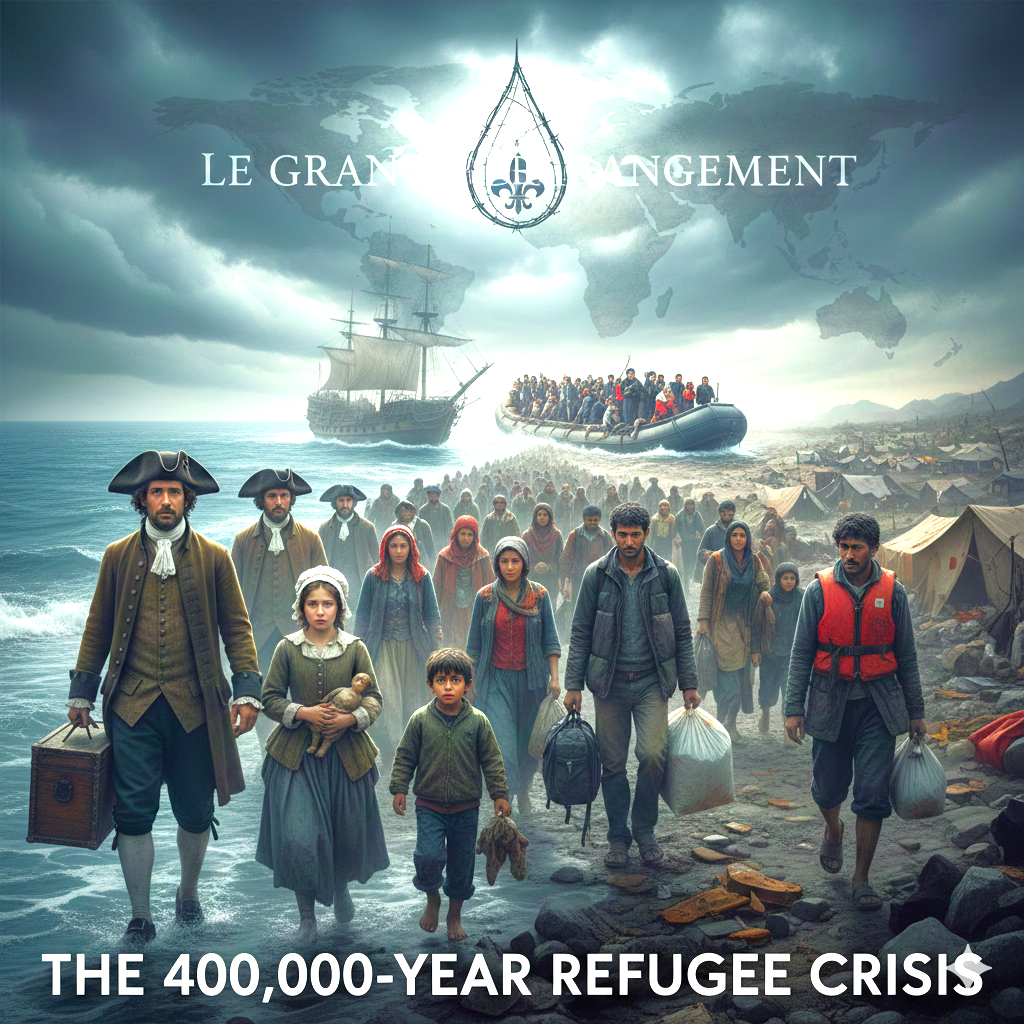
The project connects the 1755 deportation of the Acadians from Grand‑Pré to a much older human pattern—one stretching back hundreds of thousands of years. By framing the Great Upheaval within a 400,000‑year continuum of forced migration, the series positions the Acadian story not as an isolated tragedy but as part of a recurring global cycle driven by empire, conflict, and power. This reframing is essential in an era when modern media tends to prioritize trending crises over long‑form historical context.
Volume One introduced readers to Eva Lynn and Gabby Dev, two children separated from their families during the deportation. Volume Two expands their journey into a strategic, politically charged mission that transforms them from victims into agents of resistance. The narrative becomes a layered humanitarian parable disguised as a historical adventure—one that resonates far beyond its 18th-century setting.
At the heart of the trailer is Cajun Dead, a shapeshifting resistance figure who reveals the existence of a covert registry. This secret document contains names, coordinates, and clandestine routes designed to reunite scattered Acadian families. In stark contrast, British forces are building their own registry to track, control, and deport those who remain. The message is unmistakably modern: data determines destiny. Whether in the 18th century or the 21st, the power to catalogue people is the power to control their futures.
This is parallel to contemporary refugee registries, biometric systems, and border databases, and underscores the trailer’s relevance. It reframes the deportation of approximately 11,500 Acadians between 1755 and 1764 not as distant history but as a blueprint for understanding today’s global displacement patterns. In doing so, the project challenges viewers to reconsider how humanitarian crises are remembered, represented, and understood.

The Grand Pré Diaspora and the Humanitarian Crisis Modern Media Overlooks
Search trends spike daily around current conflicts, yet long‑term historical crises rarely sustain public attention. The humanitarian dimensions of the Grand Pré diaspora remain largely absent from mainstream discourse, overshadowed by contemporary political cycles and algorithm‑driven news feeds. Volume Two seeks to correct that imbalance by re-centering the Acadian expulsion as a foundational narrative of displacement in North America.
One of the trailer’s most powerful sequences takes place in a warehouse in Philadelphia. Here, Eva Lynn faces a moral dilemma: surrender the registry to save herself or protect the futures of hundreds of displaced families. She chooses resistance, even under threat of execution. This moment is not a theatrical embellishment—it reflects the real choices faced by displaced populations throughout history, from Acadian families in the 18th century to refugees navigating modern border regimes.
 Claude Edwin Theriault
The story to watch
Between 1755 and 1764, Acadian families were scattered across North America, Europe, and the Caribbean. Children were separated from parents, siblings vanished across oceans, and many families were never reunited. By presenting these historical realities through cinematic storytelling, the trailer forces viewers to confront an uncomfortable truth: displacement is cyclical, not episodic.
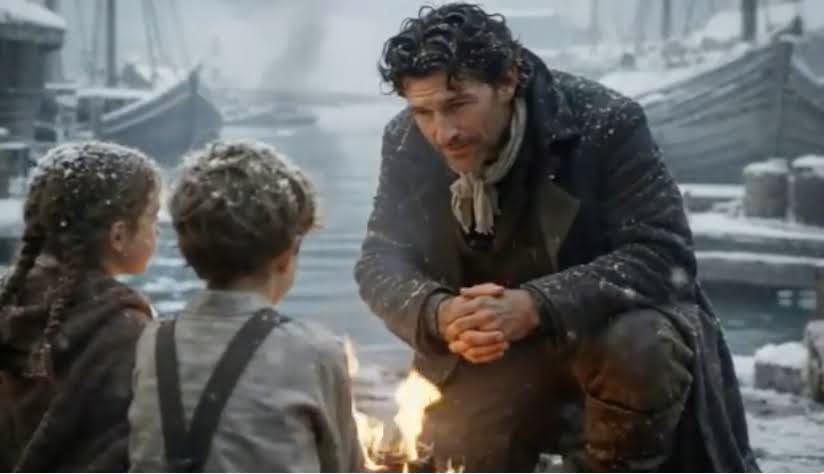
The humanitarian dimension of the Acadian expulsion extends beyond historical documentation. It is a story of emotional continuity—of identity fractured by exile, of bureaucratic erasure, and of resistance through solidarity. The trailer’s visual language reinforces this continuity: burning ships, coded astrolabes, winter docks, and shadowed warehouses evoke both historical specificity and universal themes of loss and resilience.
In a digital landscape saturated with distractions, this trailer cuts through the noise by grounding viewers in a human story that refuses to be forgotten. It insists that the Acadian diaspora is not merely a regional tragedy but a global humanitarian narrative with enduring relevance.

Why Volume Two Demands to Be Shared: A Narrative Intervention in the Age of Data and Displacement
Volume Two is more than a promotional clip—it is a narrative intervention designed to shift how audiences engage with historical and contemporary humanitarian crises. The storytelling demonstrates clear structural maturation from the first installment, following a disciplined three‑act arc of departure, initiation, and return. The stakes rise from personal survival to organized resistance, and the children evolve into strategic actors navigating coded maps, infiltrating settlements, and reclaiming the registry that holds hundreds of futures.
Yet the ending remains intentionally bittersweet. Eva Lynn and Gabby Dev succeed in reuniting multiple families, but not their own. This creative choice rejects simplistic closure in favor of realism. In real humanitarian crises, not every family finds resolution. The trailer honors that truth while still offering hope: the “elixir” returned to the community is not merely a document but a renewed sense of solidarity and the refusal to let displacement define identity.
The relevance to modern audiences is unmistakable. Today, global refugee numbers are at historic highs, and debates about borders dominate political discourse. Yet the human texture of displacement—the generational trauma, the moral dilemmas, the bureaucratic violence—rarely receives sustained artistic attention. Volume Two fills that gap by offering a story that is both historically grounded and urgently contemporary.
 Claude Edwin Theriault
Sharing this trailer becomes an act of awareness. It invites educators, historians, cultural institutions, and humanitarian advocates to engage with the Acadian story as part of a broader conversation about migration, justice, and the politics of memory. It challenges viewers to consider how historical expulsions inform modern frameworks for understanding displacement.
From a creative standpoint, the production value reinforces its impact. The antagonist—a British officer compiling a deportation registry—embodies the cold logic of empire. The visual motifs of coded star charts, burning ships, and clandestine routes evoke both danger and determination. The emotional climax rests not on spectacle but on moral choice, echoing the decisions faced by displaced people across centuries.
In a world conditioned to consume crisis content passively, Volume Two asks a sharper question: What does it mean to act?
By anchoring a 400,000‑year narrative of displacement in the Grand Pré diaspora, Cajun Dead et le Walkin’ Stick reframes Acadian history as global commentary. It positions the Great Upheaval not as a regional footnote but as part of humanity’s recurring confrontation with systems that displace the vulnerable.
As the trailer’s final frame hints at a possible journey toward Louisiana, the message is clear: the search continues. The story is unfinished. The humanitarian conversation is far from over.
A Humanitarian Lens for a Noisy Digital Age
Volume Two delivers a powerful reminder that history speaks—if we are willing to listen. In an era dominated by algorithms, rapid‑fire news cycles, and fragmented attention, the trailer offers a rare opportunity to engage deeply with a humanitarian narrative that has shaped generations. It bridges past and present, humanizes statistics, and insists that stories of exile deserve amplification rather than silence.
La version francaise
For audiences seeking meaningful narratives in a noisy media landscape, Cajun Dead et le Walkin’ Stick provides a compelling blend of historical fiction, humanitarian insight, and cinematic storytelling. It challenges viewers to reconsider how displacement is remembered and represented, and it invites a broader conversation about identity, resilience, and the politics of belonging.
 Claude Edwin Theriault
Frequently Asked Questions
1. What is the central theme of Volume Two?
Volume Two explores forced displacement through the lens of the Acadian expulsion, connecting it to a much older human pattern of migration driven by conflict and power.
2. Who are the main characters?
Eva Lynn and Gabby Dev, two children separated from their families during the Great Upheaval, return as strategic agents of resistance working to protect a covert registry of displaced Acadian families.
3. Why is the registry important?
The registry symbolizes both hope and control. For the Acadian resistance, it is a tool for reunification. For British forces, their competing registry represents surveillance and domination.
4. How does the trailer relate to modern humanitarian issues?
The narrative parallels contemporary refugee registries, biometric systems, and border databases, highlighting how data continues to shape human futures.
5. Why does the story avoid a fully resolved ending?
The bittersweet conclusion reflects the reality of humanitarian crises, where not all families are reunited. It emphasizes resilience and solidarity rather than simplistic closure.
Citations
- Acadian Deportation Records, 1755–1764.
- Grand Pré National Historic Site Archives.
- Historical Studies on Forced Migration in North America.
- Research on Global Refugee Patterns and Data Systems.
- Cultural Analyses of Acadian Identity and Diaspora.
- Comparative Studies on Empire, Displacement, and Resistance.