New country song lyric catalogue making an impression in a creatively bankrupt country music industry
New Appalachian country Cajun Dead et le Talkin' Stick song lyric catalogue making an impression in a creatively bankrupt country music industry

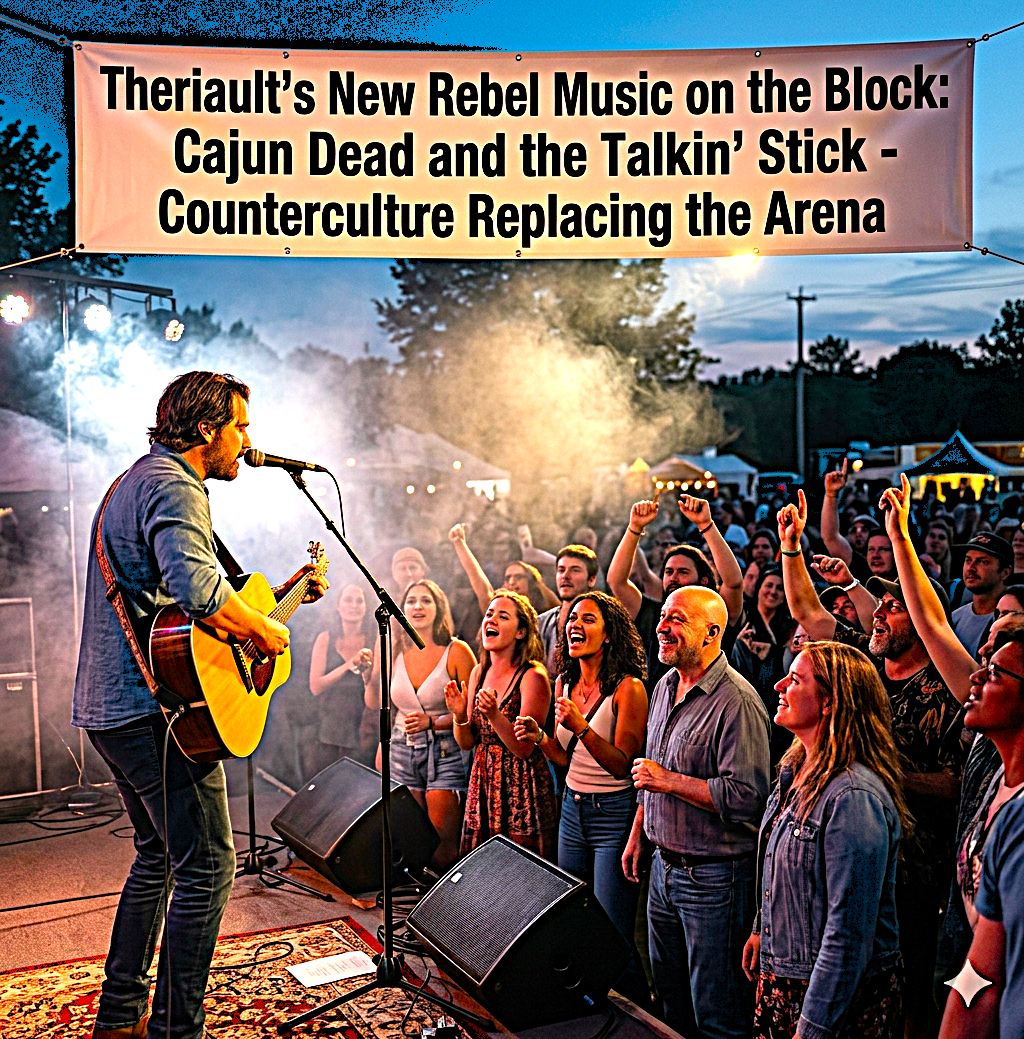
In an era where country music often gravitates toward formulaic radio hits and polished production, Cajun Dead et le Talkin' Stick emerges as a defiant voice of authenticity, channelling the revolutionary spirit of 1920s Appalachian folk through a distinctly modern lens. This isn't your grandfather's country music—nor is it sanitized Nashville fare. Instead, this artist crafts what might best be described as "social commentary country," blending French Acadian heritage with raw American twang to create music that serves as both a cultural artifact and a call to action.
Cajun Dead et le Talkin' Stick: Revolutionary Indie Twang Redefining Country Music's Social Conscience
 Claude Theriault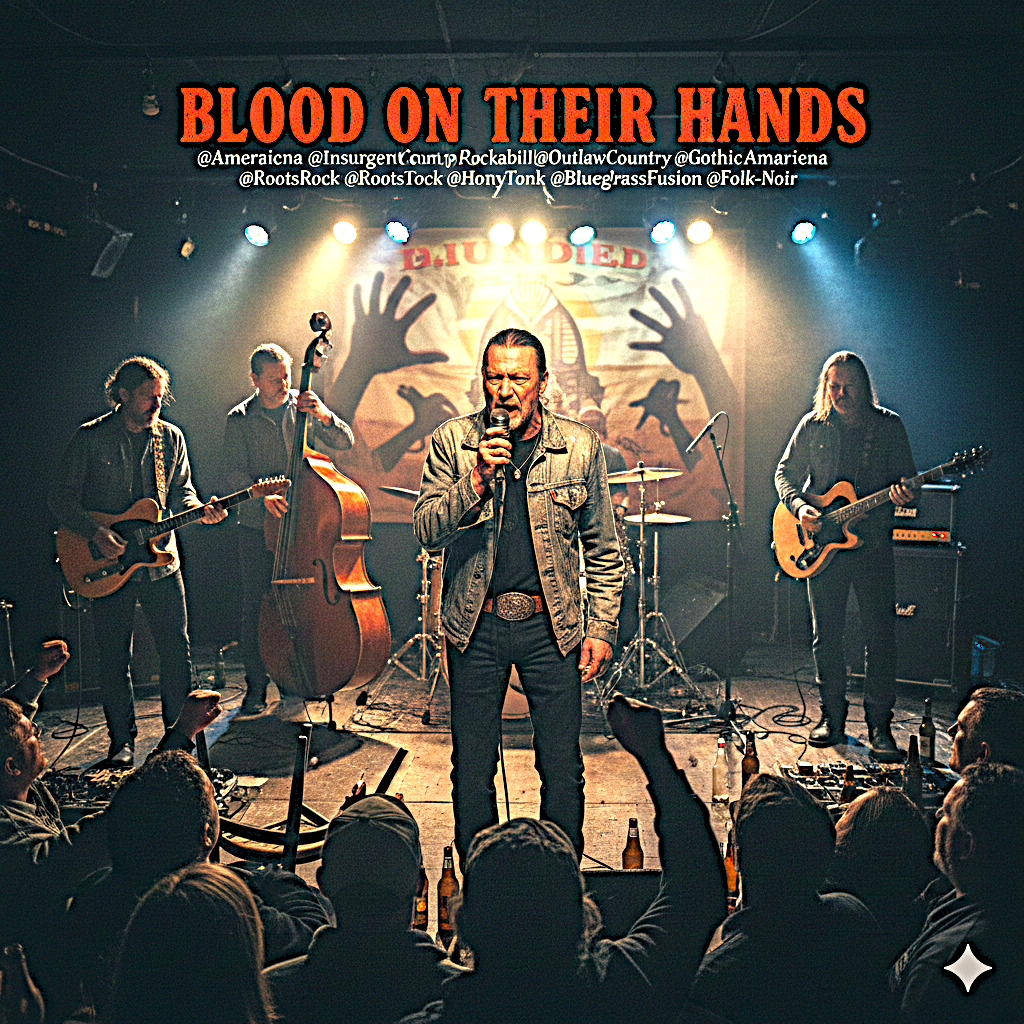
The project's expanding catalogue represents a bold reclamation of country music's roots as a vehicle for social observation and community storytelling. At a time when trust erodes and truth becomes increasingly elusive, Cajun Dead et le Talkin' Stick offers something rare: music that doesn't just entertain but illuminates, challenges, and ultimately empowers listeners to become architects of change rather than passive survivors of chaos.
The Ancestral Roots: When Folk Music Was Revolutionary Get on the Horn News
To understand the significance of Cajun Dead et le Talkin' Stick's work, we must first journey back to the crucible of American country music—the Appalachian hills of the 1920s. During this transformative decade, French, Irish, and Scottish immigrants converged in the mountain regions, bringing with them fiddle tunes, ballads, and a tradition of musical storytelling that served a vital social function. These weren't merely songs for entertainment; they were the news of the day, musical broadsides that documented coal mine disasters, labour struggles, and the daily battle for dignity in an industrializing nation.
This folk tradition never shied from uncomfortable truths. Songs chronicled specific events—mining collapses that killed workers, strikes broken by violence, families torn apart by economic desperation. The music created what scholars now recognize as a "new song source," an authentic documentation of working-class experience that no newspaper could fully capture. These ballads carried emotional weight and historical testimony in equal measure, passed from picker to picker, evolving with each retelling while maintaining their core message of resistance and resilience.
Cajun Dead and the Talkin' Stick deliberately position their work within this lineage, recognizing that country music's original purpose was radical truth-telling. The artist acknowledges that, as in the 1920s, people now need music that reflects their struggles and validates their experiences. By consciously reviving this approach, the project challenges the contemporary country landscape to remember its revolutionary origins. The French-Acadian influences woven throughout the catalogue add another layer of authenticity, honouring the often-overlooked contributions of Cajun culture to the broader American musical tapestry.
"Times of Blood on Their Hands": A Modern Broadside for the Unravelling
The track "Times of Blood on Their Hands" stands as perhaps the most striking example of Cajun Dead et le Talkin' Stick's ability to merge ancestral folk energy with urgent contemporary commentary. The song operates on multiple levels simultaneously—as a musical composition, a social critique, a philosophical meditation, and a call to communal action. From its opening lines, the track establishes a landscape of moral crisis and systemic corruption, where darkness spreads across the land, and people await direction from authorities who may never arrive.
The lyrical journey begins with a stark acknowledgment of those who hold power. At the same time, blood stains their hands, a metaphor as old as folk music itself but rendered fresh through contemporary application. The reference to waiting for "the letter to come down from the new and future King" captures our modern tendency toward passivity, expecting top-down solutions while our communities fracture around us. This isn't cynical nihilism, however—the song immediately pivots to agency and choice.
The central tension of the track explores a question many listeners will recognize: "How do I work on myself, and how do I put all the fires out / And also to the people sing." This line crystallizes the modern dilemma of balancing personal development with collective responsibility, individual healing with social action. It refuses the false binary that suggests we must choose between inner work and outer engagement, instead proposing that authentic purpose requires both simultaneously.
Creole, Cajun, and French versions are pretty hot as well.
Perhaps most provocatively, the song aims to critique contemporary self-optimization culture with its reference to the "nutraceutical optimization stack." In an age of biohacking, wellness trends, and individualistic solutions to systemic problems, Cajun Dead et le Talkin' Stick suggests that supplements and self-improvement regimens won't sustain us when the next crisis arrives. What we need instead is community, purpose, and the competence to act with intention rather than react from fear. The track challenges listeners to "be the one who doesn't just survive the unravelling / But be the one who helps architect what comes next in the new best thing"—a radical proposition that we have agency in shaping what emerges from chaos.
The invocation of Wetiko—a Cree term for a mind-virus of greed, consumption, and disconnection—adds philosophical depth, elevating the track beyond typical protest-song territory. By naming this spiritual-psychological phenomenon, the song provides language for something many feel but struggle to articulate: the sense that certain systems and behaviours consume life force and community bonds for hollow gain. This concept transforms the song from political commentary into something more fundamental—a diagnosis of collective sickness and an invitation to healing through purpose-driven action.
The Indie Twang Aesthetic: Authenticity Over Production Polish
Musically, Cajun Dead et le Talkin' Stick embraces what might be termed "indie twang"—a sound that prioritizes authenticity and emotional truth over commercial polish. This isn't music designed for passive consumption or background noise. The production philosophy centers on real instruments, unvarnished vocals, and arrangements that serve the story rather than obscure it. The French-Acadian influences manifest through fiddle work, rhythmic choices, and melodic structures that carry echoes of centuries-old traditions while remaining unmistakably contemporary.
The indie twang aesthetic represents a deliberate rejection of the overproduced country-pop that dominates commercial radio. Where mainstream country often smooths away rough edges and favours formulaic structures, Cajun Dead et le Talkin' Stick leans into texture, imperfection, and the kind of raw emotional power that can only come from artists who prioritize message over market appeal. This approach creates space for lyrical complexity and philosophical exploration that would feel incongruous against slick production.
The world music elements woven throughout the catalogue reflect a deep understanding that American roots music has always been a synthesis of immigrant traditions. By foregrounding French-Acadian heritage alongside Irish and Scottish influences, the project expands the narrative of what country music is and who it belongs to. This isn't fusion for fusion's sake but rather an honest representation of the cultural crossroads where American folk music was born. The result is music that sounds simultaneously ancient and urgent, traditional and revolutionary.
Finding Signal in the Noise: Music as Sense-Making Tool
In "Times of Blood on Their Hands," the imperative to "find your signal in all the noise when trust and truth disappear" speaks to perhaps the defining challenge of our current moment. We live in an era of information overload, competing narratives, and the collapse of institutional credibility. Traditional authorities—government, media, even science—face widespread skepticism while conspiracy theories and misinformation proliferate. In this landscape, how does anyone discern truth from manipulation, signal from noise?
Cajun Dead et le Talkin' Stick proposent que la musique elle-même peut servir d'outil de sens-making, un moyen de percer la confusion et d'accéder à des vérités plus profondes. This isn't escapism but its opposite—music as a means of engaging with reality that honours both intellectual analysis and emotional wisdom. The folk tradition has always served this purpose, helping communities process collective trauma, celebrate shared values, and maintain cultural memory across generations. By reviving this function, the project offers listeners not just songs but tools for navigation.
The catalogue's emphasis on social architecture rather than mere survival represents a philosophical leap from reaction to creation. Too often, we define ourselves by what we oppose, our energy consumed by resistance to forces we cannot control. The call to "help architect what comes next" shifts the frame entirely, asking listeners to envision and build rather than simply endure. This requires the kind of "purpose and competence" the song champions—not vague optimism but skilled, intentional action grounded in clear values.
The distinction the lyrics draw between changing "reactively, shaped by crisis, stress and fear" versus "deliberately shaped by purpose and competence in the right now, right here" offers a roadmap for agency in overwhelming times. Fear-based reactivity keeps us trapped in survival mode, always responding to the latest emergency without addressing root causes. Purpose-driven deliberation, by contrast, allows us to act from our deepest values even amid chaos, making choices that create the world we want rather than resisting the world we fear.
 Claude Edwin Theriault
The Working-Class Anthem: Music for People Building the Future
Cajun Dead et le catalogue de Talkin' Stick's speaks directly to the working-class experience, honouring the struggles and dignity of people whose labour builds society but whose voices often go unheard in mainstream narratives. The French-Acadian heritage central to the project carries particular significance here—the Cajun people have historically occupied marginalized positions in American culture, their contributions undervalued and their traditions treated as curiosities rather than vital cultural forces. By centring this heritage in contemporary social commentary country, the artist reclaims space and asserts belonging.
The instruction to "look for the ones not drowning and who might be someone solid to hold onto" acknowledges that survival in hard times requires community, not individual heroics. In a culture that glorifies self-sufficiency and rugged individualism, this lyric offers counter-wisdom: we need each other, especially when circumstances threaten to overwhelm us. The simple recognition that "it's all people want, it's all they all need to do" validates the fundamental human requirement for connection and mutual support.
This working-class perspective extends beyond economics to encompass a worldview that values practical competence, communal bonds, and purposeful action over abstract theorizing or passive consumption. The catalogue doesn't offer easy answers or comfortable platitudes but rather acknowledges the difficulty of living with integrity in compromised systems. The call to "get your game on" and "not be quiet" (quiet) is an exhortation to action, to voice, to refusal of complicity through silence.
For listeners navigating their own experiences of economic precarity, social fragmentation, or moral crisis, these songs offer validation and companionship. The music says: you're not crazy for feeling that something is profoundly wrong, and you're not alone in searching for ways to live with purpose amid the unravelling. This is the traditional function of folk music—to witness, to validate, to connect isolated individuals into a community of shared struggle and shared hope.
 Claude Edwin Theriault
Conclusion: The New Best Thing
Cajun Dead et le Talkin' Stick represents something increasingly rare in contemporary music: an artist willing to prioritize truth-telling over commercial appeal, community building over individual celebrity, and cultural preservation over trend-chasing. The expanding catalogue demonstrates that indie twang and social commentary country aren't nostalgic throwbacks but vital forms for our current moment, capable of addressing contemporary challenges while honouring ancestral wisdom.
As we collectively face what the songs call "the unravelling"—climate crisis, political polarization, economic instability, epistemological collapse—we need music that doesn't look away. We need artists who understand that country music's revolutionary roots can speak to revolutionary times, that French-Acadian heritage belongs at the center of the American story, and that the "new best thing" we must architect together requires both individual transformation and collective action.
The question "Times of Blood on Their Hands" poses to each listener is ultimately simple and profound: Will you merely survive what comes, or will you help build what emerges? Will you wait for the King's letter, or will you find your signal in the noise and act with purpose now? These aren't rhetorical questions but genuine invitations to agency, to creativity, to the hard and necessary work of being human in inhuman times.
 Claude Edwin Theriault
Frequently Asked Questions
What is the meaning of "Wetiko" in Cajun Dead et le Talkin' Stick's music?
Wetiko is a Cree term referring to a mind-virus characterized by greed, consumption, and spiritual emptiness. In the context of "Times of Blood on Their Hands," Cajun Dead et le Talkin' Stick uses this concept to describe systemic patterns of exploitation and disconnection that spread darkness across communities. The term provides a framework for understanding how certain behaviours and systems consume life force and communal bonds while offering nothingin return. By incorporating this Indigenous wisdom into country music, the artist bridges cultural traditions to illuminate contemporary social challenges.
How does Cajun Dead et le Talkin' Stick connect to 1920s Appalachian folk music?
The project deliberately channels the revolutionary spirit of 1920s Appalachian folk, when French, Irish, and Scottish immigrants created a new song source that functioned as news and social commentary. Like those early folk singers who documented coal mine disasters and labour struggles, Cajun Dead et le Talkin' Stick uses music to witness contemporary crises and empower communities. The connection is both sonic—through authentic instrumentation and traditional influences—and philosophical, reviving country music's original purpose as a vehicle for truth-telling rather than mere entertainment.
What makes "indie twang" different from mainstream country music?
Indie twang prioritizes authenticity and emotional truth over commercial polish and market appeal. While mainstream country often features heavy production, formulaic structures, and radio-friendly themes, indie twang embraces raw vocals, real instruments, and complex lyrical content that challenges listeners. Cajun Dead and the Talkin' Stick's indie twang aesthetic incorporates French-Acadian world music elements alongside traditional country influences, creating space for philosophical exploration and social commentary that wouldn't fit withincommercial country's constraints. This approach honours working-class experiences and marginalized cultural traditions.
Why does the song criticize "nutraceutical optimization stacks"?
The reference to nutraceutical optimization stacks critiques contemporary culture's tendency toward individualistic, consumption-based solutions to systemic problems. While supplements and biohacking promise personal optimization, the song suggests these approaches won't sustain us during genuine crises that require community, purpose, and collective action. This lyric challenges listeners to look beyond self-improvement trends toward the deeper work of building connection, developing competence, and acting with intention. It's a rejection of the idea that we can consume our way to resilience or individually optimize our way out of collective challenges.
What does it mean to "architect what comes next" rather than survive?
To architect what comes next means actively shaping future possibilities through intentional, purpose-driven action rather than merely reacting to crises from a survival mindset. Cajun Dead et le Talkin' Stick challenges listeners to move beyond passive endurance and become creators of new systems, relationships, and ways of being. This requires both individual transformation—working on oneself—and collective engagement—putting out fires and singing to the people. The concept suggests we have agency in determining what emerges from current unravelling if we choose deliberate creation over fearful reaction.
References
- Modern Contemporary Artwork Trends. "Cajun Dead Sonic Rebellion: How One Artist Detonates Acadian Music's Dusty Chains of Tradition." https://www.moderncontemporaryartworktrends.com/cajun-dead-sonic-rebellion-how-one-artist-detonates-acadian-musics-dusty-chains-of-tradition/
- Boomplay Music. "Cajun Dead et le Talkin' Stick - Artist Profile." https://www.boomplay.com/artists/106018570
- YouTube. "Cajun Dead et le Talkin' Stick - Times of Blood on Their Hands." https://youtu.be/EzgOQ8unkQc?si=Uka8IXpfGyOPqyvn
- Modern Contemporary Artwork Trends. "Cajun Dead et le Talkin' Stick: Reclaiming the First Spark of Mountain Music." https://www.moderncontemporaryartworktrends.com/cajun-dead-et-le-talkin-stick-reclaiming-the-first-spark-of-mountain-music/
- Modern Contemporary Artwork Trends. "Cajun Dead et le Talkin' Stick: A New Anthem for the Working Class French Acadians." https://www.moderncontemporaryartworktrends.com/cajun-dead-et-le-talkin-stick-a-new-anthem-for-the-working-class-french-acadians/
- Source Document. "Social Wetiko Unravelling: Cajun Dead et le Talkin' Stick's New Social Anthem." Original promotional material and lyrical analysis.