New Appalachian Risin`style song catalogue of Cajun Dead et le Talkin' Stick.
Cajun Dead et le Talkin Stick fuses tradition with world music to bring a fresh wave of inspiration to the dull formulaic country music industry.

In an era defined by division, crisis fatigue, and the erosion of shared truth, music has always served as both a mirror and a medicine. Cajun Dead et le Talkin Stick's latest release, "They Be Blood on Their Hands," emerges as a provocative anthem for our turbulent moment. This world music fusion masterpiece uses the vivid metaphor of a roadhouse bar band playing through an epic barroom brawl to explore how we maintain our center when everything around us is falling apart.
They Be Blood on Their Hands: How Cajun Dead et le Talkin Stick's Appalachian World Fusion Speaks to Our Polarized Times.
This isn't just another protest song. It's a philosophical meditation wrapped in Appalachian grooves, Cajun rhythms, and indigenous wisdom, asking the most essential question of our time: will you change reactively, shaped by crisis, stress, and fear—or deliberately, shaped by purpose and competence, right here, right now?
The Roadhouse Metaphor: Finding Your Groove in the Chaos
The central conceit of "They Be Blood on Their Hands" is brilliant in its simplicity and profound in its implications. Picture a working-class bar band—the kind that plays every weekend to keep the beer flowing and the dancers moving. Now imagine violence erupts. Tables flip. Bottles shatter. Fists fly. And through it all, the band keeps playing.
This isn't about ignoring the chaos or pretending everything is fine. It's about maintaining your essential function, your purpose, your groove, even when—especially when—the world descends into mayhem around you. The musicians don't stop because stopping won't end the fight. They continue because their music is what they came to do, who they are, and possibly the only thing that might eventually restore some sense of order to the madness.
 Claude Theriault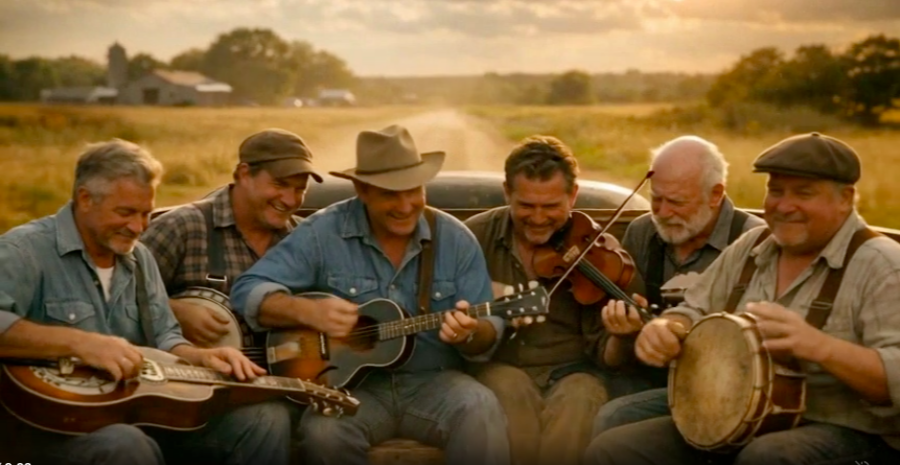
As the lyrics declare: "Some run from disaster, others run right on for it / So go get your game on, go on and just do not be quiet." This call to action rejects both flight and freeze responses. Instead, it advocates for purposeful presence—for being the signal in the noise.
The song draws from a rich tradition of working-class music that understands survival isn't just about making it through—it's about maintaining dignity, community, and purpose under pressure. From Woody Guthrie's Dust Bowl ballads to Bruce Springsteen's explorations of economic despair, American roots music has always known that keeping your humanity intact during a crisis is a form of resistance in itself.
In Appalachian musical tradition, the concept of "playing through" has deep cultural resonance. Mountain musicians have historically performed at community gatherings that served multiple functions—celebration, mourning, conflict resolution, and social bonding. The music didn't stop when tensions arose; it provided a container that allowed the community to process thedifficulty together. Cajun Dead et le Talkin Stick channels this ancestral wisdom into contemporary relevance.
Wetiko and the Spreading Darkness: Indigenous Wisdom Meets Modern Crisis
One of the most striking elements of "They Be Blood on Their Hands" is its invocation of Wetiko, a concept from indigenous North American traditions that has gained renewed attention among those seeking to understand our current collective predicament. The lyrics warn: "Oh yes it be times of blood on their hands / As Wetiko darkness spreads out onto the land."
Wetiko, sometimes spelled wendigo or wétiko, is understood in various indigenous traditions as a spiritual disease characterized by selfishness, greed, cannibalistic consumption, and the delusion of separation from nature and community. Indigenous scholars like Jack Forbes have explored how Wetiko consciousness manifests as colonialism, capitalism's excesses, and the extraction-based thinking that treats everything—land, people, relationships—as resources to be consumed rather than relations to be honoured.
The song's use of this framework isn't cultural appropriation but rather a bridge-building gesture that recognizes how indigenous wisdom offers diagnostic tools for understanding our contemporary malaise. When the lyrics speak of "darkness spreads out onto the land," they're describing something beyond political polarization—they're pointing to a spiritual crisis of disconnection that manifests as our current multifaceted catastrophe.
This connects to the song's central concern: "How do I work on myself and how do I put all the fires out / And also to the people sing." The Wetiko framework suggests that our external crises (climate collapse, political extremism, social fragmentation) and our internal crises (anxiety, meaning-loss, addiction) are not separate problems requiring separate solutions. They're interconnected symptoms of the same spiritual disease we are seeing.
The antidote to Wetiko, in indigenous teaching, isn't more consumption or more individual optimization. It's restoration of right relationship—to land, to community, to the sacred, to purpose. This is precisely what the song advocates when it urges listeners to "Look for the ones not drowning and who might be someone solid to hold onto." Connection, not isolation, is the path through.
Beyond the Optimization Stack: What Actually Sustains Us Through Crisis
Perhaps the song's most cutting critique comes in these lines: "When the next end-of-the-world moment comes to attack, / You're going to need more than your nutraceutical optimization stack." This sharp observation names something many of us recognize but rarely articulate—the insufficiency of purely individualistic responses to collective crisis.
Modern wellness culture, particularly in its most privileged expressions, often reduces resilience to personal optimization: the right supplements, the perfect morning routine, the optimized sleep schedule, the biohacked body. While none of these practices are inherently problematic, the song recognizes their limitations when positioned as primary responses to civilizational upheaval.
You cannot supplement your way through societal collapse. You cannot optimize yourself into immunity from the consequences of living through a historic transformation. The promise that individual perfection can insulate you from collective crisis is a seductive lie that ultimately deepens isolation and vulnerability.
Instead, the Appalachian-inspired Indie twang song points toward relational resilience: "It's all people want, it's all they all need to do / Be the one who doesn't just survive the unravelling / But be the one who helps architect what comes next in the new best thing." This vision of resilience is fundamentally social and generative. It's not about making it through alone—it's about helping build what comes after.
This aligns with contemporary research on disaster resilience and community psychology. Studies consistently show that communities with strong social bonds, mutual aid networks, and collective efficacy fare better through crisis than those where individuals are highly resourced but socially isolated. The roadhouse band survives the brawl because they're in it together, coordinated, with a shared purpose.
The song's call to "Find your signal in all a' the noise when trust and truth disappear" speaks to the epistemological crisis of our moment. In an environment saturated with disinformation, algorithmic manipulation, and manufactured outrage, how do we know what's real? The song suggests the answer isn't found in perfect information but in cultivated discernment: "You'll know it when you see it all fine and clear."
Deliberate Transformation vs. Reactive Collapse: The Choice Before Us
The song's philosophical core crystallizes in these lines: "Will you change reactively, shaped by crisis stress and fear / Or deliberately shaped by purpose and competence in the right now, right here." This presents the fundamental choice of our era, not just individually but collectively.
Reactive change occurs in systems under stress without intentional guidance. It's chaotic, often destructive, and tends to replicate existing patterns of harm even as it disrupts surface structures. We see reactive change in the rise of authoritarian responses to complexity, in the retreat into tribalism when trust erodes, and in the desperate grasping for simple answers to multifaceted problems.
Deliberate transformation requires what the song calls "purpose and competence"—knowing why you're here and developing the skills to actually contribute to building what comes next. This is harder work than reaction. It requires presence rather than panic, discernment rather than dogma, and the courage to "not be no quite" when silence means complicity.
The song's Appalachian and Cajun musical roots are significant here. Both traditions emerged from communities that faced repeated crises—economic exploitation, cultural suppression, environmental disaster—and maintained identity and dignity through deliberate cultural practice. The music itself was an act of deliberate transformation, a refusal to let crisis erase what mattered.
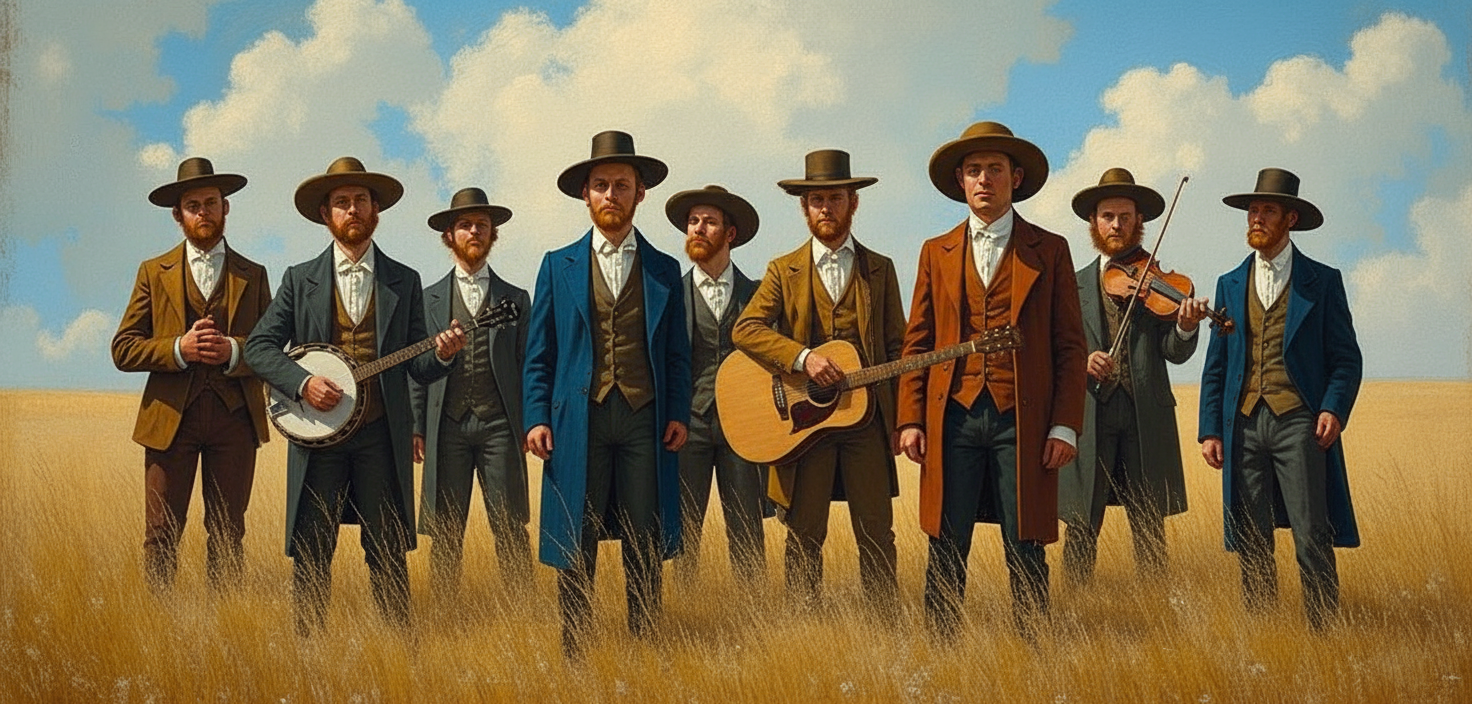
Cajun Dead et le Talkin Stick extend this tradition into world music fusion, suggesting that our path through current crises requires drawing on multiple wisdom traditions, cultural resources, and ways of knowing. The talking stick—a practice from indigenous North American traditions that ensures everyone in council is heard—combined with Cajun groove represents exactly this kind of deliberate, creative syncretism.
The song doesn't promise that deliberate transformation is easy or that choosing purpose over panic will immediately solve anything. The darkness is still spreading. There is still blood on the hands. The bar fight is still happening. But the band keeps playing, and in that playing, maintains the possibility that music—connection, purpose, beauty, rhythm—can outlast and ultimately transform the violence.
Frequently Asked Questions
Q: What does "Wetiko" mean in the context of this song?
A: Wetiko is a concept from indigenous North American traditions describing a spiritual disease characterized by selfishness, greed, and the delusion of separation from nature and community. In "They Be Blood on Their Hands," Cajun Dead et le Talkin Stick uses this framework to describe the underlying spiritual crisis manifesting as our current political, ecological, and social upheavals. The "Wetiko darkness" spreading across the land represents the consumptive, disconnected consciousness that treats everything as a resource to exploit rather than a relationship to honour.
Q: What is the "roadhouse bar band" metaphor really about?
A: The image of musicians continuing to play through a massive barroom brawl serves as a metaphor for maintaining purpose, presence, and creative function during chaotic times. Just as the band doesn't stop playing when violence erupts—because their music is their essential contribution and possibly the only thing that might restore order—we're challenged to maintain our purpose and competence even as crisis swirls around us. It's about deliberate presence rather than reactive panic or avoidance.
Q: Why does the song criticize "nutraceutical optimization stacks"?
A: The song isn't against wellness practices but critiques the idea that purely individual optimization can protect us from collective crises. The line challenges the belief that the right supplements, biohacks, or personal routines can insulate you from civilizational transformation. Instead, it points toward relational resilience—building strong communities, finding solid people to hold onto, and contributing to creating what comes next rather than just optimizing yourself to survive what is.
Q: How does this song relate to Appalachian and Cajun musical traditions?
A: Both Appalachian and Cajun music traditions emerged from communities facing repeated crises while maintaining cultural identity through deliberate practice. Appalachian music has historically served multiple community functions, including conflict resolution and collective processing of difficult experiences. Cajun music represents resilience in the face of cultural suppression. Cajun Dead et le Talkin Stick draws on these traditions while fusing them with elements of world music, suggesting that our current challenges require drawing on multiple wisdom sources.
Q: What does "find your signal in the noise" mean?
A: In our current environment of information overload, disinformation, and manufactured outrage, "finding your signal in the noise" means cultivating the discernment to recognize what's real and important versus what's a distraction and manipulation. The song suggests this isn't about having perfect information but about developing an inner clarity—"You'll know it when you see it all fine and clear"—that comes from purpose, competence, and connection to solid people and principles.
Conclusion: Music for the Long Emergency
"They Be Blood on Their Hands" arrives at a moment when we desperately need music that doesn't look away from difficulty but also doesn't surrender to despair. Cajun Dead et le Talkin Stick has crafted something rare—a song that's simultaneously a banger and a meditation, a dance track and a teaching, roots music and revolutionary vision.
The song's power lies in its refusal of false binaries. It doesn't ask us to choose between working on ourselves and putting out fires, between individual transformation and collective action, between honouring tradition and creating something new. Instead, it presents a both/and vision: be the one who survives the unravelling AND helps architect what comes next. Find solid people to hold onto AND develop your own competence and purpose. Acknowledge the blood on your hands and the spreading darkness, and keep playing your music.
In the end, "They Be Blood on Their Hands" is less a prediction of doom than an invitation to purposeful presence. Yes, these are times of blood on their hands. Yes, darkness spreads. Yes, the bar fight is happening. The question isn't whether we'll face chaos—we already are. The question is who we'll be in it, and whether we'll keep playing our essential music even when, especially when, everything is falling apart.
That's not escapism. That's the work. And Cajun Dead et le Talkin Stick has given us a groove we can do that work to.
References
- Forbes, J. (2008). Columbus and Other Cannibals: The Wétiko Disease of Exploitation, Imperialism, and Terrorism. Seven Stories Press.
- Solnit, R. (2009). A Paradise Built in Hell: The Extraordinary Communities That Arise in Disaster. Penguin Books.
- Macy, J., & Johnstone, C. (2012). Active Hope: How to Face the Mess We're in Without Going Crazy. New World Library.
- Kimmerer, R. W. (2013). Braiding Sweetgrass: Indigenous Wisdom, Scientific Knowledge and the Teachings of Plants. Milkweed Editions.
- Porges, S. W. (2017). The Pocket Guide to the Polyvagal Theory: The Transformative Power of Feeling Safe. W.W. Norton & Company.
- Wheatley, M. J. (2017). Who Do We Choose to Be? Facing Reality, Claiming Leadership, Restoring Sanity. Berrett-Koehler Publishers.