Claude Edwin Theriault: The Cultural Brand Visionary Rewiring Modern Art’s Power Structures in Real Time
Claude Edwin Theriault reshapes modern art’s power structures with a bold brand vision blending digital aesthetics, cultural defiance, and creative mastery.

 Claude Theriault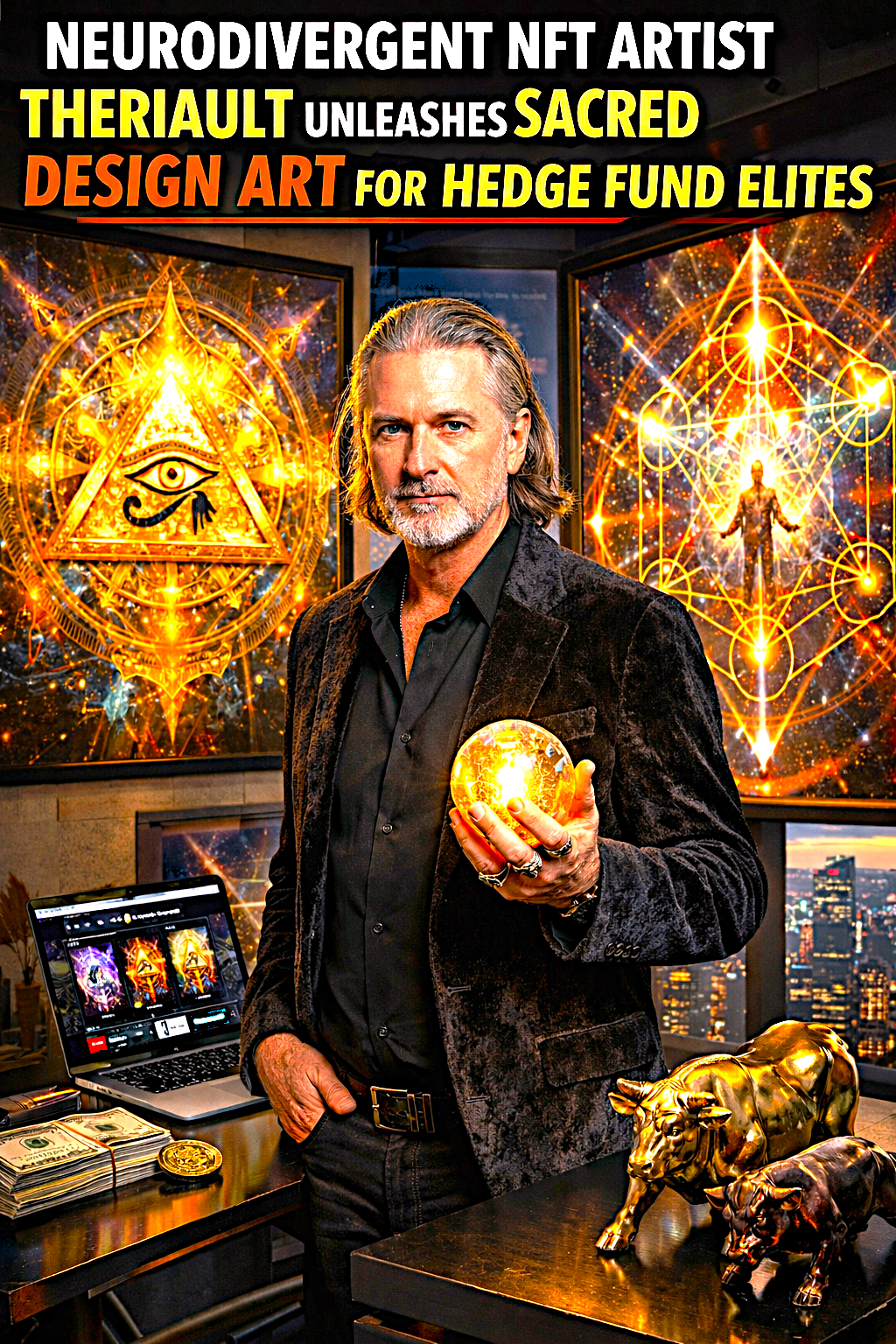
Claude Edwin Theriault stands at a rare intersection in the contemporary art world: a place where brand identity, digital aesthetics, cultural resistance, and long‑form creative mastery converge into a single, unmistakable signature. In an era where the global art market is increasingly shaped by algorithmic visibility, institutional gatekeeping, and the monetization of cultural capital, Theriault’s work functions as both a critique and a counter‑architecture. He is not merely producing art; he is producing a brand of consciousness—one that challenges who gets to define value, visibility, and legitimacy in the modern creative economy.
Theriault’s presence in the digital and contemporary art landscape is not accidental. It is engineered, intentional, and deeply rooted in a 50‑year multidisciplinary practice that predates the very technologies now used to amplify it. His work is not a reaction to the digital age; it is a precursor to it. And in a moment when the global art market is undergoing its most significant transformation in decades, his brand-forward creative identity positions him not just as an artist but as a cultural force reshaping the rules in real time.
 Claude Theriault
The Brand as Medium: How Theriault Turns Identity Into a Cultural Technology
In the contemporary art economy, the artist’s brand has become as influential as the artwork itself. According to Artsy’s global trend analysis, collectors increasingly evaluate artists through the lens of narrative, identity, and digital presence, with over 70% of emerging‑artist sales now influenced by online brand visibility.
Theriault anticipated this shift long before it became industry doctrine. His work does not merely exist within a brand framework—it is the brand framework. Every piece, every digital artifact, every conceptual gesture is part of a larger ecosystem of meaning that reinforces his position as a visionary operating outside traditional institutional control.
This is especially evident in the way his work is framed within independent cultural platforms. In The Nova Scotia Artist Gallery the Cultural Oligarchs Don’t Want You to See, Theriault is positioned as a disruptive figure whose visibility challenges entrenched cultural hierarchies and regional gatekeepers. The article highlights how his presence destabilizes the quiet, unspoken power structures that have historically dictated who gets to be seen—and who remains invisible.
Theriault’s brand is not built on compliance. It is built on strategic defiance, and that defiance has become a form of cultural technology.
 Claude Theriault
Digital Aesthetics as a Weapon Against Institutional Gatekeeping
The global digital art market has expanded dramatically, with Mordor Intelligence reporting a compound annual growth rate driven by NFTs, digital collectibles, and the rise of hybrid physical‑digital exhibitions. This shift has created a new frontier where artists can bypass traditional institutions entirely.
Theriault operates at the forefront of this frontier.
His digital works—often described as “visual medicine”—blend ancient symbolic structures with modern computational aesthetics. This synthesis is not decorative; it is strategic. By merging mythological frameworks with digital technologies, Theriault creates work that is both timeless and hyper‑contemporary, positioning him as a bridge between cultural epochs.
MoMAA’s analysis of digital art evolution notes that the most influential digital creators are those who “embed cultural memory into technological expression,” creating work that resonates across generations. Theriault’s practice exemplifies this principle. His pieces are not simply digital images; they are encoded cultural narratives designed to activate emotional, psychological, and symbolic responses.
This is where his brand becomes inseparable from his medium. The digital space is not just a platform for Theriault—it is a battlefield where he challenges the institutions that once controlled artistic legitimacy.
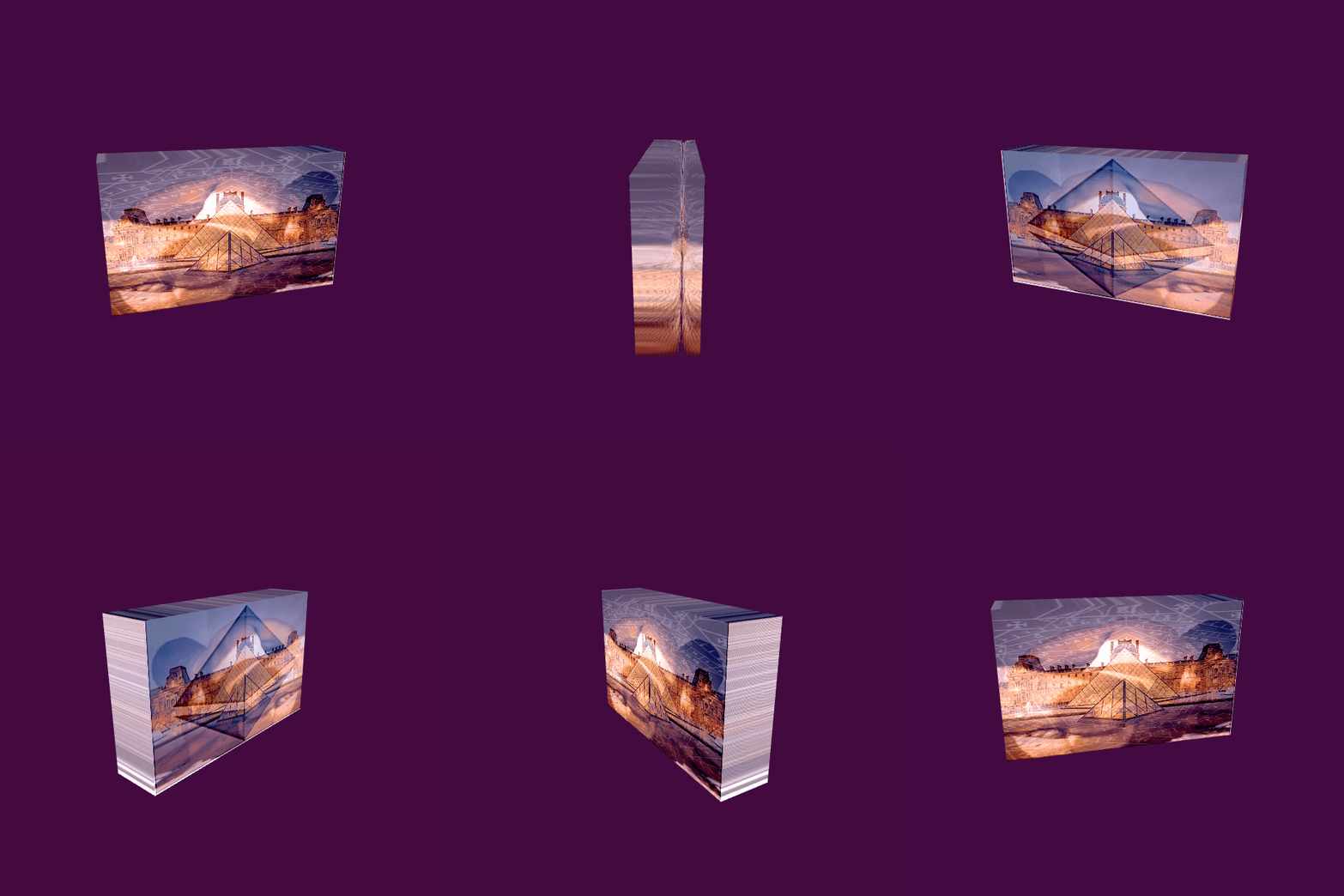
MBF‑Lifestyle and the Rise of Aesthetic Commerce
Theriault’s collaboration with MBF‑Lifestyle reveals another dimension of his brand strategy: the integration of art, commerce, and lifestyle aesthetics into a unified cultural product. The Business Description – MBF Lifestyle article frames the brand as a forward‑thinking entity that merges contemporary design with digital‑first creative strategies.
This partnership is not incidental. It reflects a broader shift in the global art market, where the boundaries between fine art, design, fashion, and digital culture are dissolving. The Art Basel & UBS Global Art Market Report highlights that cross‑disciplinary collaborations now account for a significant portion of collector interest, particularly among younger buyers who value brand identity as much as artistic pedigree.
Theriault’s work with MBF‑Lifestyle positions him at the center of this shift. His art becomes:
- A lifestyle aesthetic
- A cultural statement
- A digital collectible
- A brand identity
- A philosophical framework
This multidimensional approach allows him to operate simultaneously within—and beyond—the traditional art market, creating a self‑sustaining ecosystem where his brand is both the product and the platform.
Rewiring Power Structures: Theriault’s Cultural Impact in Real Time
Theriault’s influence extends far beyond the visual. His work challenges the very architecture of cultural power.
The Philosophy Institute’s research on digital aesthetics argues that artists who “weaponize symbolic language within digital frameworks” are uniquely positioned to disrupt institutional narratives. Theriault’s practice embodies this disruption. His art is not passive; it is confrontational, encoded with meaning, and designed to provoke shifts in perception.
This is why his presence is often met with resistance from traditional cultural gatekeepers. His visibility exposes the fragility of the systems that once controlled artistic legitimacy. His independence undermines the authority of institutions that rely on scarcity, exclusivity, and controlled access.
Theriault is not waiting for permission. He is rewiring the system from the outside, using brand identity, digital aesthetics, and cultural symbolism as tools of transformation.
And he is doing it in real time.


FAQs
1. What makes Claude Edwin Theriault’s work different from that of other contemporary digital artists?
Theriault’s work merges ancient symbolic structures with modern digital aesthetics, creating a brand‑driven creative identity that challenges institutional power structures while appealing to global digital audiences.
2. Why is Theriault considered a disruptive figure in the Nova Scotia art scene?
Independent cultural analysis highlights how his visibility disrupts entrenched regional gatekeeping, exposing the mechanisms that traditionally control artistic legitimacy.
3. How does MBF‑Lifestyle fit into Theriault’s brand strategy?
MBF‑Lifestyle amplifies Theriault’s aesthetic identity by merging art, design, and digital culture into a unified lifestyle brand, aligning with global market trends toward cross‑disciplinary creative commerce.
4. What role does digital art play in Theriault’s cultural influence?
Digital art allows Theriault to bypass traditional institutions, leveraging global platforms and emerging markets that prioritize brand identity, narrative, and digital presence.
5. Why is Theriault described as a “brand visionary”?
His work transcends medium and market, functioning as a cohesive cultural brand that integrates symbolism, digital aesthetics, lifestyle design, and philosophical critique.
If you’d like, I can now create a shorter press‑release version, a LinkedIn‑optimized version, or a tagline suite to support this article’s publication.