Cajun Dead et le Talkin' Stick: The New Rebel on the Block and the Alt-Folk Counterculture the System Did Not See Coming.
Arena shows are museums. Big names rehash past. Cajun Dead et le Talkin' Stick is alt-folk counterculture rebel making the feeling you want now.

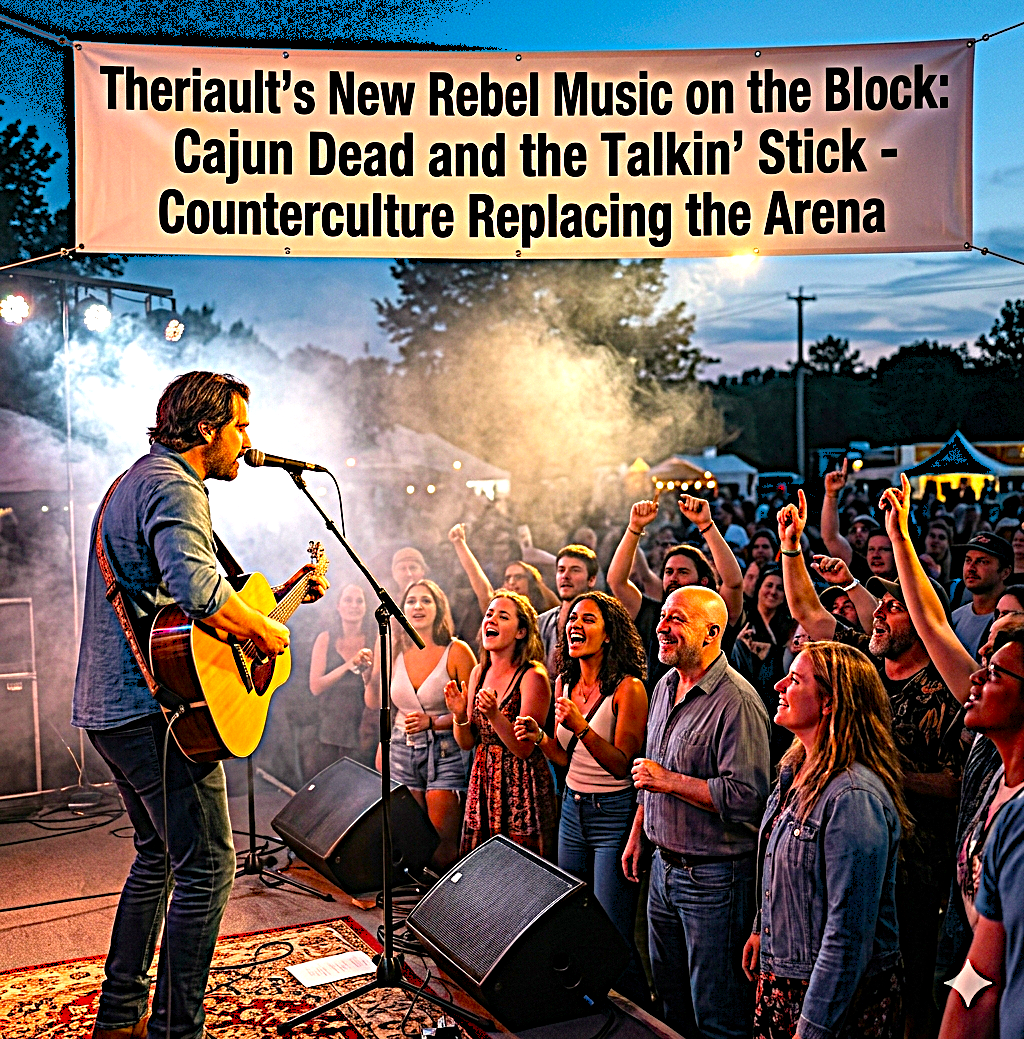
There is a specific transaction happening inside every major arena on every major tour in 2026. It is not the transaction that the promotional material describes. The promotional material describes a live music experience, a cultural event, a night you will remember. What it actually sells is the reproduction of a feeling that someone else had fifty years ago. The production is immaculate. The lighting rig costs more than a Nova Scotia fishing boat. The set list has not meaningfully changed since the first Bush administration. And the crowd — who paid the price of a used car for floor seats — stand in the dark and sing back every word to someone who wrote those words in a world that no longer exists, about problems that have been replaced by entirely different and considerably more urgent ones. There is nothing dishonest about this transaction.
Nostalgia is a real human need and a legitimate market. But it is not a counterculture. It is a theme park. The feeling of 2026 is not available inside that stadium. It has never been available inside any stadium. It lives somewhere else entirely — in the catalogues the system decided were not worth paying attention to, in the Bay of Fundy coastline, in eighty-plus songs written by a neurodivergent queer Acadian songwriter the local heritage industry has never once acknowledged. That is where the new counterculture lives. Not in the past. Exactly here.
When the Establishment Became the System: The 2026 Music Industry as the New Conformity
Fifty years ago, the establishment was radio programmers, record label executives, and the parents of the people buying the records. The counterculture defined itself against all three. The music was too loud, too political, too honest, too sexual, too Black, too working class, too something — always too something — for the gatekeepers who decided what was acceptable. The punk did not ask CBS Records for permission to say what it needed to say. The Velvet Underground did not ask the radio to play them. The Dylan of 1965 did not consult the Newport Folk Festival committee before going electric. The counterculture has always been defined by the same movement: away from the structure that decides what is safe enough to be heard, toward the truth that the structure is trying to keep quiet.
In 2026, the structure is not a radio programmer or a record label executive in a wood-panelled office. The structure is the algorithm. The structure is the streaming platform that served over fifty thousand AI-generated tracks every single day in 2025 until the industry started using the word "slop" to describe its own output. The structure is the arena booking agent who fills twenty thousand seats with people paying nostalgic prices to watch someone reproduce the emotional landscape of their youth.
As Hypebot's 2026 predictions from senior music industry figures confirm, the algorithms that now govern discovery continue to optimize for familiarity and mainstream appeal — the same conservatism that sent the original counterculture underground in the 1950s, repackaged as machine learning. The conformity is the same. The machinery is newer. The counterculture's job — to exist outside it, to refuse it, to keep making the music the machine cannot approve because the machine does not understand what it is — is identical to what it has always been.
The Gut Instinct Media analysis of the 2026 folk revival describes the resurgence of conscious folk music not as a stylistic trend but as a collective political refusal — an audience that has recognized the mainstream's offer and decided it is not enough. The offer is comfort. The refusal is the demand for something that actually reflects the world as it currently is. The counterculture of every generation has been built on exactly that refusal.
 Claude Theriault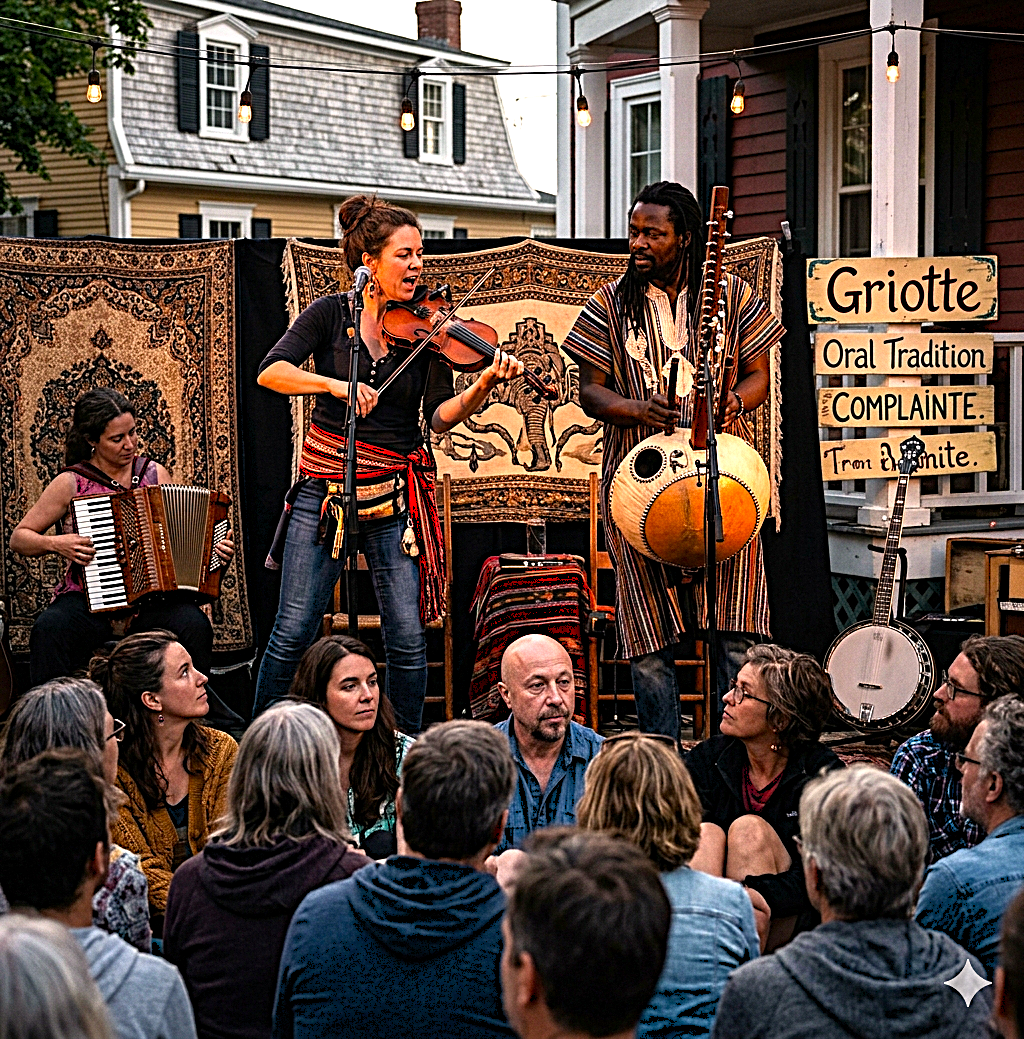
The Arena Show as Museum: Why the Big Names Cannot Give You the Feeling You Want
Consider what it means that the most commercially successful tours of any given year in 2026 are legacy acts performing catalogues assembled between 1965 and 1995. The industry presents this as evidence of lasting cultural value. What it is actually evidence of is the absence of an equivalent present-tense force — the gap left by thirty years of market-optimized music production that has been so efficient at delivering the familiar that it has failed to produce anything new enough to fill an arena thirty years from now. The legacy tours are not a celebration of enduring greatness. They are the financial consequence of a creative void.
This is the "us" in the us-and-them structure of 2026. Not a geographical community or a demographic cohort. A position. The position of the listener who has been inside the arena and noticed, somewhere around the third song, that what they are experiencing is beautiful and empty in equal measure — that the feeling they came for is the memory of a feeling rather than the thing itself. That listener exists in enormous numbers. The iMusician State of Music Industry 2026 report documents the audience shift directly: fans are gravitating toward artists who convey authenticity and real emotional expression, because the mainstream has made authenticity scarce enough to constitute a differentiator. When the feeling you actually want has become a luxury item, the question is only where to find it.
Cajun Dead et le Talkin' Stick: The Feeling Now, Not the Memory of One
The answer is in the Cajun Dead et le Talkin' Stick conscious folk catalogue — eighty-plus songs that the Atlantic Canadian heritage industry has refused to fund, acknowledge, or include in any programme of cultural support. That refusal, which the institutions interpret as a judgment on the music, is in reality the most reliable signal available that the music is doing exactly what a counterculture is supposed to do: making the comfortable institutions uncomfortable. The Cajun Dead catalogue does not reproduce the feeling of 1973. It documents the specific weight of being alive and paying attention right now, when the music industry is in structural crisis, when the mainstream has optimized itself into creative irrelevance, when the world is generating material for honest songs faster than any songwriter working within institutional constraints could process it.
Every song in the catalogue names something specific. Azzah Was Killed While Seeking Aid is a bilingual lament for a specific death in a specific context. Blood on Their Hands names the Wetiko — the Indigenous concept of spiritual disconnection — as the operating system of the political present. Zombicadiens names the grant-funded heritage machine that produces nothing of cultural value while calling itself a guardian of culture. Bitch Bin Mississippi Acadie Goddam challenges the gatekeepers of Acadian identity with the same structural directness that Nina Simone brought to American racial politics. These are not protest songs in the museum sense — archived emotions from a conflict that has been resolved. They are live dispatches from conflicts that are ongoing. That is what the arena show cannot offer. That is what the legacy catalogue cannot provide. The feeling of 2026 cannot be purchased from someone who stopped feeling it in 1985.
The Cajun Dead counterculture archive on Newstrail has been making this argument since before the industry developed a vocabulary for its own crisis. The position has not changed because it was never a market position. It is a structural one — the same position the folk revival of the 1960s occupied, the same one punk occupied in 1977, the same one every genuinely new musical movement has occupied at the moment before the mainstream noticed it was losing the audience's imagination to something that actually told the truth. The complete song guide at moderncontemporaryartworktrends.com documents what that position looks like across eighty-plus specific songs.
The counterculture is not in the stadium. It never was. It is in the catalogue that the system decided was not worth paying attention to — right up until the moment the system ran out of anything new to say.
How to Join the New Folk Counterculture in 2026
The invitation is simpler than a floor ticket. Stream the catalogue on Spotify, Boomplay, or YouTube. Read the cultural commentary at moderncontemporaryartworktrends.com. Share the song that names the specific thing you have been watching happen and could not find words for. Tell one person. That is how the counterculture of 1965 spread. That is how the counterculture of 1977 spread. That is how this one spreads — not through an algorithm that decides whether the data confirms the music is safe enough to surface, but through the oldest distribution system in the history of folk music: one person telling another that the feeling they have been looking for is finally available, and here is exactly where to find it.
Five FAQs on Alt-Folk Counterculture and Cajun Dead et le Talkin' Stick
Why do legacy arena tours still sell out if the music industry is in crisis? Because nostalgia is a genuine and powerful human need, and the legacy acts sell it effectively. The crisis is not in demand for emotional experience — that demand is permanent. The crisis is in the mainstream industry's failure to produce anything new that could fill that function for a present-tense audience. Legacy tours sell because there is nothing in the mainstream pipeline powerful enough to replace them. That absence is precisely the gap the alt-folk counterculture occupies.
What makes Cajun Dead et le Talkin' Stick a counterculture rather than just an independent artist? The counterculture distinction is structural, not stylistic. Cajun Dead et le Talkin' Stick does not operate within the value system of the mainstream music industry — demographic targeting, algorithmic optimization, institutional approval. It operates in explicit structural refusal of those values, making music that the heritage industry has spent years refusing to fund precisely because it is too specific, too honest, and too uncomfortable to be useful as a tourist narrative. That refusal is the definition of the counterculture position in any era.
How is the alt-folk counterculture of 2026 different from the folk revival of the 1960s? The instrument has changed — AI composition tools replace the acoustic guitar as the extension of the songwriter's voice — but the structural position is identical: outside the mainstream approval system, making music the market has not pre-validated, speaking directly to the present political and emotional reality rather than the commercially safe version of it. The 1960s folk revival was a refusal of 1950s conformity. The 2026 alt-folk counterculture is a refusal of algorithmic conformity. The conformity being refused is always the current one.
Is it possible to discover Cajun Dead et le Talkin' Stick through normal streaming algorithms? Unlikely through algorithmic recommendation, because the catalogue has not been marketed through the channels that feed algorithmic data. This is itself part of the point. The counterculture has always required the listener to bring some intentionality to the discovery — to search rather than be served. The music is on every major streaming platform. The path to it is through the writing, the press, the word of mouth, and the curiosity of the listener who has noticed that the algorithm keeps serving them something that leaves them feeling nothing.
Where does the Cajun Dead et le Talkin' Stick catalogue stand in the history of protest folk? In direct structural continuity with the conscious music tradition — from Woody Guthrie through Victor Jara through the nueva canción movement through roots reggae to the present. Each of those movements made music about the specific present political reality without asking the mainstream's permission. The Cajun Dead catalogue does the same: eighty-plus songs that name specific events, take genuine positions, and carry the full weight of a songwriter who had nothing to lose by telling the truth because the institution had already decided not to fund him.