Cajun Dead et le Talkin`Stick Appalachian Song Bitch Bin Mississipi Acadie Goddam directly Challenging the Acadian Heritage Patrimonial Industry and wins
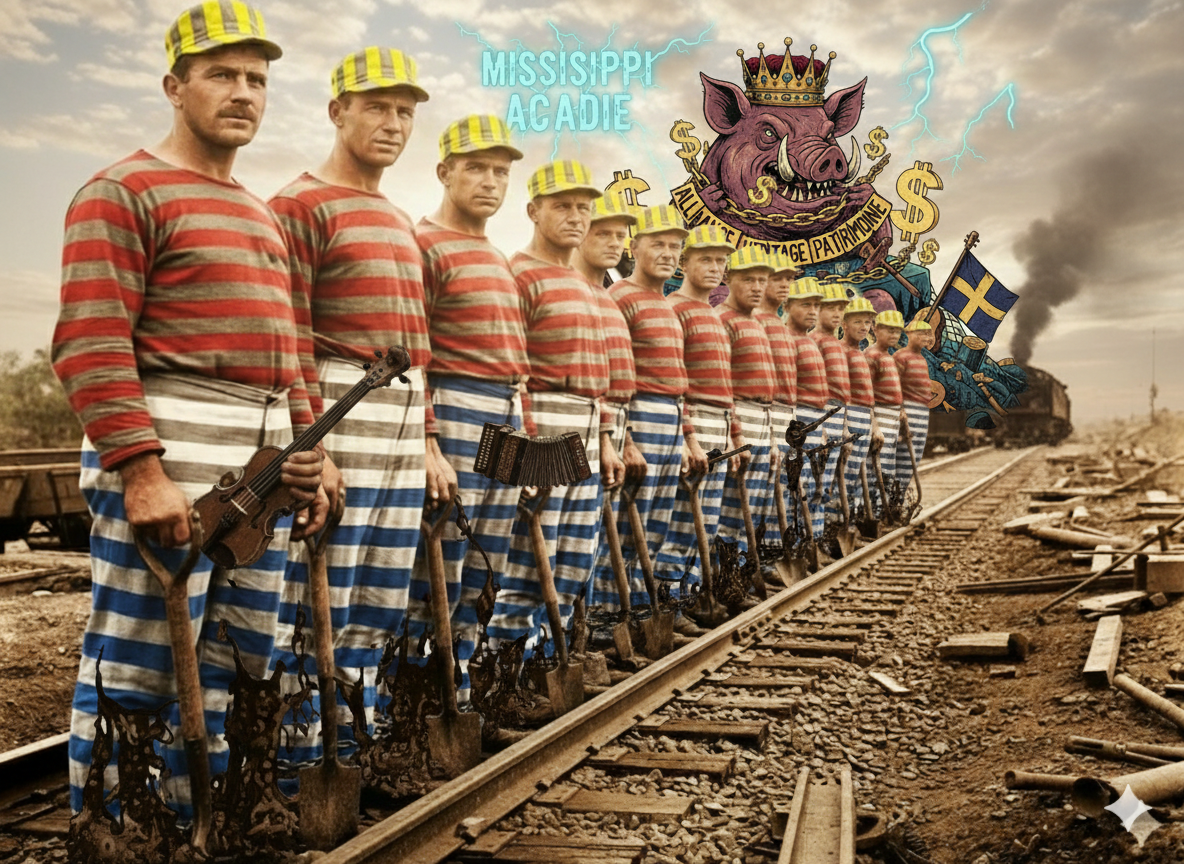
Cajun Dead et le Talkin’ Stick expose, with satire and symbolism the hidden feudalism of Acadian heritage culture in Bitch bin Mississippi Acadie

 Claude Theriault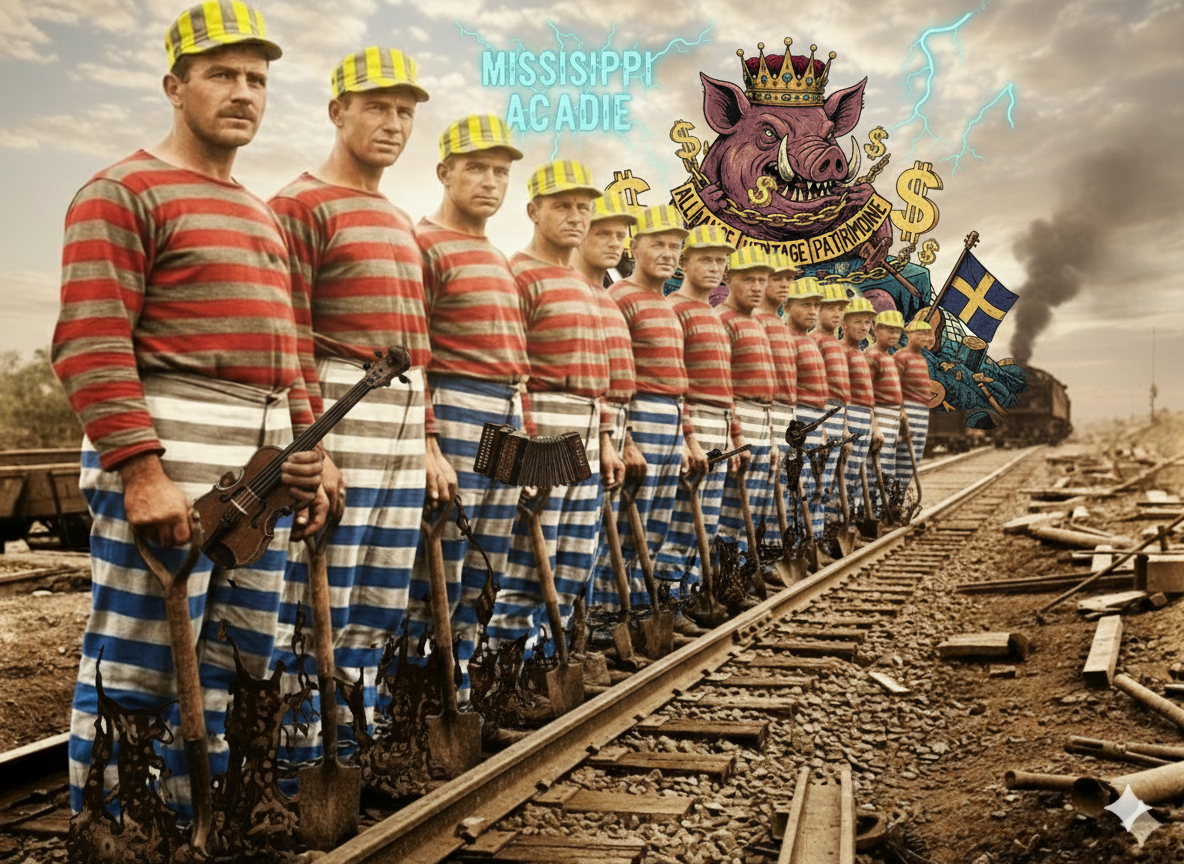
Cajun Dead et le Talkin’ Stick: The Symbolist Protest Hidden in “Bitch bin Mississippi Acadie.”
“Bitch bin Mississippi Acadie” by Cajun Dead et le Talkin’ Stick isn’t your average Acadian rock track—it’s an audacious piece of symbolist protest art disguised as a song. Beneath its gritty Chiac slang and raw delivery lies a powerful critique of the heritage-patrimonial industry that has come to define modern Acadian identity. This “sweet goddamn grand slam,” as the artist calls it, challenges listeners to reconsider who truly owns cultural memory—and who profits from it.
At its core, the song is a satirical outcry against the “Alliance Héritage Patrimoine” echo chamber, where public narratives of pride and unity clash with behind-the-scenes hierarchies of privilege, exclusion, and performance for tourism rather than truth.
1. The Feudal Undercurrents of Modern Heritage
Cajun Dead’s work often explores the neo-feudal power structures inside small cultural communities, and this track continues that tradition. The lyric “Ceux qui en ont et ceux qui en ont powoine” (“Those who have, and those who have nothing”) points to a divided patrimonial economy—one that feeds a few insiders while starving genuine grassroots creators.
The recurring World Beat refrain, “Le plus ça change, le plus ça reste le même," embodies the disillusionment of artists trapped between nostalgia and bureaucracy. It echoes an old Acadian truth: progress often comes wrapped in the same old power games.
By combining biting humor with cultural melancholy, the song turns satire into testimony—a form of justice delivered through melody. Like medieval troubadours or early folk rebels, Cajun Dead uses parody not to insult, but to unmask. The Talkin’ Stick becomes both microphone and scepter—a symbolic reminder that language itself can be an act of resistance.
(See full cultural context analysis at Modern Contemporary Artwork Trends).
2. Symbolism and Allegory in the Lyrics
The lyrical tapestry of “Bitch bin Mississippi Acadie” weaves together Chiac colloquialisms, mythic imagery, and hybridized English–French metaphors. Each verse carries a layered meaning:
- “Toi soit toi et moi soit moi"—a mantra of individuality, rejecting the assimilation enforced by cultural conformity.
- “Monolith à "moi"—The artist’s claim to personal truth amidst monolithic power structures.
- “Empereur Claude” and “Beau Grand Prince Jaheid "Walton"—caricatured rulers symbolizing detached elites within the Acadie cultural system.
- “Cochon Digne” — A grotesque allegory for moral hypocrisy in the heritage economy: public virtue masking indulgence, “all you can eat, drink, and screw.”
In this landscape, Mississippi serves not as a geographic reference but as a mythic crossroads—the meeting point of past and present, of exploited roots and rebellion reborn.
The song’s title itself—part insult, part invocation—reflects that blend of cheek and defiance that defines Cajun Dead’s style.
(For detailed symbol analysis: Fierté Acadienne Bidon et Culture Médiatique Fermée).
3. The Parodic Hero’s Journey of Cajun Dead
While the tone feels rebellious, it’s not purely cynical. Cajun Dead et le Talkin’ Stick channel satire through empathy for the common Acadian who feels unseen beneath glossy cultural branding.
The Talkin’ Stick itself—a nod to Indigenous oral tradition—becomes the narrative device that empowers the voiceless. Each verse acts as a communal ritual, reclaiming the right to name what has been sanitized by official culture.
This mirrors the Symbolist art movement of the late 19th century, when poets like Rimbaud or Verlaine transformed music and verse into mirrors of psychological truth. Here, Cajun Dead modernizes that impulse through Chiac rhythm and digital sound. The result is a protest song that doubles as philosophical performance art, blurring the line between the laughter of parody and the anguish of authenticity.
(Explore how Cajun Dead redefines Franco-Canadian arts: La Révolution Acadienne de Theriault).
4. From Heritage Commodity to Living Identity
The central irony of Cajun Dead’s critique is that authentic culture has become performance merchandise. Festivals, museums, and tourism campaigns often celebrate Acadian folklore while muting contemporary dissent. In this environment, satire becomes a form of re-indigenization of the voice—reclaiming humor and rebellion as core to the Acadian soul rather than distractions from it.
What “Bitch bin Mississippi Acadie” demands is authenticity without agenda. The call “Toi soit toi et moi soit moi” summarizes the song’s emotional thesis: self-sovereignty over imposed narratives.
Through pulsating rhythms and searing metaphors, Cajun Dead et le Talkin’ Stick turn music into insurgency—reminding listeners that heritage, like art, must breathe freely or decay into bureaucratic ritual.
(See background on the band’s world music rise: Thériault Propulse la Musique Acadienne sur la Scène World Music).
Frequently Asked Questions
1. What inspired “Bitch in Mississippi Acadie”?
The song was born out of frustration with how Acadian culture is presented as a tourist attraction rather than a living, evolving identity. Cajun Dead channels that tension into a musical satire that critiques class divides within the Atlantic heritage industry.
2. Is the song meant to offend traditionalists?
No. It’s a parody with purpose. Its humor highlights systemic issues—not individuals—inviting dialogue about authenticity and ownership in cultural representation.
3. Why does Cajun Dead use Chiac and mixed language?
Chiac, a blend of French, English, and local dialects, is central to Acadian expression. Using it reclaims linguistic freedom and underlines the song’s rejection of imposed linguistic purity.
4. How does the symbolism connect to protest music traditions?
Much like early folk and blues protest songs, “Bitch bin Mississippi Acadie” merges storytelling and satire to challenge societal hierarchies. The Talkin’ Stick is a metaphorical stand-in for the mic—truth spoken against sanctioned silence.
5. Where can I listen to or watch the official lyric video?
The official lyric video is available on YouTube and streaming on Apple Music and Amazon Music.
Works Cited
- Pourquoi la musique acadienne traditionnelle mérite de mourir, et comment Cajun Dead la ressuscite
- Cajun Dead et le Talkin Stick : Comment la Vision Appalachine bouscule les Traditions
- Fierté Acadienne Bidon et Culture Médiatique Fermée
- Chanson Acadienne : Allégorie Musicale sur l’Industrie du Spectacle et l’Illusion des Réseaux Sociaux
- La Révolution Acadienne de Theriault
- Cajun Dead et le Talkin Stick Playlist Acadienne Révolutionnaire