Cajun Music Artist They're Trying to Silence: How Cajun Dead et le Talkin' Stick Exposes the Ten Gatekeepers Strangling French-Canadian Music
Groundbreaking song lyric project Cajun Dead et le Talkin' Stick an Appalachian-inspired song catalogue redefining what French-Canadian music.

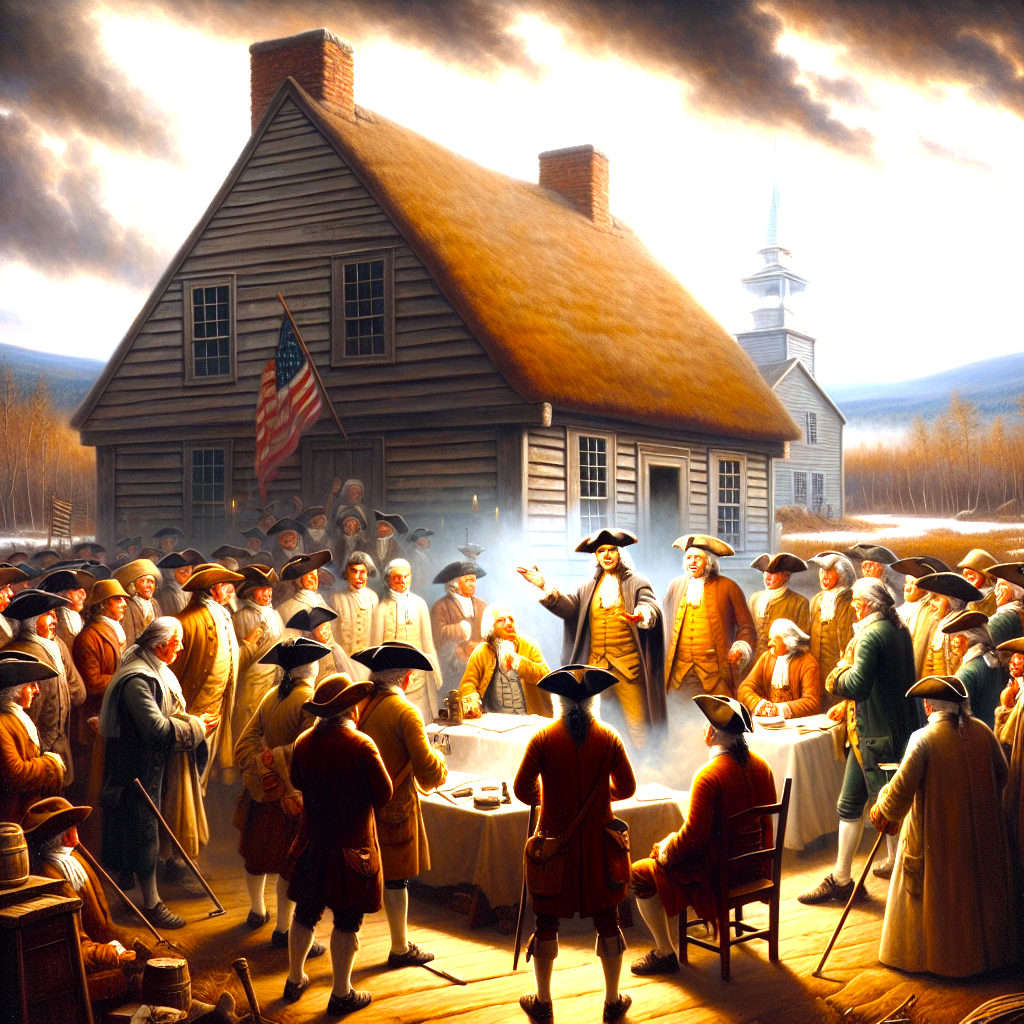

In the rolling hills and coastal Atlantic Canadian communities of Acadia, a quiet revolution is taking shape. While traditional French-Canadian music has long been preserved in museums, heritage festivals, and tourism brochures, a contemporary artist is asking an uncomfortable question: Can culture truly survive if it refuses to evolve?
Enter Claude Edwin Theriault and his groundbreaking song lyric project Cajun Dead et le Talkin' Stick—an Appalachian-inspired song catalogue that's redefining what French-Canadian music can be in the 21st century. With over 12 streaming platforms carrying his work and a production pace that outstrips most established artists, Theriault represents something the heritage industry hasn't quite figured out how to categorize: an authentic voice that refuses to be confined by nostalgia.
This isn't simply about one artist's success. It's about a fundamental shift in how marginalized communities tell their stories, who controls cultural narratives, and whether traditional institutions can adapt quickly enough to remain relevant in an age of rapid technological and social change.
The Appalachian Connection: Mining Deep Veins of Working-Class Storytelling
What makes Cajun Dead et le Talkin' Stick particularly compelling is its unexpected fusion of French-Canadian identity with Appalachian World musical traditions. Rather than relying on the fiddles, accordions, and celebratory reels that dominate mainstream Acadian music, Theriault draws from the modal melodies, minor pentatonic scales, and stripped-down instrumentation of early mountain music.
La Version Francaise a voir
This isn't a random aesthetic choice. Appalachian World music has always been the voice of the marginalized—coal miners, textile workers, displaced farmers, and those left behind by economic progress. The genre's DNA is encoded with stories of struggle, displacement, and resilience. By channelling these influences, Theriault positions French-Canadian narratives within a broader global folk tradition that includes American blues, Irish ballads, and Delta folk songs.
 TRANSSION: LHX
His lyrics tackle unemployment, addiction, gentrification, mental health struggles, PTSD, and cultural isolation—the lived realities of contemporary Acadian communities that rarely make it into heritage programming. Songs like "Denver Boot" critique materialistic excess in Montreal's 1990s cultural landscape, while other compositions address refugee invisibility and the erosion of local culture. This is music that carries weight, that speaks to people navigating economic precarity and social marginalization.
The Appalachian connection also serves another purpose: it bypasses the gatekeepers. While heritage institutions debate what constitutes "authentic" Acadian music, Theriault has positioned his work within the international World Beat scene, where audiences recognize similar struggles across cultural boundaries. His music resonates with Indigenous musicians addressing displacement, Latin American folk artists chronicling political strife, and African singer-songwriters fighting for representation.
Queer Asperger's Neurodivergence, and the Democratization of Music Creation
Perhaps the most radical aspect of Theriault's project is his production method. As an artist with Asperger's, he has developed an innovative workflow that leverages artificial intelligence to challenge conventional structures in the music industry. Theriault sings his lyrics a cappella into AI software, then uses advanced prompt engineering to generate accompanying instrumentation that matches each song's emotional landscape.
This approach has enabled a production pace that seems impossible by traditional standards. While mainstream Acadian artists might release one song every few months, Cajun Dead et le Talkin' Stick produces new material every few days. This isn't about quantity over quality—it's about maintaining cultural relevance in real-time, responding to current events, and creating dynamic social commentary that doesn't wait for approval from institutional gatekeepers.
Cajun Dead et le Talkin' Stick: How One Artist's Appalachian-Inspired Vision Is Challenging French-Canadian Musical Traditions
The neurodivergent perspective brings something essential to this work. Theriault's autism spectrum experience informs a creative process that operates outside conventional social and artistic hierarchies. Where neurotypical artists might self-censor to maintain industry relationships or conform to expected templates, Theriault's approach is refreshingly direct. His stream-of-consciousness "Autism Mantra Flow" monologues blend sound, movement, and unfiltered social critique in ways that feel genuinely transgressive.
This technological democratization poses an existential question for heritage industries: if an individual artist with AI tools can outproduce an entire institutional apparatus while addressing more relevant themes, what exactly is the institution's purpose? The traditional answer—preservation and promotion of cultural heritage—rings hollow when that "heritage" increasingly feels like a tourist-friendly fiction rather than a living, breathing culture.
The Heritage Industry's Uncomfortable Reckoning
The tension between Cajun Dead and the Talkin' Stick, and the established French-Canadian heritage industry, reveals deeper fractures in how culture is managed, funded, and promoted. Traditional institutions operate on a model developed decades ago: government funding flows to established organizations, which then support a small roster of artists who produce work that aligns with predetermined cultural narratives.
This system worked reasonably well when cultural production was expensive, and a few media outlets controlled distribution. But in an era of streaming platforms, social media, and AI-assisted creation, the old gatekeeping model is increasingly irrelevant. An artist like Theriault can reach global audiences without needing approval from regional cultural boards or radio programmers.
 Claude Edwin Theriault
The response from some corners of the establishment has been predictable: silence. According to multiple sources, despite Cajun Dead et le Talkin' Stick's presence on major streaming platforms and growing international recognition, the project receives minimal attention from heritage industry institutions. This "ghosting" strategy—simply pretending innovation doesn't exist—may work temporarily, but it ultimately accelerates institutional decline.
The critique cuts both ways. Heritage industries argue they're preserving authentic traditions against the homogenizing forces of globalization. They worry that experimental fusion projects dilute cultural distinctiveness. These are legitimate concerns. The question is whether the answer lies in curatorial control or in organic evolution.
Theriault's work suggests a third path: deep respect for source material combined with fearless contemporary interpretation. His songs draw extensively on traditional narratives while refusing to sanitize them for tourist consumption. He's not discarding French-Canadian culture—he's insisting it be honest about its present as well as its past.

The 2030 Great Reset and Cultural Survival
The phrase "Great Reset 2030" has taken on various meanings. Still, in a cultural context, it refers to the massive disruptions arising from technological change, economic restructuring, and generational shifts in values. For heritage industries dependent on government funding, tourism revenue, and traditional media attention, these disruptions pose existential threats unlike any other.
Consider the economics: streaming platforms have decimated traditional music sales. AI is democratizing production. Young audiences expect authentic engagement on social media rather than curated festival experiences. Government arts funding faces increasing scrutiny and competition. The heritage industry model—which often resembles a jobs program for a small circle of connected artists and administrators—looks increasingly unsustainable.
When French Acadian Heritage Becomes a Weapon: The Appalachian Invasion That's Tearing Apart French-Canadian Music's Old Guard
Theriault's project offers a glimpse of what cultural production might look like after the 2030 reset: lean, technologically savvy, globally connected, and brutally honest. It's built on platforms rather than institutions, on direct audience connection rather than curatorial mediation. Most importantly, it addresses contemporary issues rather than selling nostalgia.
This doesn't mean traditional approaches have no value. Many people genuinely love heritage festivals, historical reenactments, and preservation of traditional musical forms. But these can coexist with contemporary innovation—they don't need institutional monopoly protection.
The real question is whether heritage industries can evolve to support both preservation and innovation, or whether they'll cling to gatekeeping until they become irrelevant. Signs suggest the latter. When institutions ignore, exclude, or actively resist innovative artists who are successfully reaching audiences, they're essentially choosing decline.
Beyond the Binary: What Authentic Cultural Evolution Looks Like
The debate around Cajun Dead et le Talkin' Stick ultimately reflects a false binary: tradition versus innovation, preservation versus evolution, authenticity versus experimentation. Real cultural vitality has always required both.
What makes cultures resilient isn't their static perfection but their adaptive capacity. French-Canadian culture survived the deportation, diaspora, and centuries of marginalization not by freezing itself in amber but by creatively adapting while maintaining core identity. The very traditions now being "preserved" were themselves innovations in their time—responses to new circumstances, the fusion of different influences, and creative solutions to contemporary challenges.
Theriault's Modern Contemporary artist work embodies this historical pattern. His Appalachian World Music influences aren't a betrayal of Acadian identity but a recognition that working-class Acadians and working-class Appalachians share similar struggles. His use of AI isn't a rejection of musical craft but a tool for expanding creative possibilities. His frank treatment of addiction, mental health, and LGBTQ+ experiences isn't an attack on tradition but an insistence that contemporary Acadian lives matter as much as historical ones.
Ghosted by the Industry He's Disrupting: Why Claude Edwin Theriault's Cajun Dead et le Talkin`Stick song lyric project Musical Revolution Terrifies the dull and uninspiring Acadian Cultural Bureaucrats.
The project's queer perspectives deserve particular attention. Songs like "Oh My Sweet Big Wang Daddi"—described as possibly the world's first openly queer bluegrass love song—aren't simply provocative. They assert that LGBTQ+ Acadians are part of the culture's present and future, not shameful secrets to be hidden for tourism's sake. This kind of inclusion isn't diluting Acadian culture; it's making it more honest and complete.
Perhaps most importantly, Theriault's self-representing solopreneur work demonstrates that cultural innovation doesn't require institutional blessing. Artists can build audiences, create meaningful work, and contribute to cultural evolution outside traditional gatekeeping structures. This threatens institutions, but it's ultimately healthy for culture itself.
The Path Forward: Pluralism or Obsolescence
The French-Canadian heritage industry faces a choice. It can continue operating as a closed-off, walled-garden system, supporting a small roster of dull, uninspired, politically connected artists, producing worksafe for tourism brochures while ignoring innovative Queer asperger`s artist voices that challenge comfortable narratives based on a template THeriault calls 1975. This path leads to a steady decline—perhaps not immediate collapse, but gradual irrelevance as audiences, especially younger ones, turn to artists who speak to their actual lives.
Alternatively, institutions could embrace pluralism. They could recognize that cultural vitality comes from diversity of voices and approaches. They could support both preservation and innovation, as well as traditional forms and experimental fusions. They could create space for uncomfortable conversations about contemporary Acadian life alongside celebrations of historical resilience.
This would require humility. It would mean acknowledging that artists operating outside institutional frameworks might be producing the most culturally significant songwriting. It would mean ceding some curatorial control and accepting that audiences, not administrators, should decide what resonates. It would mean confronting the uncomfortable reality that much heritage programming serves institutional and economic interests more than cultural vitality.

Cajun Dead et le Talkin' Stick won't single-handedly transform the French-Canadian music landscape. But it represents something important: proof that contemporary artists can honour their cultural heritage while refusing to be limited by it. That they can address difficult truths while creating work of genuine artistic merit. That they can reach global audiences while remaining rooted in local experience.
The paradigm shift isn't that one artist is innovating. It's that institutional gatekeeping is becoming optional. Artists can now build sustainable careers, reach international audiences, and contribute meaningfully to cultural evolution without needing permission from heritage bureaucracies. This democratization is unstoppable—the only question is whether traditional institutions will adapt or be bypassed entirely.
Culture belongs to the people who live it, not the people who manage it. Theriault's work is a powerful reminder of that fundamental truth.
Frequently Asked Questions
Q: What makes Cajun Dead et le Talkin' Stick different from traditional Acadian music?
The project fuses French-Canadian themes with Appalachian influences, world music elements, and real-time contemporary social commentary. Rather than focusing on historical celebration, pride and kitchen parties, it addresses current issues like economic hardship, mental health, addiction, and LGBTQ+ experiences. The production method—using AI to generate accompanying music for a cappella vocals—also represents a significant departure from traditional approaches.
Q: How does Claude Edwin Theriault use AI in his music creation?
Theriault writes and sings lyrics a cappella into AI software, then uses very creative prompt engineering to generate instrumentation that matches each song's emotional intent. This workflow allows for rapid production—releasing songs every few days rather than every few months—while maintaining artistic control over lyrical content and overall creative vision. The approach leverages technology to democratize music production.
Q: Why has the heritage industry been resistant to this project?
Multiple factors contribute: the challenging subject matter that doesn't fit tourism-friendly narratives, the use of non-traditional influences and production methods, explicit LGBTQ+ themes in a conservative cultural space, and the implicit critique of institutional gatekeeping. Innovation often threatens established, jealous power structures, particularly when it demonstrates that institutional support isn't necessary for artistic success and audience connection.
Q: What are the main themes explored in Cajun Dead et le Talkin' Stick songs?
The catalogue addresses contemporary Acadian life, including unemployment, addiction, PTSD, mental health struggles, gentrification, cultural isolation, refugee experiences, materialism, and queer identity. The work draws on Appalachian storytelling traditions that center on working-class experiences and social marginalization. Rather than sanitizing culture for external consumption, the project insists on honest representation of current realities.
Q: Where can I listen to Cajun Dead et le Talkin' Stick?
The project is available on 12 major streaming platforms, including Spotify, Apple Music, and others. This broad distribution strategy bypasses traditional gatekeepers and enables direct connection with global audiences. The accessibility represents a deliberate choice to democratize French-Canadian music and reach listeners who might never attend heritage festivals or visit Acadian regions.
Citations and Further Reading
- French Acadian Song Catalogue on World Music Scene via Cajun Dead et le Talkin' Stick - Explores how the project addresses real social issues while positioning Acadian narratives within global folk traditions.
- Cajun Dead et le Talkin' Stick Revolutionizing French Acadian Music with AI and Raw Authenticity - Details Theriault's innovative use of AI technology and his critique of heritage industry gatekeeping.
- Cajun Dead and the Talkin' Stick Breathing New Life Into Acadian Music - Discusses how the project challenges conventional representations of French-Canadian culture and introduces contemporary narratives.
- Cajun Dead et le Talkin' Stick Shakes Up the Musical Establishment - Examines the project's rapid production pace and the resistance it has encountered from established cultural institutions.
- Appalachian-Inspired Queer Bluegrass: How Cajun Dead et le Talkin' Stick is Revolutionizing Acadian Music - Analyzes the project's groundbreaking incorporation of LGBTQ+ themes into French-Canadian musical traditions.
- The Moon, the Sun, and the Truth: Exposing the Clique Controlling Acadian Culture - Features Theriault's perspective on institutional gatekeeping and his vision for authentic cultural representation.
Word Count: 1,999